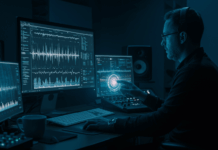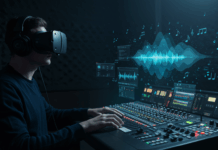

Spectral sampling for ambient soundscapes involves analyzing the frequency components of a sound over time, rather than just its waveform, and then manipulating this spectral data to create rich, evolving, and often otherworldly sonic textures ideal for atmospheric music and immersive audio environments. This technique allows for unprecedented control over the timbral qualities of a sound, enabling the creation of sustained drones, shimmering pads, and unique, non-repeating sonic tapestries that are difficult to achieve with traditional synthesis or sampling methods.
Foundations of Spectral Processing
At its core, spectral sampling transcends traditional audio manipulation by operating on the frequency content of a sound. Instead of merely playing back a waveform or slicing it into discrete samples, spectral processors deconstruct audio into its constituent frequencies and their amplitudes across time. This data, often visualized as a spectrogram, provides a granular map of a sound’s harmonic and noise characteristics. By working with this spectral blueprint, artists gain the power to freeze specific moments in time, stretch elements to immense lengths, or blur transient details into a smooth, ethereal wash. This fundamental shift from waveform-centric to frequency-centric processing is what unlocks the unique textures and evolving nature inherent to spectral ambient soundscapes.
Understanding the difference between traditional and spectral sampling is crucial. Conventional samplers trigger pre-recorded audio, which can then be looped, pitched, and filtered. Spectral sampling, however, allows for a deep dive into the sound’s anatomy, enabling alterations to its very timbral DNA. Imagine taking a transient pluck and sustaining only its resonant harmonics indefinitely, or taking a noisy field recording and extracting only the tonal elements, or vice-versa. This level of sonic surgery is key to crafting the intricate, non-repetitive textures that define compelling ambient music and sound design.
Essential Software and Tools for Spectral Exploration
The journey into creative spectral sampling techniques for ambient soundscapes requires specific tools designed to analyze and manipulate frequency data. While some digital audio workstations (DAWs) offer built-in spectral capabilities, dedicated plugins and standalone applications often provide more extensive control and unique algorithms. Key categories of software include dedicated spectral processors, granular synthesis engines with spectral capabilities, and specialized resynthesis tools.
Dedicated spectral processors like iZotope RX (specifically its spectral repair and editor modules), Paulstretch (a powerful freeware tool for extreme time stretching and blurring), and various Max for Live devices offer direct access to spectral data. These tools allow users to visualize the spectrogram and perform operations such as removing specific frequencies, freezing frequency bands, or stretching the sound far beyond conventional limits, transforming short sounds into vast, evolving pads. Granular synthesis engines, such as Arturia Pigments, Native Instruments Reaktor (with ensembles like Grain Cloud or Metaphysical Function), or specialized plugins like Glitchmachines Polygon and Output Portal, often incorporate spectral elements into their grain generation. This means individual grains can be processed spectrally, leading to intricate, shimmering textures or chaotic soundscapes depending on the parameters.
Furthermore, tools like MetaSynth by U&I Software or modules within Cycling ’70 Max/MSP provide advanced spectral resynthesis and morphing capabilities. These allow for the reconstruction of sound based on its spectral analysis, enabling complex transformations, cross-synthesis between different sounds’ spectral data, or the generation of entirely new timbres from scratch. Integrating these diverse tools into a seamless workflow within your DAW is paramount, allowing for initial sound capture, spectral processing, and subsequent layering and mixing to build comprehensive ambient soundscapes.
Crafting Source Material for Spectral Transformation
The success of spectral sampling techniques for ambient soundscapes heavily relies on the quality and characteristics of the initial source material. Unlike traditional sampling where a pristine, isolated sound is often preferred, spectral processing thrives on complexity, evolving harmonic content, and even carefully chosen ‘noise.’ The choice of source material dictates the sonic palette available for manipulation, directly influencing the unique textures that can be unlocked.
Diverse audio sources prove most fruitful. Field recording techniques, for instance, offer a rich tapestry of environmental sounds—the subtle hum of electricity, distant traffic, dripping water, or the rustle of leaves. These often contain complex, non-repeating spectral information that, when processed, can yield fascinating, organic textures. Instrumental recordings, especially those with sustained tones or rich overtones like bowed strings, singing bowls, or modulated synthesizers, provide excellent foundations for ethereal pads and drones. Even human vocalizations, whispers, or abstract foley sounds can become unrecognizably beautiful spectral elements. The key is to select sounds that have interesting spectral activity, rather than just simple sine waves or static noise.
Consider the dynamic range and frequency content of your source. Sounds with a broad frequency spectrum, or those that evolve over time in their harmonic structure, offer more “material” for the spectral algorithms to work with. Short, sharp transients can be stretched into expansive washes, while sustained tones can be frozen and manipulated into endless drones. Experimentation is paramount here; a seemingly mundane sound can reveal astonishing sonic potential once passed through a spectral lens, encouraging a re-evaluation of what constitutes ‘usable’ audio material for sound design.
Core Spectral Manipulation Techniques
Once you have chosen your source material and selected your spectral tools, the real artistry of spectral sampling for ambient soundscapes begins with specific manipulation techniques. These methods allow for profound transformations, turning familiar sounds into otherworldly, evolving textures. Understanding these core techniques is crucial for achieving diverse and compelling sonic results.
One of the most powerful techniques is **Spectral Freezing**. This involves capturing a specific moment in a sound’s spectral data and sustaining it indefinitely. Imagine a bell chime; instead of its natural decay, spectral freezing can hold the shimmer of its resonance, creating an endless, shimmering drone. This technique is fundamental for generating static yet rich pads and atmospheric backdrops. Closely related is **Spectral Blurring or Smearing**, which diffuses the sharp attacks and clear transients of a sound, spreading its frequency content over time. This process can dissolve percussive elements into smooth washes, or transform melodic phrases into indistinct, hazy textures, ideal for creating a sense of distance or mystique within an ambient piece.
**Spectral Granularization** takes the concept of granular synthesis and applies it to the spectral domain. Instead of chopping a waveform into tiny grains, this technique segments the spectral data, allowing for the reordering, stretching, and pitching of these spectral fragments. This can lead to shimmering, pointillistic textures, glitchy soundscapes, or complex, evolving clouds of sound. Furthermore, **Spectral Resynthesis and Morphing** offer the ability to recreate a sound’s timbral characteristics from its spectral analysis, or even blend the spectral properties of two different sounds. This can result in a new hybrid sound that possesses characteristics of both sources, or a seamless transition from one timbre to another, facilitating a sense of transformation and organic evolution within your sound design. These techniques, applied creatively, form the bedrock of unique ambient textures.
Designing Ethereal Ambient Textures
Beyond the fundamental manipulation techniques, the true art of spectral sampling for ambient soundscapes lies in their application to design truly ethereal and immersive textures. This involves combining various processes, layering different spectral elements, and employing subtle modulation to infuse life and movement into the resulting sounds. The goal is to create sonic environments that are rich, evolving, and capable of evoking deep emotional responses without relying on conventional melodies or rhythms.
To design evolving pads, begin by taking a sustained source, perhaps a violin note or a vocal drone, and apply spectral freezing to create an endless sustain. This is a common method for crafting ambient pads from non-musical field recordings or other sound sources. Subsequently, introduce slow, continuous automation to parameters such as spectral blur amount, frequency shifting, or even filters that operate in the spectral domain. This gradual evolution prevents the pad from becoming static and adds an organic quality. For shimmering atmospheres, consider using percussive or transient-rich sounds as your source. Apply spectral granularization, manipulating grain size, density, and spread to create intricate, sparkling layers that subtly shift over time. Pitch modulation on these grains can add a further layer of complexity and perceived depth, mimicking natural sonic phenomena.
Layering is paramount when building complex ambient soundscapes. Combine a long, spectrally stretched drone with a shimmering, granularized texture and a subtly modulated, blurred field recording. Each layer, processed uniquely through spectral methods, contributes to the overall sonic tapestry without clashing. Focus on creating sounds that have a slow attack and long decay, allowing them to gently wash over the listener. The absence of sharp transients and clear rhythmic elements ensures a continuous, immersive experience, where the listener can get lost in the intricate details and slow, deliberate transformations of the spectral textures.
Integrating Spectral Elements into a Soundscape
Creating compelling spectral textures is one step; integrating them seamlessly into a cohesive ambient soundscape is another. This involves thoughtful mixing, careful spatialization, and strategic use of traditional audio effects to ensure the spectrally processed elements sit well within the broader sonic environment, contributing to depth and immersion without overwhelming other components.
Start by considering the role each spectral element plays. Is it a foundational drone, a textural layer, or an accent? Adjusting the volume and frequency balance (EQ) of each layer is crucial. Often, spectral processes can introduce a lot of low-end rumble or harsh high-frequency content; subtle EQ can clean these up, allowing the unique spectral characteristics to shine through without muddying the mix. Compression, applied gently, can help glue layers together and control dynamics, ensuring that the often-unpredictable movements of spectral sounds remain within a manageable range.
Spatialization is key to creating depth and width in an ambient soundscape. Extensive use of high-quality reverb and delay can transform a dry spectral texture into a vast, expansive presence. Experiment with different reverb types—halls for a sense of grandeur, plates for a metallic shimmer, or non-linear reverbs for unique decays. Panning individual spectral elements across the stereo field, or even automating their pan positions slowly, introduces movement and makes the soundscape feel more alive and surrounding. By carefully blending these processed sounds with traditional ambient elements, and thoughtfully placing them within a three-dimensional sonic space, you can construct truly immersive and evocative soundscapes that captivate the listener.
Overcoming Challenges in Spectral Sound Design
While spectral sampling for ambient soundscapes offers immense creative potential, it also presents unique challenges. Navigating these obstacles is crucial for maintaining sonic clarity, achieving musicality, and optimizing your production workflow. Addressing these common pitfalls ensures that your spectrally designed textures enhance, rather than detract from, your overall ambient composition.
One primary challenge is **avoiding muddiness or harshness**. Spectral processing, especially extreme stretching or blurring, can sometimes create an undesirable build-up of frequencies, leading to a muddy low-end or a brittle, harsh high-end. Proactive equalization is essential. Before and after spectral processing, use parametric EQs to carve out problematic frequencies, focusing on clarity. Sometimes, reducing the “density” or “intensity” parameters within your spectral tool can also alleviate these issues. Another common hurdle is **maintaining musicality and coherence**. It’s easy to get lost in the technical possibilities, creating sounds that are abstract but lack a cohesive musical purpose. Always ask how the sound serves the emotional or narrative intent of your ambient piece. Subtle pitch modulation, even microtonal shifts, can add interest without making the sound overly melodic.
**CPU usage** can also be a significant consideration. Spectral processors are often highly computational, especially when applied to multiple tracks or at high resolutions. Optimizing your workflow by rendering (bouncing) processed spectral tracks to audio once you are satisfied with the sound can free up CPU resources. Finally, the vastness of possibilities can sometimes lead to **analysis paralysis**. Instead of endlessly tweaking, establish a clear creative goal for each sound. Begin with a specific intention—e.g., “I want a shimmering, evolving pad,” or “I need a deep, resonant drone”—and let that guide your experimentation, rather than simply exploring every parameter randomly. Embracing these challenges as part of the creative process will ultimately lead to more refined and impactful spectral soundscapes.