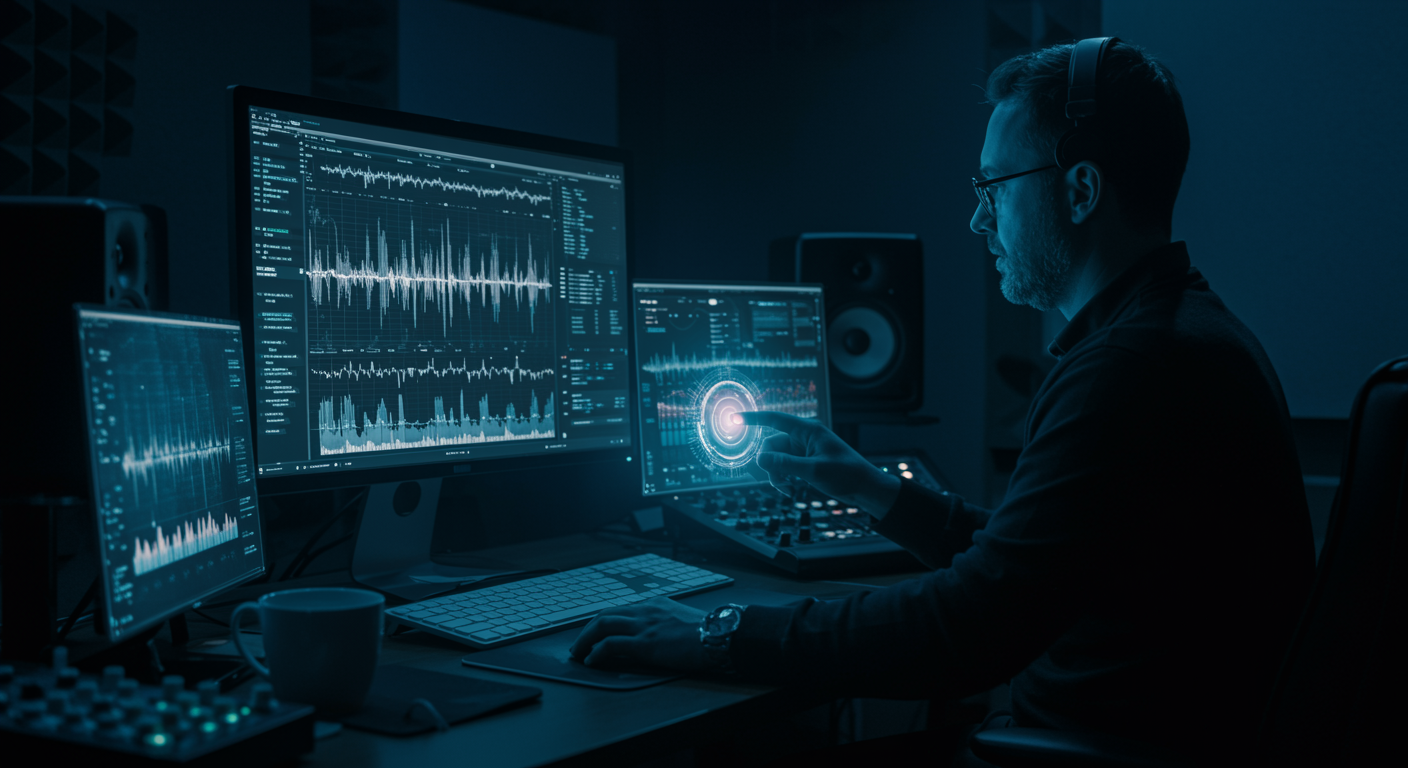
AI-powered tools revolutionize drum sample selection and groove creation by leveraging sophisticated algorithms to analyze vast libraries, recommend contextually relevant sounds, and generate intricate rhythmic patterns, significantly enhancing efficiency and creative possibilities for producers.
Understanding AI in Drum Sample Selection
The landscape of music production has been dramatically transformed by artificial intelligence, particularly in the realm of rhythm section programming. Traditionally, producers spent countless hours sifting through massive drum sample libraries, an often tedious process that could stifle creative flow. AI drum sample selection tools fundamentally change this by intelligently curating sounds based on user input, existing track context, or specific sonic characteristics. These systems move beyond simple tag-based filtering, offering a deeper, more intuitive interaction with vast collections of percussive elements.
At its core, AI-driven sample selection aims to bridge the gap between a producer’s sonic vision and the practical availability of samples. Whether a track demands punchy 808s, crisp acoustic snares, or ethereal percussive textures, AI can quickly pinpoint options that align with the desired aesthetic. This capability not only saves time but also exposes producers to samples they might never have discovered through manual browsing, pushing creative boundaries and introducing fresh sonic palettes into their work. The intelligence lies in the system’s ability to learn and adapt, making recommendations that become increasingly tailored to individual preferences over time.
Mechanisms Behind AI-Powered Sample Curation
The intelligence within AI drum sample selection tools stems from advanced machine learning algorithms. These algorithms are trained on extensive datasets of drum sounds, analyzing various sonic attributes such as timbre, transient shape, frequency content, loudness, and decay characteristics. Beyond individual sample analysis, some sophisticated systems also process entire musical compositions or rhythmic patterns, understanding how different drum elements interact within a larger context. This allows them to grasp concepts like “tightness,” “groove,” or “energy,” enabling more nuanced recommendations.
Many AI tools employ techniques like similarity clustering and content-based recommendation systems. When a user provides a reference sample or describes a desired sound (e.g., “warm kick,” “snappy snare,” “hip-hop hats”), the AI can scan its library for samples that exhibit similar acoustical properties or are commonly used in the specified genre. Furthermore, some platforms utilize neural networks to learn patterns from successful track productions, suggesting drum kits or individual samples that complement the melodic and harmonic elements of a track. This deep analysis moves beyond superficial metadata, delving into the very essence of sound to provide truly intelligent curation.
AI’s Role in Creative Drum Groove Generation
Beyond selecting individual samples, AI music sample generation tools are proving revolutionary for groove creation. Generating compelling drum patterns, especially when faced with creative blocks, can be challenging. AI-powered groove generators offer a dynamic solution by creating entirely new rhythmic ideas or intelligently varying existing ones. These systems can interpret parameters such as tempo, genre, intensity, and even emotional descriptors, translating them into intricate and musically relevant drum sequences. This capability frees producers from repetitive programming tasks, allowing them to focus on the broader compositional aspects of their music.
The algorithms for groove creation often incorporate techniques from generative music and probabilistic modeling. They can learn rhythmic patterns and stylistic conventions from vast amounts of existing music, then apply these learnings to generate novel beats. Some tools allow for real-time manipulation, enabling producers to “mutate” or “evolve” a groove, exploring countless variations at the click of a button. This iterative process fosters experimentation, providing an endless source of inspiration for crafting unique and engaging drum parts that align perfectly with the track’s overall feel and energy. From subtle ghost notes to complex polyrhythms, AI assists in bringing dynamic life to any drum part.
Optimizing Workflow with AI Drum Tools
Integrating AI drum sample selection and groove creation tools into a production workflow significantly streamlines the creative process. The traditional method often involves disruptive breaks in creative flow for manual sound hunting or laborious programming. AI minimizes these interruptions by providing instant access to relevant sounds and immediate rhythmic inspiration. Producers can audition a myriad of options quickly, maintaining momentum and keeping their focus on the artistic vision rather than technical minutiae. This efficiency gain is particularly valuable in fast-paced production environments or when working on tight deadlines, where optimizing drum samples and workflow is crucial.
Many AI drum tools are designed as plugins or standalone applications that seamlessly integrate with popular Digital Audio Workstations (DAWs). This allows for direct drag-and-drop functionality for samples and MIDI grooves, making the transition from AI suggestion to actual implementation fluid. Features like automatic tempo synchronization, key detection for pitched percussion, and intelligent layering recommendations further enhance the workflow. By automating much of the legwork involved in drum programming, AI tools empower producers to experiment more freely, explore diverse sonic avenues, and ultimately produce higher-quality results in less time, refining their overall music creation pipeline.
Expanding Sonic Possibilities Through AI Recommendations
One of the most exciting aspects of AI in drum production is its ability to push producers beyond their typical sonic comfort zones. While manual searching often leads to re-using familiar samples or sticking within established genres, AI algorithms can make unexpected yet musically compelling recommendations. By analyzing the harmonic, melodic, and rhythmic content of a track, AI can suggest drum sounds that might not immediately come to mind but ultimately enhance the piece in unforeseen ways. This capability fosters genuine sonic exploration and helps producers develop a more unique and signature sound.
These intelligent recommendations aren’t just random suggestions; they are often based on complex cross-referencing of characteristics that human ears might not immediately connect. An AI might identify subtle timbral similarities between an unconventional foley sound and a desired snare characteristic, or suggest a percussive element from an entirely different genre that adds a unique texture to a track. This algorithmic serendipity can lead to innovative sound design and entirely new drum arrangements, broadening the creative palette for musicians and sound designers alike, enabling them to discover new dimensions in their rhythm sections.
Addressing Common Production Challenges with AI
AI-powered drum tools offer effective solutions to several pervasive challenges faced by music producers. “Producer’s block” is a frequent hurdle, where the inspiration for new grooves or appropriate sounds simply isn’t flowing. AI can act as a tireless creative partner, generating fresh ideas on demand and breaking through stagnation. Another challenge is achieving sonic cohesion across different drum elements; AI can analyze how individual samples interact and recommend combinations that blend harmonically and rhythmically, ensuring a polished and unified drum sound. This includes suggestions for percussion sample layering to build complex, unique grooves.
Furthermore, for producers working across multiple genres, manually understanding and applying the stylistic nuances of drum programming can be time-consuming. AI systems, having learned from vast amounts of genre-specific music, can instantly adapt to a desired style, providing genre-appropriate samples and grooves. This reduces the learning curve and allows for rapid genre switching without sacrificing authenticity. By tackling these common pain points, AI empowers producers to maintain a consistent creative output and elevate the overall quality of their productions, making the process less daunting and more enjoyable.
Future Trends in AI for Rhythm Production
The trajectory of AI in drum sample selection and groove creation is rapidly evolving, promising even more sophisticated capabilities in the near future. We can anticipate AI tools becoming increasingly adaptive, learning not just from global datasets but also from individual user habits and preferences, leading to hyper-personalized recommendations. Real-time, reactive AI systems that adjust drum patterns and sample choices dynamically during a performance or live jam session are also on the horizon, blurring the lines between static composition and spontaneous creation.
Further integration with advanced psychoacoustic modeling could allow AI to predict how certain drum sounds and grooves will impact a listener emotionally, tailoring rhythms for specific moods or atmospheres. Additionally, the development of more intuitive natural language processing interfaces could enable producers to simply describe their desired drum sound or groove in plain English, with the AI instantly generating options that match their verbal descriptions. These advancements suggest a future where AI acts not just as an assistant, but as an even more integral and intelligent creative collaborator, continually pushing the boundaries of rhythm production.