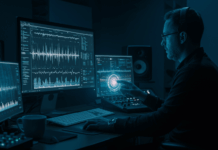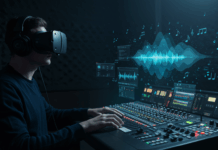
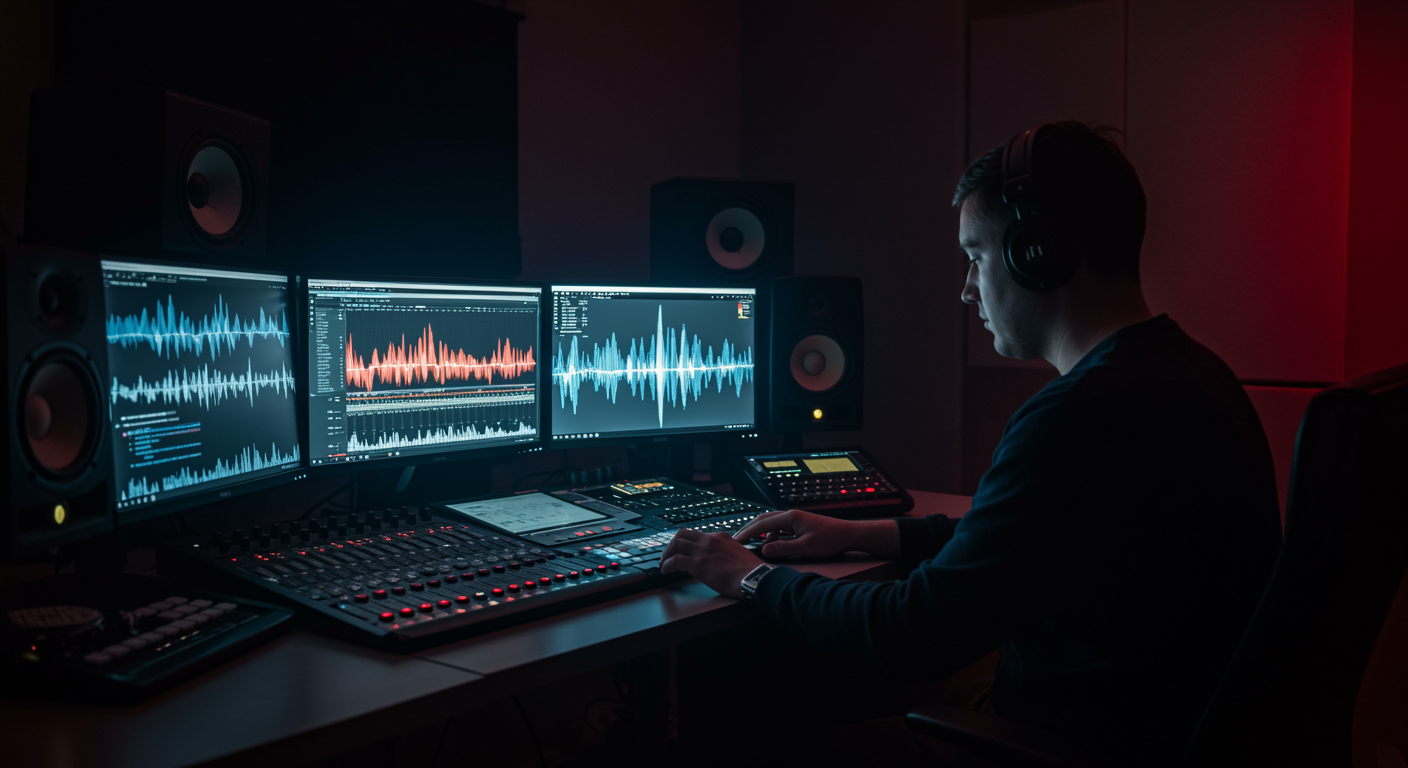
AI music sample generation tools leverage sophisticated machine learning algorithms to create unique audio snippets, loops, and one-shots across various genres and styles, offering creative producers a novel way to overcome creative blocks, generate fresh ideas, and rapidly prototype musical concepts without needing extensive manual sound design or traditional instrumentation.
Understanding the Mechanics of AI Sample Generation
The core of AI music sample generation tools lies in advanced machine learning models, primarily neural networks trained on vast datasets of existing audio. These models, often including Generative Adversarial Networks (GANs), Variational Autoencoders (VAEs), or transformer architectures, learn the intricate patterns, timbres, rhythms, and harmonic structures present in music. By analyzing millions of audio samples, they develop an internal representation of musical characteristics, enabling them to produce new sounds that adhere to learned styles while introducing novel elements.
When a user inputs parameters such as genre, mood, instrumentation, tempo, or key, the AI model uses its learned knowledge to synthesize audio waveforms. This process involves complex computations that manipulate digital sound information at a granular level, often leveraging techniques like spectral analysis and resynthesis. Unlike simple randomization, these AI music sample generation tools are designed to create coherent and musically plausible outputs, even for highly nuanced requests, making them invaluable for creative producers seeking to expand their sonic palette with intelligent assistance.
Some tools also incorporate transfer learning, where a pre-trained model is fine-tuned on a smaller, specific dataset to generate samples with a particular stylistic slant. This allows for highly specialized output, whether it’s vintage synth sounds, specific percussive elements, or ambient textures. The underlying algorithms constantly evolve, leading to increasingly sophisticated and customizable sample generation capabilities that push the boundaries of what’s possible in digital audio creation.
Enhancing Creative Workflows with AI Tools
For creative producers, AI music sample generation tools offer a revolutionary approach to sound design and ideation. One of the most significant benefits is the ability to quickly generate a multitude of unique sounds that might otherwise take hours or even days to craft manually. This speed allows producers to experiment more freely, auditioning various sonic textures and loops to see what fits a track’s vibe, without committing significant time to creating each sound from scratch.
These tools are also powerful catalysts for overcoming creative blocks. When inspiration wanes, an AI generator can provide unexpected sounds or melodic fragments that spark new ideas, leading the producer down unforeseen creative paths. By offering sounds that might not be part of a producer’s usual repertoire, AI expands the creative horizon, encouraging exploration of new genres, instrumentation combinations, and rhythmic patterns that might not have been considered otherwise.
Furthermore, AI music sample generation tools democratize access to high-quality, diverse audio assets. Producers without extensive knowledge of synthesis, recording, or specific instruments can still generate professional-grade samples. This capability levels the playing field, allowing more creators to produce rich, complex soundscapes that rival those created with expensive equipment and extensive expertise, ultimately fostering a more inclusive and innovative music production landscape.
Exploring Key Features of Sample Generation Platforms
Modern AI music sample generation tools come equipped with a range of features designed to maximize utility and creative control for producers. A fundamental aspect is parameter customization, allowing users to specify desired attributes like genre (e.g., techno, hip-hop, ambient), instrument type (e.g., bass, drums, synth pad), mood (e.g., dark, uplifting, calm), tempo, key, and even the complexity or intensity of the generated audio. This fine-grained control helps producers steer the AI towards outputs that are relevant to their current project.
Many platforms offer intuitive interfaces that allow producers to quickly audition and tweak generated samples. Features like real-time sound manipulation, where users can adjust parameters on the fly and hear immediate changes, are becoming increasingly common. This interactivity transforms the generation process into a dynamic creative collaboration between human and AI. The ability to generate variations of a sound, or even entire sets of complementary samples (e.g., a drum kit or a collection of synth pads in a specific style), further enhances their utility.
Crucially, most reputable AI music sample generation tools provide options for seamless export and integration into Digital Audio Workstations (DAWs). This often includes exporting samples in standard formats like WAV or AIFF, sometimes with metadata, and increasingly, offering plugins or direct API integrations that allow producers to generate and import samples directly within their preferred production environment. Some advanced tools even include stem separation capabilities for existing audio, or the ability to generate samples based on an input audio “seed,” allowing for creative blending of human and AI elements.
Notable AI Music Sample Generators for Producers
The market for AI music sample generation tools is rapidly evolving, with several platforms offering distinct approaches and functionalities tailored for creative producers. While some tools like AIVA and Amper Music are known for generating full compositions, others focus specifically on producing smaller, reusable audio components. For instance, services often integrated within larger production ecosystems, like those offering AI-powered drum loops or synth textures, utilize sophisticated algorithms to analyze vast libraries and then synthesize entirely new, royalty-free samples based on user input.
Experimental platforms and research projects, such as those originating from Google Magenta or various academic institutions, often push the boundaries of what’s possible, showcasing advanced techniques for generating highly specific instrument sounds, sound effects, or even entire textural soundscapes. These often serve as incubators for features that eventually make their way into commercial products, continuously refining the quality and diversity of AI-generated audio samples. Producers can explore these tools to find novel sounds that stand out from typical sample packs.
Furthermore, several services focused on royalty-free music and sound libraries are now integrating generative AI capabilities. These platforms allow producers to specify parameters and receive custom-generated samples, often within seconds. This access to a constantly expanding pool of unique audio assets empowers creative producers to maintain originality in their work, ensuring that their tracks feature sounds that haven’t been overused or widely distributed. The competitive landscape ensures ongoing innovation in fidelity, control, and variety for AI music sample generation tools.
Seamless Integration of AI Samples into Production
Integrating AI-generated samples effectively into a music production workflow is key to unlocking their full potential. Creative producers can approach these samples not as finished products, but as versatile building blocks. One common method is to use them as starting points for new tracks or as a unique layer within an existing arrangement. For example, an AI-generated atmospheric pad can provide a rich background texture, while a generated percussive loop can be chopped, rearranged, and layered with other drum elements to create complex rhythms.
Producers often import AI-generated samples into their Digital Audio Workstations (DAWs) and then apply traditional sound design techniques. This might involve EQing to fit the mix, adding compression for punch, applying time-based effects like reverb and delay for spatialization, or even granular synthesis to stretch and manipulate the sample into entirely new sounds. The beauty of these samples is their inherent uniqueness, providing a fresh foundation for further processing and personalization, ensuring the final output retains a human touch.
Furthermore, AI-generated melodies or chord progressions, even if initially simple, can serve as inspiration for more elaborate compositions. A producer might take an AI-generated synth line, transpose it, change its rhythm, or use it as a counterpoint to other instruments. This collaborative process between human creativity and AI generation allows for a hybrid approach to music making, where the efficiency and novelty of AI complement the artistic vision and emotional depth brought by the human producer. The goal is always to leverage these AI music sample generation tools to enhance, not replace, artistic expression.
Navigating the Challenges and Opportunities
While AI music sample generation tools offer immense opportunities for creative producers, they also present certain challenges that warrant consideration. One primary concern revolves around originality and copyright. While most platforms state their generated samples are royalty-free, the ethical implications of AI models being trained on existing copyrighted music raise ongoing debates within the industry. Producers must ensure they understand the Music Sample Legal Clearance rules and the provenance of the AI’s training data to avoid potential issues down the line.
Another challenge can be the occasional generic or predictable output. While AI excels at mimicking patterns, truly groundbreaking and emotionally resonant sounds often require a human touch. Producers might find that while AI can generate a vast quantity of samples, not all will possess the unique character or “soul” required for a particular track. This necessitates a careful curation process, where the producer acts as an editor, sifting through generated samples to find those rare gems that align with their artistic vision, and then further shaping them.
Despite these hurdles, the opportunities are profound. AI music sample generation tools can significantly speed up workflow, provide endless inspiration, and open doors to sonic territories previously inaccessible. They empower solo producers with smaller budgets to compete with larger studios, and they facilitate rapid prototyping of ideas, allowing for more iterations and refinements. By understanding both the strengths and limitations of these tools, creative producers can effectively integrate them to augment their capabilities and unlock new dimensions of sound.
The Evolving Landscape of AI in Music
The trajectory of AI music sample generation tools points towards an increasingly sophisticated and integrated future within music production. We can anticipate more nuanced control parameters, allowing producers to specify intricate details of sound design, from the subtle decay of a cymbal to the harmonic richness of a synth pad, with greater precision. This evolution will move beyond simple genre or mood selections, enabling a deeper co-creation experience between human and artificial intelligence.
Further advancements are likely to include real-time, adaptive generation, where AI models can listen to a track in progress and instantly suggest or create complementary samples that fit seamlessly into the mix. Imagine an AI analyzing your bassline and generating a perfectly harmonized synth lead or a rhythmically aligned drum fill on the fly. This level of dynamic interaction will transform the creative process, making AI less of a separate tool and more of an intelligent, responsive co-producer.
Ultimately, the future of AI in music production is not about replacing human creativity but augmenting it. As AI music sample generation tools become more intuitive, powerful, and integrated, they will serve as indispensable assistants, freeing creative producers from repetitive tasks and expanding their imaginative scope. The ongoing research and development in machine learning promises a landscape where the boundaries of sonic possibility are continuously pushed, offering endless avenues for innovation and artistic expression.