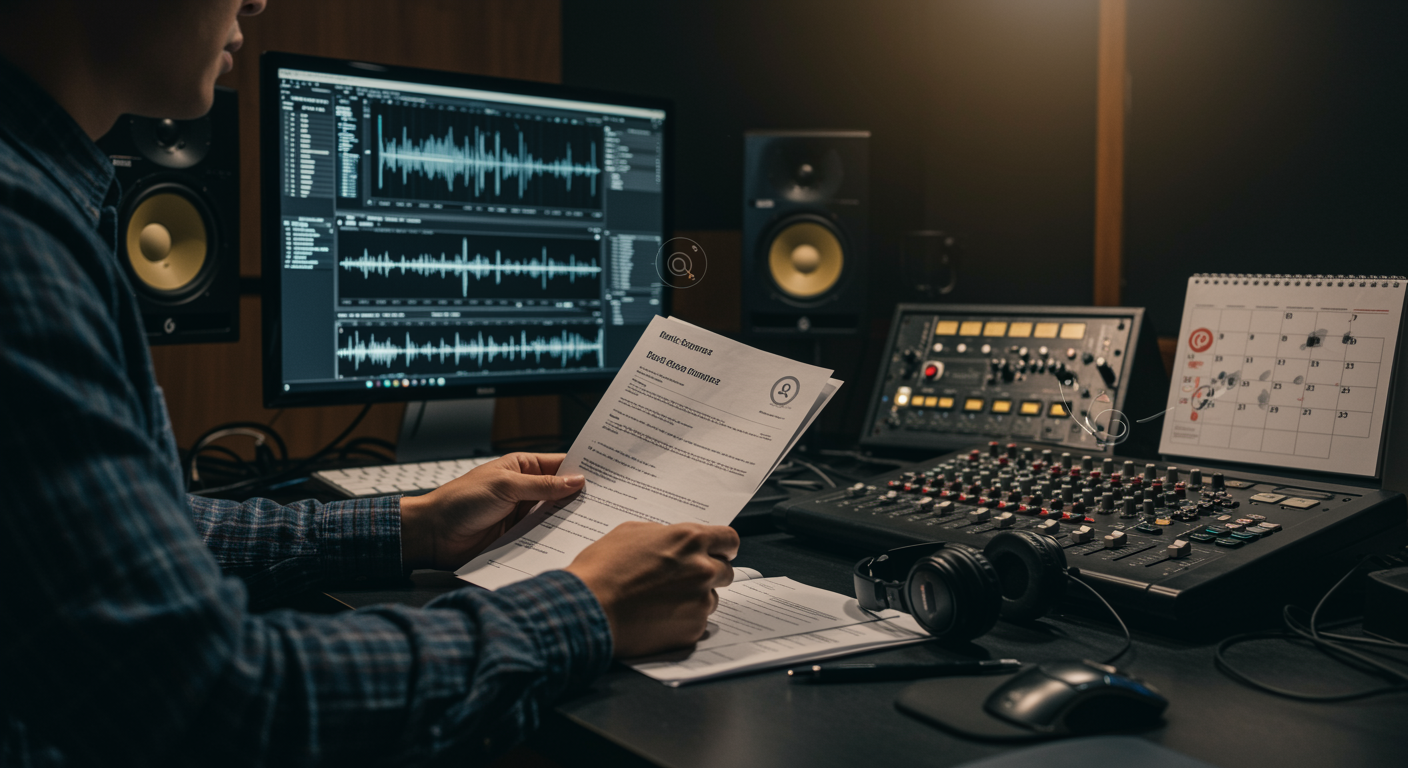
When using music samples for commercial purposes, legal clearance is absolutely essential to avoid copyright infringement. This involves obtaining proper licenses for both the sound recording and the underlying musical composition from all rights holders, a process that ensures you have the legal right to use the sampled material in your commercial work.
Understanding Copyrights in Music Sampling
The act of music sampling inherently involves two distinct, yet equally important, layers of copyright: the sound recording and the musical composition. The sound recording copyright protects the specific performance and production of a piece of music, essentially how it sounds on a record, controlled typically by record labels or independent artists. This covers the actual audio track you might want to lift a drum beat, vocal snippet, or instrumental lick from. For commercial use, securing permission from the owner of this master recording is a non-negotiable first step in the music sample legal clearance process. For a deeper dive into the legal framework, understanding specific music sample copyright laws is essential for every producer.
Concurrently, the musical composition copyright safeguards the underlying song itself – the melody, lyrics, and harmonic structure. This intellectual property is usually owned by the songwriter(s) and their publishers. Even if you recreate a sample yourself rather than using the original recording, you still need permission for the musical composition if it’s recognizable. Failure to clear both layers of copyright means that even if you’ve obtained permission for one, you are still exposed to potential infringement claims from the owners of the other, making comprehensive legal clearance for commercial use a dual-faceted requirement for any music producer or artist.
Navigating the Music Sample Clearance Process
Successfully clearing a music sample for commercial use involves a systematic approach, beginning with thorough identification of the sample and its origin. Producers must accurately pinpoint the song, artist, album, and year of the original recording to ascertain the relevant rights holders. This thorough identification is crucial for navigating the music licensing landscape, which can involve complex considerations like subscription models versus one-off purchases. This initial research is critical, as incorrect information can lead to significant delays or even failed clearance attempts. Once identified, the process moves to contacting the owners of both the sound recording and the musical composition. This often means reaching out to record labels for the master recording and music publishers for the underlying composition.
The communication phase involves formally requesting permission to use the sample and outlining the intended commercial use, including details about the new track, expected distribution, and potential revenue. Negotiations then ensue, where the terms of the license are discussed. These terms typically include an upfront fee (an advance), a percentage of future royalties, and sometimes a co-ownership stake in the new composition. Agreements are formalized through comprehensive licensing contracts that detail the scope of use, duration, territorial rights, and all financial considerations. This meticulous process ensures that all parties are legally protected and that the new work can be distributed commercially without fear of future legal challenges related to the sampled material.
Financial Aspects of Licensing Music Samples
The costs associated with music sample legal clearance for commercial use can vary dramatically, reflecting factors such as the prominence of the original track, the length and recognizability of the sample, and the proposed commercial scale of the new work. Generally, clearance involves two main types of payments: an upfront synchronization fee (or advance) and a royalty share. The synchronization fee is a one-time payment made to the rights holders for the initial permission to use the sample. This fee can range from a few hundred dollars for lesser-known works to tens of thousands, or even hundreds of thousands, for highly popular or iconic tracks.
Beyond the initial fee, rights holders typically demand a percentage of the royalties generated by the new song. This royalty split applies to both the mechanical royalties (from physical sales, downloads) and performance royalties (from streaming, radio play), and often a share of the publishing royalties of the new composition. In some cases, particularly with very famous samples, the original rights holders may even demand a significant ownership percentage in the new musical composition. These financial negotiations require careful consideration and often legal counsel to ensure fair terms that align with the commercial viability and potential success of the new music, making the financial assessment a crucial part of the sample clearance strategy.
Risks and Repercussions of Unlicensed Samples
Failing to obtain proper music sample legal clearance for commercial use exposes artists and producers to significant legal and financial risks that can severely impact their careers and finances. The most immediate and common repercussion is a copyright infringement lawsuit. If a rights holder discovers their material has been used without permission, they can sue for damages, which can include statutory damages (often ranging from hundreds to tens of thousands of dollars per infringement, or up to $150,000 for willful infringement), actual damages (lost profits to the copyright holder and profits made by the infringer), and attorney’s fees.
Beyond monetary penalties, courts can issue injunctions, forcing the artist to cease all commercial distribution of the infringing work, remove it from streaming platforms, and recall physical copies. This can halt an artist’s career trajectory, damage their reputation, and result in substantial losses from marketing and production investments. Furthermore, streaming services and distributors often have strict policies against uncleared samples, leading to tracks being taken down, accounts being suspended, or even permanent bans. The potential for reputational damage, financial ruin, and career setbacks underscores why comprehensive legal clearance is not merely a formality but a critical component of responsible music production for commercial release.
Strategies to Avoid Copyright Infringement
To proactively circumvent copyright infringement issues related to music samples, artists and producers can employ several strategic approaches, prioritizing legal compliance and creative alternatives. One primary strategy is to rely on royalty-free sample libraries and sound packs. These resources offer sounds that have been pre-cleared for commercial use, often requiring a one-time purchase or subscription, thereby eliminating the complex clearance process. Similarly, utilizing samples that are in the public domain, where copyrights have expired, presents another safe avenue, though verifying public domain status can sometimes require careful research.
Another effective strategy is replaying or interpolating the desired musical passage rather than directly sampling the original recording. While this bypasses the need to clear the sound recording copyright, it is crucial to remember that the musical composition copyright still applies. Therefore, permission from the song’s publisher(s) for the underlying composition remains necessary. When considering such alternatives, gaining insights into commercial rights and legal uses of royalty-free music can further clarify compliant production practices. Furthermore, engaging legal counsel specializing in music law early in the production process is invaluable. A legal expert can guide artists through the intricacies of sample clearance, review agreements, and advise on potential infringement risks, ensuring that all aspects of music sample legal clearance for commercial use are meticulously handled, safeguarding the artist’s work and future.
Distinguishing Fair Use from Infringement
The concept of “fair use” is frequently misunderstood in the context of music sampling, often leading artists to mistakenly believe their usage is permissible without clearance. In reality, fair use is a highly limited legal doctrine that provides a defense against copyright infringement under specific, stringent circumstances. For commercial music sampling, claiming fair use is exceptionally challenging and rarely succeeds in court. Courts evaluate fair use based on four factors: the purpose and character of the use (e.g., commercial vs. non-profit, transformative vs. derivative), the nature of the copyrighted work, the amount and substantiality of the portion used, and the effect of the use upon the potential market for or value of the copyrighted work.
In the commercial music landscape, sampling is almost always considered derivative and directly competes with or diminishes the market value of the original, making a fair use defense difficult. The “transformative” aspect, where new meaning or message is added, is critical but rarely met by simply incorporating a recognizable sample into a new track without significant alteration or commentary. Therefore, relying on fair use as an excuse to avoid obtaining proper music sample legal clearance for commercial use is a perilous gamble. Prudent artists and producers understand that for any commercial release, securing explicit licenses for both the sound recording and the musical composition is the only reliable path to legal compliance, effectively setting aside the often-misapplied concept of fair use in favor of concrete permissions.