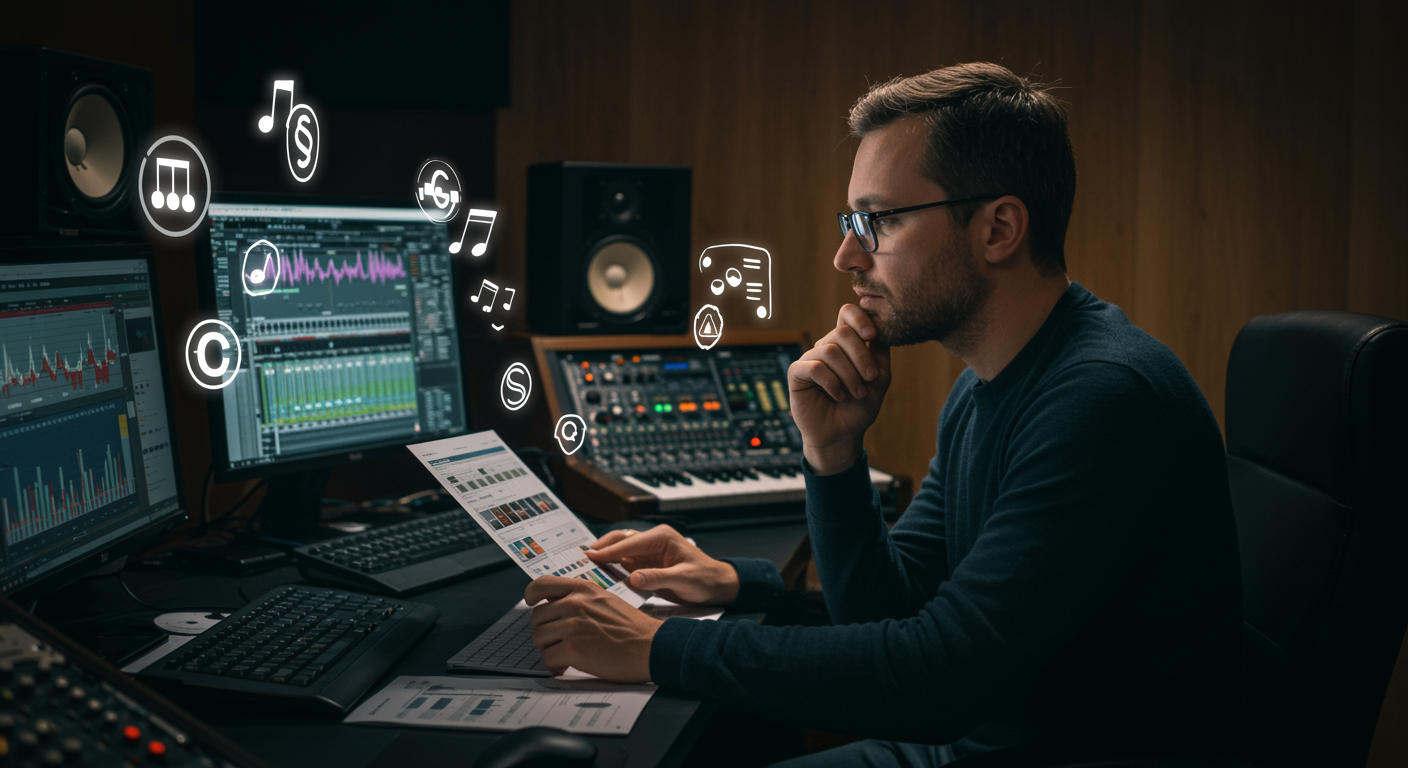
Music sample copyright laws are a critical aspect for producers, dictating the legal use of pre-existing audio recordings in new musical works. Producers must secure permissions from the original sound recording owner and the musical composition’s copyright holder to avoid infringement, as sampling without proper clearance can lead to significant legal and financial repercussions.
Defining a Music Sample and Its Legal Implications
A music sample refers to a portion of a sound recording incorporated into a new piece of music. This act, common across genres like hip-hop, electronic, and pop – to truly appreciate the depth of this art form, one might delve into the historical origins of hip hop samples – involves taking an excerpt—which can be a beat, melody, vocal snippet, or any recognizable sound—from an existing master recording and integrating it into a new composition. From a legal standpoint, the act of sampling immediately raises copyright concerns because it involves using intellectual property owned by others. Unlike merely being inspired by a song or recreating a melody by ear, direct sampling physically appropriates a part of an existing work. This appropriation means that producers engaging in sampling must navigate a complex web of permissions to ensure their new work is legally sound and free from potential infringement claims.
The core of the legal challenge lies in the dual nature of music copyright. Before diving deep into the legalities, it’s helpful for producers to understand what is a sample pack and how these resources are typically structured. When a producer samples a track, they are typically taking from two distinct copyrighted works simultaneously. The first is the actual sound recording itself, often referred to as the “master” recording, which protects the specific arrangement of sounds captured. The second is the underlying musical composition, which protects the melody, harmony, rhythm, and lyrics as written or conceived. Both of these copyrights are typically owned by different entities – record labels often own master recordings, while songwriters and music publishers own the publishing rights to the composition. Understanding this distinction is fundamental for any producer aiming to legally use music samples, as securing permission for one does not automatically grant permission for the other.
Producers must understand that the legal framework around music sample copyright laws is designed to protect the creators and owners of these intellectual properties. Unauthorized use is considered copyright infringement, regardless of the sample’s length or prominence within the new work. While debates about “de minimis” use—a legally undefined threshold below which a sample might be considered too insignificant to warrant permission—have occurred, court rulings have consistently favored the original rights holders, making it clear that even very short or heavily processed samples can still constitute infringement if recognizable. Therefore, a proactive approach to clearance is not just a best practice; it is a legal imperative for producers.
The Dual Copyrights in Music Samples
When a producer decides to sample an existing piece of music, they are not just dealing with one layer of copyright, but typically two distinct and separately owned rights. The first is the copyright in the **sound recording**, often referred to as the “master” recording. This right protects the specific captured performance and production of a musical work. It covers the actual audio waveform that is heard—the unique blend of instrumentation, vocals, and overall sound engineering. This copyright is typically owned by the record label that financed and distributed the recording, or sometimes by the performing artist if they self-recorded and retained these rights. To use any part of the master recording, a producer needs to obtain a **master use license** from the owner of this copyright.
The second crucial layer is the copyright in the **musical composition**. This right protects the underlying song itself: its melody, lyrics, harmonic structure, and rhythmic patterns as written by the songwriter(s). This is the intangible idea of the song, separate from any particular recording of it. For example, the song “Happy Birthday” has a musical composition copyright, regardless of who sings it or how it’s recorded. The musical composition copyright is typically owned by the songwriter(s) and administered by music publishers. To incorporate any part of the underlying musical work (even if re-recorded, which is called interpolation, but especially if directly sampled), a producer needs to obtain a **mechanical license** (if a new sound recording is made and distributed) and potentially a **synchronization license** if used in visual media. When sampling directly from a master recording, both the sound recording and the underlying composition are being utilized.
Understanding this distinction is paramount for producers. For instance, if a producer samples a drum break from a 1970s funk record, they need permission from the record label (for the master recording) and from the songwriter/publisher (for the underlying musical composition, even if it’s just a rhythm). Neglecting either of these permissions leaves the producer vulnerable to a copyright infringement lawsuit. The process of clearing a sample, therefore, involves identifying the owners of both these distinct copyrights and negotiating separate licenses with each. For producers actively working on their craft, learning sampling with FL Studio or other DAWs is a key skill. This dual requirement often makes sample clearance a complex and potentially costly endeavor, highlighting the importance of thorough due diligence and legal consultation for any producer wishing to legally incorporate samples into their work.
When Sample Clearance Becomes Necessary
A common misconception among music producers is the idea that if a sample is short enough, heavily modified, or used in a non-commercial context, it might fall under a “de minimis” exception or “fair use,” thereby negating the need for clearance. However, under U.S. copyright law, specifically concerning sound recordings, the concept of “de minimis” use for sampling is largely inapplicable. Influential court cases, most notably *Bridgeport Music, Inc. v. Dimension Films*, have established a strict “get a license or do not sample” rule for sound recordings. This means that if you sample *any* portion of a copyrighted sound recording, no matter how small or unrecognizable you believe it to be, you are technically infringing unless you have secured proper permissions. The court’s reasoning has been that even a brief sample involves copying the entire copyrighted work, albeit briefly, and therefore requires authorization.
While the “de minimis” argument for the underlying musical composition might still be theoretically possible in some jurisdictions, its practical application is fraught with peril. The standard here revolves around whether the sampled portion of the composition is “recognizable” and “substantial” enough to constitute copyright infringement. However, the subjective nature of “recognizability” means that relying on this defense is incredibly risky. Most copyright lawyers advise producers against making such subjective judgments themselves, as rights holders are often quick to pursue infringement claims, irrespective of the sample’s length or alteration.
Furthermore, the context of use, such as whether a track is for commercial release or an underground mixtape, does not automatically exempt producers from copyright obligations. While statutory damages might differ between commercial and non-commercial infringement, the act of infringement itself remains. Any public distribution of a work containing an uncleared sample carries legal risk. The only truly safe approach for a producer is to assume that any use of a copyrighted sample, regardless of length, modification, or distribution channel, requires explicit permission from all relevant rights holders. Proactive sample clearance is the only reliable way to ensure legal compliance and avoid future liabilities under music sample copyright laws.
Navigating the Sample Clearance Process
The sample clearance process is a critical, multi-step endeavor that every producer must undertake to legally use copyrighted material. The first and often most challenging step is identifying all relevant rights holders. As previously established, this usually involves two distinct parties: the owner of the sound recording (the “master” rights) and the owner of the underlying musical composition (the “publishing” rights). For the master recording, this is typically the record label that released the original track. For the composition, it involves the songwriter(s) and their associated music publisher(s). Resources like music databases (e.g., ASCAP, BMI, SESAC, or global equivalents) can help identify publishers and songwriters, while record label websites or databases can aid in finding master owners. Sometimes, reaching out to the original artist’s management or legal team can also lead to the correct contacts.
Once identified, the next step involves initiating contact and negotiation. This phase requires sending a formal request for permission to each rights holder. The request should include details about the new track, the specific sample being used (duration, exact location in the original, and how it’s integrated), and the intended usage (e.g., commercial release, album, single). Producers should be prepared to provide a copy of their new track for the rights holders to evaluate. Negotiations will then focus on the licensing terms, which typically involve an upfront flat fee, a royalty percentage for both the master recording and the publishing, or a combination of both. The upfront fee can range from hundreds to thousands of dollars, depending on the sample’s prominence, the original track’s popularity, and the negotiating power of the rights holder. Royalty splits, usually a percentage of the producer’s share, also vary widely.
It is crucial to understand that securing a master use license from the record label does not grant permission to use the underlying composition, and vice versa. Producers must obtain separate licenses from both entities. The terms of these licenses will outline the scope of use, territories, duration, and financial arrangements. All agreements should be documented in formal contracts, outlining the specific rights granted and the obligations of both parties. Due to the legal complexities and the potential financial implications, it is highly advisable for producers to engage an entertainment lawyer specializing in music law to assist with the negotiation and drafting of these license agreements. This legal expertise ensures that all necessary permissions are secured correctly and that the producer’s interests are protected under music sample copyright laws.
Risks and Consequences of Copyright Infringement
Failing to properly clear samples can expose music producers to severe legal and financial consequences, making a thorough understanding of music sample copyright laws paramount. The most immediate risk is a lawsuit for copyright infringement from the owners of the uncleared master recording and/or musical composition. These lawsuits can be incredibly costly, draining a producer’s resources, time, and creative energy. If found liable for infringement, a producer could face several types of damages. Actual damages cover the lost profits of the copyright holder and any profits made by the infringer attributable to the infringement. This means any revenue generated from the new track that uses the uncleared sample could be demanded by the original rights holder.
Perhaps more significantly, copyright law allows for **statutory damages**. If the copyright holder registered their work with the U.S. Copyright Office prior to the infringement, they can elect to receive statutory damages instead of actual damages. These can range from $750 to $30,000 per infringed work, and up to $150,000 per infringed work if the infringement is found to be willful. Considering that a single song can involve two separate copyrights (master and composition), and each might be infringed multiple times if distributed widely, the potential financial liability can quickly escalate into hundreds of thousands or even millions of dollars, enough to bankrupt independent producers and even established artists.
Beyond monetary damages, a court can issue an **injunction**, ordering the producer to cease all distribution and sale of the infringing work. This means the infringing track must be removed from all streaming platforms, digital stores, and physical media, effectively halting its commercial life and potentially damaging a producer’s career. Additionally, the producer may be required to pay the copyright holder’s legal fees and court costs. The damage extends beyond financial penalties; a producer’s reputation can be severely tarnished, making it harder to secure future collaborations, record deals, or distribution agreements. High-profile cases serve as stark reminders of these severe consequences, underscoring that compliance with music sample copyright laws is not optional but a fundamental aspect of professional music production.
Alternatives to Direct Music Sampling
Given the complexities and financial burdens associated with clearing music samples, many producers actively explore alternatives to direct sampling. One popular method is **interpolation**, also known as “replaying” or “re-recording.” This involves hiring musicians to re-play or re-sing a portion of an existing musical composition, rather than directly using a segment of the original sound recording. While this avoids the need for a master use license (since no part of the original recording is used), it absolutely still requires a mechanical license (and potentially a synchronization license if used in visual media) for the underlying musical composition. The producer must still obtain permission from the songwriter(s) and publisher(s), but typically avoids the often higher fees and complexities associated with master clearances. This strategy is frequently employed when the original recording’s cost or clearance difficulty is prohibitive.
Another viable alternative is to utilize **public domain** material. Works enter the public domain when their copyright term expires, or if they were never copyrighted in the first place (which is rare in modern music). Once a work is in the public domain, it can be freely used, sampled, or adapted by anyone without needing permission or paying royalties. This option requires meticulous research to confirm the public domain status of both the sound recording and the musical composition, as these copyrights can expire at different times. Older classical recordings or very early jazz/blues tracks are more likely to be in the public domain, offering a rich source for producers willing to do the research.
Producers can also turn to royalty-free sample packs and libraries. Numerous companies and individual creators offer sounds, loops, and one-shots that come with pre-cleared licenses, often allowing commercial use without further royalty payments, sometimes for a one-time purchase fee or subscription. These resources are specifically designed to circumvent copyright issues, providing producers with creative flexibility without the legal headaches. While the unique character of using a classic sample might be missed, the vast array of available royalty-free sounds allows for immense creativity. Finally, producing entirely **original compositions** or collaborating with other musicians to create unique sounds and recordings eliminates all sampling concerns, ensuring full ownership and creative control without navigating music sample copyright laws.
Best Practices for Producers Using Samples
For any music producer wishing to incorporate samples, adhering to a set of best practices is essential to navigate the complexities of music sample copyright laws and avoid potential legal pitfalls. Foremost among these is the principle of **proactive clearance**. Do not release, distribute, or even widely share a track containing a sample until all necessary permissions have been secured from both the sound recording and musical composition rights holders. Attempting to clear samples after a track has gained traction can significantly increase costs, complicate negotiations, and put the producer in a vulnerable legal position. Planning for clearance early in the production process allows for adjustments if a sample proves impossible or too expensive to license.
Secondly, **maintain meticulous records**. For every sample identified and used, producers should keep detailed documentation of the original track, the specific portion sampled, all attempts to contact rights holders, and every communication and agreement made. This includes copies of licenses, payment receipts, and any correspondence related to the negotiation. Such records are invaluable if a dispute arises, providing clear evidence of due diligence and legitimate use. In the absence of formal agreements, clear evidence of communication attempts can also demonstrate good faith, though it does not negate the need for a license.
Thirdly, **budget for clearance costs**. Producers should understand that sample clearance is an inherent production expense, potentially involving upfront fees and ongoing royalty payments. Factoring these costs into project budgets from the outset prevents financial shocks and ensures that necessary funds are available. Engaging an **entertainment lawyer specializing in music law** is not merely a recommendation but often a necessity. Legal counsel can guide producers through identifying rights holders, negotiating fair license terms, and drafting legally sound agreements. Their expertise can save producers significant time, money, and stress in the long run, ensuring compliance and protection.
Finally, producers should foster a mindset of **continuous education** regarding copyright law. The landscape of intellectual property rights, particularly in the digital age, can evolve. Staying informed about new rulings, industry standards, and changes in legislation is crucial. Moreover, exploring alternatives to direct sampling, such as utilizing royalty-free libraries, creating original sounds, or employing interpolation techniques, can significantly reduce legal risks while still fostering creativity. By adopting these best practices, producers can minimize their exposure to copyright infringement claims and confidently create music within the boundaries of music sample copyright laws.