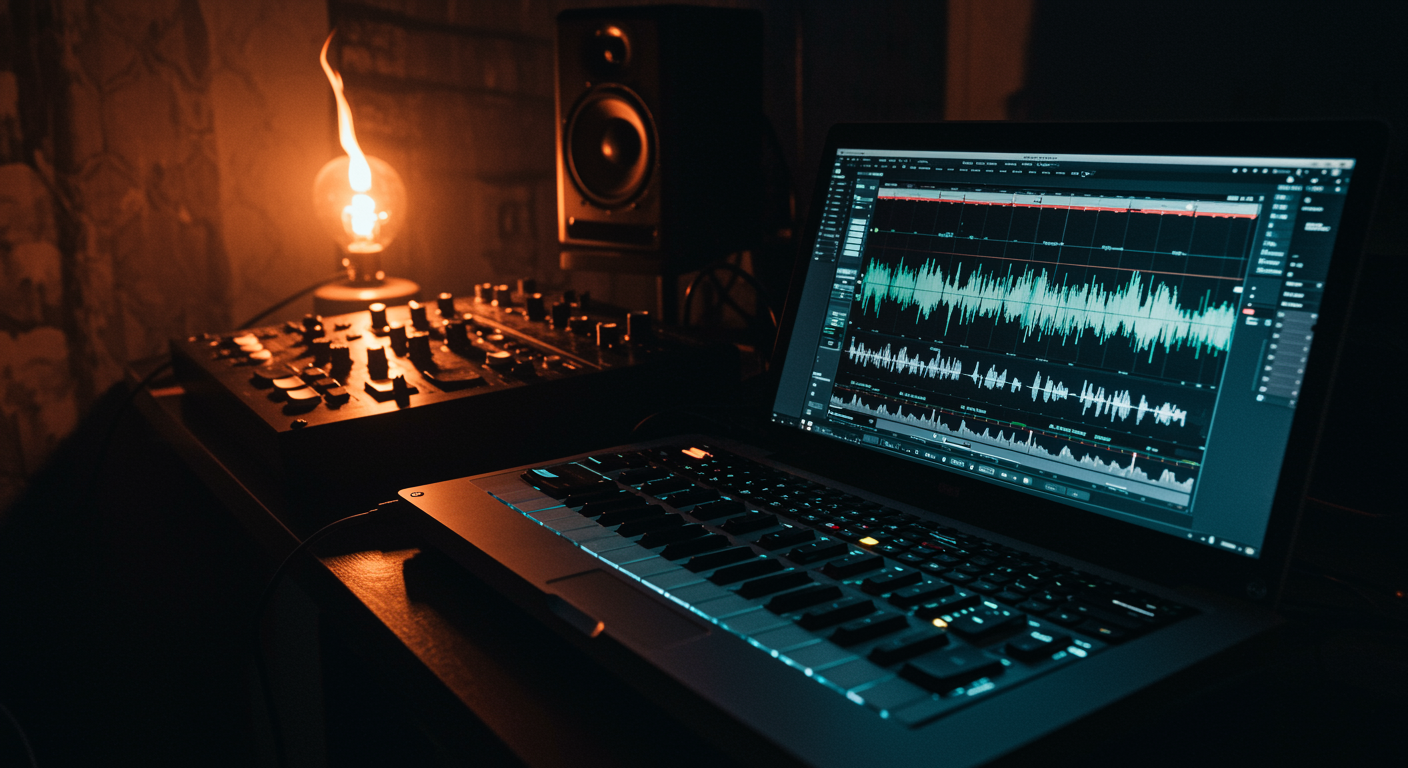
Deconstructing found sounds into musical samples involves capturing everyday, non-musical audio—like city ambiences, mechanical noises, or natural elements—and then manipulating these recordings through various digital audio workstation (DAW) techniques to extract, process, and transform them into unique percussive elements, atmospheric textures, melodic fragments, or rhythmic loops for musical compositions.
The Essence of Found Sound Sampling
Found sound sampling is a creative discipline that elevates mundane audio into potent musical components. It centers on the philosophy that every sound in our environment holds inherent musical potential, whether it’s the rhythmic clatter of a train, the resonant hum of a refrigerator, or the intricate textures of footsteps on different surfaces. The process of deconstruction begins not just with recording but with an active, analytical listening ear, discerning pitch, rhythm, timbre, and transient qualities within noises typically disregarded. This initial perceptive phase is crucial for identifying sonic elements that can be isolated, looped, or reshaped, forming the fundamental building blocks of novel musical textures and patterns.
Unlike traditional synthesis or acoustic instrument recording, found sound sampling introduces an element of unpredictability and organic authenticity. These sounds carry a unique “real-world” character that can be challenging to replicate synthetically, offering a rich palette for sound designers and musicians aiming to infuse their work with distinctive sonic signatures. The act of deconstructing found sounds encourages a deeper engagement with the sonic world, transforming the act of listening into a source of endless inspiration. It challenges conventional notions of what constitutes a musical instrument, opening doors to experimental compositions and pushing the boundaries of genre.
Capturing Your Sonic Environment
Effective deconstruction of found sounds begins with meticulous recording. The quality of your raw audio significantly impacts the flexibility and potential of your samples. While professional field recorders offer superior fidelity, even a smartphone can capture usable material if environmental factors are managed. Key considerations include minimizing unwanted background noise, understanding microphone placement relative to the sound source, and varying recording distances to capture different sonic perspectives. Experimentation is vital; record sounds from multiple angles, at different intensities, and within various acoustic spaces to build a diverse library of source material. For more in-depth guidance on capturing unique sounds, explore dedicated field recording techniques.
For more specific musical applications, consider the inherent characteristics of the sound you’re recording. Is it a transient impact that could become a snare drum? Is it a sustained hum suitable for a pad? Or a rhythmic sequence that could form a percussive loop? Documenting the context and intent behind each recording with clear metadata is invaluable for future organization and retrieval. Focusing on recording clean, isolated sounds where possible will provide the most malleable assets for post-processing. However, embracing environmental “bleed” can also yield unique, atmospheric textures that contribute to the organic feel of a track, demonstrating the expansive nature of deconstructing found sounds musical samples.
Essential Tools for Processing Found Sounds
Once captured, found sounds undergo a transformative journey within a digital audio workstation (DAW) using a suite of processing tools. Equalization (EQ) is fundamental, allowing precise shaping of the frequency spectrum to remove unwanted noise, emphasize specific sonic characteristics, or carve out space in a mix. Compression and expansion are crucial for controlling dynamics, taming harsh transients, or bringing out subtle details, making the sample sit better within a musical context. Gates can silence quiet sections, effectively isolating desired sounds from background hums or room tone.
Beyond these foundational tools, a world of creative effects awaits. Reverb and delay can place sounds in vast spaces or create complex rhythmic echoes. Granular synthesis found sounds is particularly powerful for deconstructing found sounds, chopping audio into tiny “grains” that can be stretched, pitched, and layered into evolving textures or shimmering pads. Pitch shifting and time stretching can transform a short percussive hit into a bassline or stretch a fleeting ambient noise into an expansive drone. Modulators like filters, phasers, and flangers, when applied creatively, can imbue static samples with movement, depth, and an otherworldly quality, essential for elevating raw recordings into sophisticated musical components.
Transformative Techniques for Musical Integration
Integrating deconstructed found sounds into a musical piece requires more than just dropping them onto a timeline; it demands a nuanced approach to context and composition. One powerful technique is to use found sounds as subtle layers beneath traditional instruments, adding organic texture and depth without overwhelming the main elements. A metallic clang, for instance, can reinforce a snare hit, while filtered street noise can provide an underlying atmosphere to a synth pad. Rhythmically, found sounds can form the core of a beat, substituting conventional drums with unconventional percussive elements like clicks, thuds, or scrapes, creating a unique sonic groove.
Melodically, short, pitched samples extracted from found sounds can be mapped across a keyboard or sampler, allowing them to be played as instruments. Discover practical steps for transforming everyday noises into melodic samples to unlock unique timbres. Experimenting with extreme processing such such as heavy distortion, bit-crushing, or reverse effects can further abstract the origin of the sound, making it unrecognizable yet musically compelling. The goal is not just to use the sound but to integrate it so seamlessly that it enhances the composition, pushing creative boundaries and offering listeners a fresh and engaging auditory experience by fully deconstructing found sounds musical samples.
Creative Applications and Inspiring Examples
The application of deconstructed found sounds spans across numerous musical genres and artistic forms, demonstrating its versatility. In electronic music, producers frequently employ environmental recordings for percussive elements, textural backdrops, or unique glitch effects. Artists like Amon Tobin are renowned for crafting entire albums from meticulously recorded and processed everyday sounds, transforming household objects and industrial noises into complex, cinematic soundscapes. Experimental and avant-garde composers often utilize found sounds as primary compositional material, exploring their intrinsic musicality and challenging traditional harmonic structures.
Beyond music, the techniques of deconstructing found sounds are vital in film scoring and video game audio design, where they add unparalleled realism and atmospheric depth. Consider integrating foley sound effects for truly immersive experiences. The sound of a creaking door or a distant siren, when artfully manipulated, can evoke specific emotions or enhance narrative tension more effectively than conventional sound effects. Even in pop and rock productions, subtle found sound elements can add an organic edge or signature character to a track. The key is to approach each found sound as a unique sonic artifact, ripe for exploration and transformation, allowing its inherent qualities to inspire new musical directions and emotional resonances.