Advanced drum break chopping in hip hop involves sophisticated techniques beyond simple slicing, focusing on creative re-sequencing, micro-editing, and dynamic processing to transform sampled percussive loops into unique rhythmic foundations, often utilizing specialized hardware or software samplers and meticulous sound design.
The Foundational Art of Drum Break Chopping in Hip Hop
Drum break chopping stands as a cornerstone technique in hip hop production, transforming pre-recorded rhythmic phrases into entirely new patterns and textures. This art form began with early pioneers like DJ Kool Herc isolating the percussive “breaks” of funk and soul records, creating extended dance sections. To truly appreciate this evolution, exploring the historical origins of classic hip hop samples can provide invaluable insight. As technology evolved, producers moved from turntables to samplers, allowing for individual hits and fragments of these breaks to be extracted, manipulated, and re-arranged. This process isn’t merely about cutting; it’s about deconstruction and reconstruction, imparting a distinctive human feel and groove that often defines the genre’s character. Modern hip hop still heavily relies on this technique, pushing its boundaries with increasingly intricate and creative approaches.
Advanced Slicing and Micro-Editing Techniques
Moving beyond basic transient detection, advanced slicing delves into micro-editing, where individual drum hits are precisely sculpted. This involves identifying subtle nuances within a sample, such as the initial attack of a kick drum or the decay of a snare, and separating them for individual control. Techniques like “grid-less” chopping, where slices are made purely by ear and feel rather than strict quantization, allow for a more organic, humanized groove. Producers often zoom in to the waveform level to isolate ghost notes, cymbal chokes, or even the bleed from other instruments, treating these tiny fragments as distinct rhythmic elements. This granular control facilitates complex re-sequencing, enabling the creation of intricate fills, dynamic build-ups, and unique rhythmic syncopations that would be impossible with whole loops.
Creative Re-Sequencing and Layering Strategies
Once a drum break is meticulously chopped, the true artistry of re-sequencing begins. This is where individual slices are rearranged to form entirely new patterns, deviating significantly from the original loop. Advanced producers often create multiple variations of a single break, experimenting with different start points, velocities, and rhythmic displacements. Layering plays a crucial role, allowing elements from different breaks or one-shots to be combined for a richer, more complex sound. Utilizing advanced drum resampling techniques can further enhance these layered sounds, transforming them into entirely new sonic textures. For instance, a snappy snare from one break might be layered with the body of a kick from another, or a hi-hat pattern could be supplemented with individual shaker or cymbal samples to add texture and depth. This strategic layering contributes to a fuller sound and helps to carve out a unique sonic identity for the drum track within a hip hop beat.
Dynamic Processing and Effects Application
The sound of chopped drum breaks can be dramatically enhanced through dynamic processing and creative effects. Beyond standard EQ and compression, advanced workflows incorporate techniques like parallel compression to add punch without sacrificing dynamic range, or multi-band compression to tame specific frequencies of a drum element. Saturation and distortion are often applied to add warmth, grit, and character, reminiscent of classic analog gear. Time-based effects such as short reverbs and delays can be used subtly to create a sense of space or more aggressively for rhythmic interest. Envelope shaping, through dedicated plugins or a sampler’s ADSR controls, allows for precise control over the attack, decay, sustain, and release of each individual slice, enabling producers to sculpt the transient response and overall punch of their drums. Creative use of filters, phasers, and flangers can also introduce movement and texture, transforming static samples into evolving rhythmic elements.
Essential Tools and Workflow Optimization
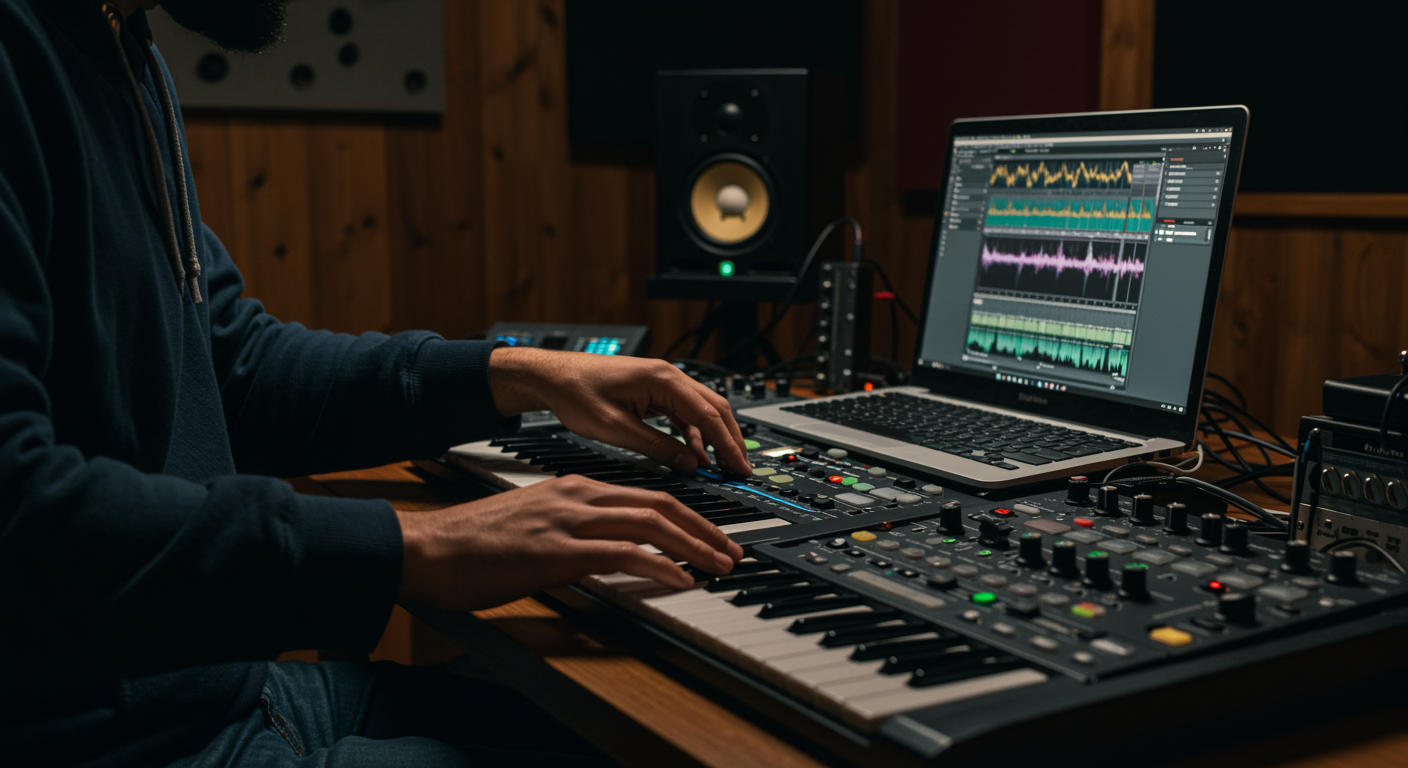
The choice of tools significantly impacts an advanced drum break chopping workflow. Hardware samplers like the Akai MPC series or Native Instruments Maschine offer a tactile, hands-on experience that many producers prefer for its immediacy and performance capabilities. Software alternatives within DAWs suchas Ableton Live’s Drum Rack or Simpler, Logic Pro’s Quick Sampler, or FL Studio’s Slicer provide robust environments for intricate editing. Key workflow optimizations include establishing a consistent sample library organization system, utilizing project templates with pre-configured effects chains, and mastering keyboard shortcuts for rapid editing. Experimenting with different chopping algorithms (e.g., transient vs. fixed grid) and understanding the nuances of a sampler’s internal routing are also critical. Furthermore, producers often develop a personalized “kit” of go-to sounds and processing chains, allowing them to quickly audition and apply their signature sound to new breaks.
Integrating Chopped Drums into Full Productions
Successfully integrating advanced chopped drum breaks into a full hip hop production requires careful attention to the overall mix and arrangement. The unique groove of the chopped break should complement, rather than clash with, other elements like basslines, melodies, and vocals. This often involves side-chain compression, where the kick drum, for instance, subtly ducks the bassline to create rhythmic pumping and enhance clarity. Careful EQing ensures that each drum element occupies its own frequency space, preventing muddiness. For those looking to refine their sound, exploring essential drum mixing techniques is highly recommended. Automation of volume, panning, and effects parameters can add dynamic interest and guide the listener’s ear throughout the track. The goal is to make the intricately chopped drums feel cohesive and organic within the larger musical context, providing a solid, yet creatively distinct, rhythmic backbone that drives the entire production.