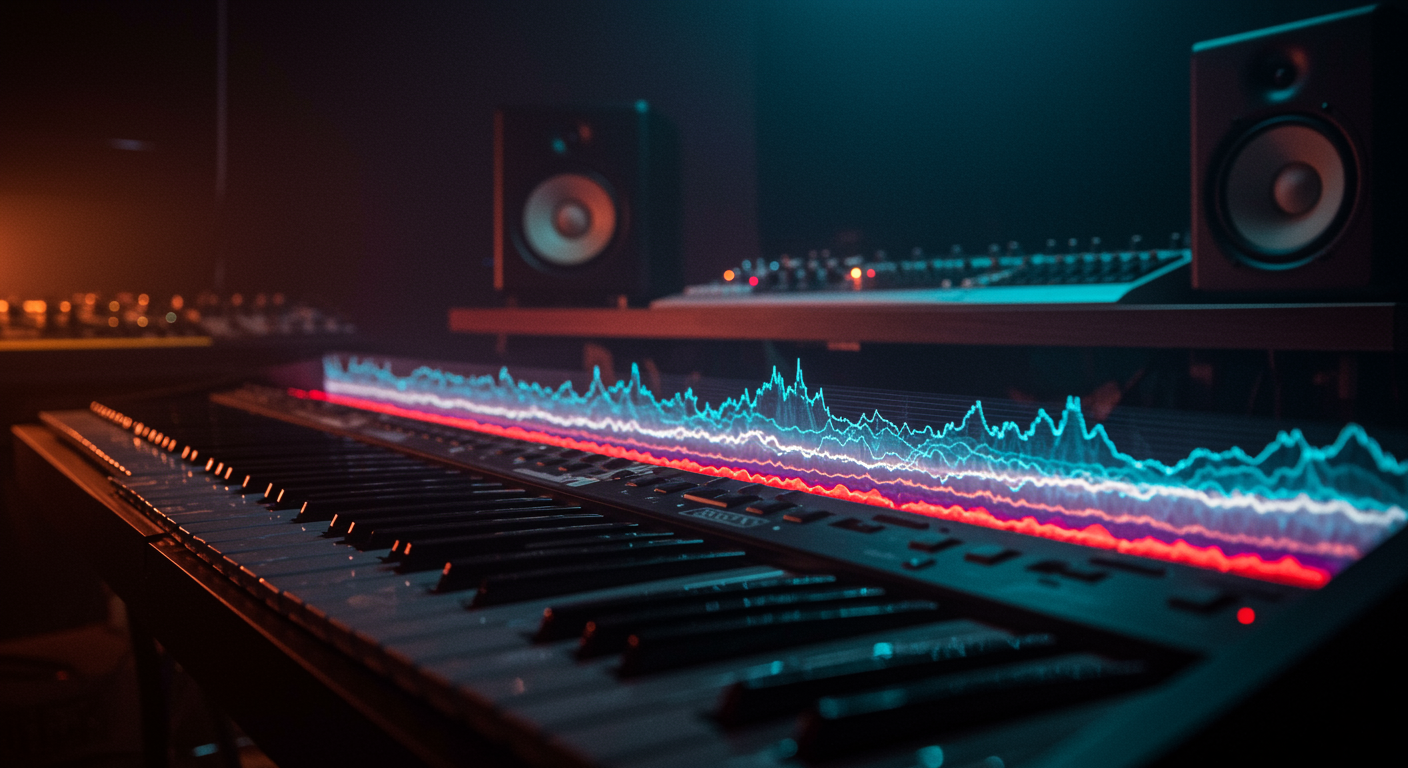
Advanced drum resampling techniques are a powerful suite of methods designed to transform conventional drum sounds into utterly unique percussive elements, injecting individuality and complex textures into musical compositions beyond standard sample manipulation. Producers often start by exploring new sources of free drum samples to truly break free from typical drum libraries and crafting signature beats that stand out in any genre.
Foundational Concepts in Drum Resampling
At its core, resampling involves recording the output of a processed audio signal back into your digital audio workstation (DAW) and then treating that newly recorded audio as a fresh source for further manipulation. For drums, this means taking an initial kick, snare, or an entire drum loop, applying effects like compression, distortion, filtering, or reverb, and then bouncing or recording the result. The ‘advanced’ aspect emerges when this new, processed sound becomes the starting point for another round of extreme processing, rather than merely being a final rendered track. This iterative approach allows for the accumulation of subtle and dramatic sonic characteristics, building layers of complexity that would be difficult to achieve in a single processing chain. It’s about developing a sound through generations of sonic evolution, where each stage contributes to a unique character, moving far beyond simple EQ or compression.
Transformative Pitch and Time Manipulation
Beyond rudimentary pitch shifting or time stretching, advanced techniques leverage these tools to fundamentally reshape drum sounds into entirely new entities. Extreme pitching, for instance, can turn a sharp hi-hat into a metallic clang, or a kick drum into a resonant, almost melodic sub-bass element. Applying complex algorithms for time stretching, such as granular or texture modes found in many DAWs and plugins, can disintegrate a drum hit into a swirling pad-like texture or stretch a single snare hit into a buzzing, rhythmic drone. Resampling these highly stretched or pitched artifacts opens doors to creating percussive textures that carry melodic or atmospheric weight. The key is to treat pitch and time not merely as corrective tools, but as generative ones, allowing the algorithms to introduce unexpected sonic nuances that become the backbone of a unique beat.
Granular Synthesis for Percussive Elements
Granular synthesis offers a profound method for deconstructing and reconstructing drum sounds, making it a cornerstone of advanced drum resampling techniques. By breaking down a drum hit or a short loop into thousands of tiny ‘grains’ of sound, and then manipulating parameters like grain size, density, playback speed, and position, producers can create ethereal, metallic, or wildly experimental percussive textures. A sharp snare crack can be transformed into a shimmering, evolving wash of sound, or a kick drum can become a dense, rumbling impact with complex internal movement. Resampling the output of a granular synthesizer allows for further processing of these often amorphous sounds, enabling you to layer them, filter them heavily, or even apply transient shapers to bring back a sense of attack and rhythm to what started as a scattered sound cloud, effectively forging entirely new percussive elements.
Creative Reversal and Melodic Resampling
Reversing drum hits or segments of drum loops offers a classic yet powerful resampling technique for building tension, creating impactful accents, or imbuing sounds with an otherworldly quality. When combined with further processing and resampling, a reversed cymbal can morph into an evolving riser, or a reversed snare can become a unique rhythmic anchor when blended with its forward counterpart. Melodic resampling takes percussive elements into harmonic territory. This involves pitching individual drum hits, particularly kicks, snares, or open hats, to specific musical notes. By doing this iteratively, you can construct basslines, arpeggios, or harmonic pads directly from drum sounds. Resampling these melodically tuned drums allows for further harmonic and timbral shaping, blending them seamlessly into the musical context while retaining their percussive edge, offering a novel approach to composition and sound design.
Sculpting Unique Textures with Convolution and Delays
Beyond traditional reverb and delay applications, these effects can be utilized as transformative sound design tools in advanced drum resampling. Convolution reverb, in particular, allows for the imposition of virtually any sound’s acoustic properties onto a drum. By loading unconventional impulse responses—such as field recordings of strange environments, abstract metallic resonances, or even other highly processed drum hits—onto your drums, you can imprint unique, intricate textures. Resampling the output captures this merged sonic identity. Similarly, using delay effect plugins with extreme feedback settings, very short times, or modulated parameters can generate intricate rhythmic patterns, metallic flanging, or chaotic evolving textures that are ripe for resampling. The key is to push these effects past their conventional uses, letting them generate new sonic material rather than simply adding ambience, creating a fertile ground for unique percussive elements.
Layering and Processing Resampled Loops
Building complex and unique beats often involves an iterative layering process with resampled sounds. Start with a simple drum loop, apply a series of effects, and resample it. Then, take that resampled loop, apply *different* effects or even more extreme versions of the previous ones, and resample again. This process can be repeated multiple times, with each iteration adding new sonic artifacts and depth. The real power comes from layering these distinct generations of resampled loops together. You might combine an original clean loop with a heavily distorted, time-stretched resampled version, and then a granularly processed iteration. Furthermore, treating these layered elements as a single unit for further processing—such as multi-band saturation or dynamic EQ—can glue them together into a cohesive, powerhouse beat. This multi-generational layering technique is fundamental for creating truly unique beats that possess profound sonic depth and complexity.
Advanced Filtering and Transient Shaping
After multiple rounds of resampling and processing, drum sounds can often become overly dense, muddy, or lose their initial punch. Advanced filtering and transient shaping techniques become crucial tools for refinement and further creative manipulation. Beyond standard low-pass or high-pass filters, consider using formant filters to add vocalic qualities, comb filters for metallic resonances, or highly resonant band-pass filters to isolate specific frequency pockets. Modulating these filters can introduce dynamic movement and texture to otherwise static resampled sounds. Transient shapers, when applied strategically, can revive the attack of an overly sustained resampled sound, extend the decay of a short percussive element, or even create entirely new transients from sustained sonic material. These tools allow for precise sculpting of the sonic envelope, ensuring that even the most heavily processed drums retain their percussive impact and rhythmic clarity within a unique sonic landscape.
Integrating External Gear and Creative FX Chains
Expanding the resampling toolkit beyond the digital realm can unlock truly distinctive sonic possibilities. Integrating external hardware samplers, analog synthesizers, vintage tape machines, or guitar pedals into the workflow offers unique characteristics difficult to replicate purely in-the-box. Sending a digital drum hit or loop through an analog compressor, a unique distortion pedal, or even a spring reverb unit, then recording the analog output back into the DAW for further digital processing, adds warmth, grit, and unpredictable artifacts. These external textures become part of the drum’s sonic DNA. Similarly, crafting intricate, multi-effect software chains—combining spectral shapers, multi-band exciters, complex delays, and bespoke reverbs—and then resampling the output of the entire chain allows for the creation of intensely textured and evolving percussive soundscapes. Mastering VST distortion plugins can significantly contribute to these unique textures. The interplay between digital and analog processing, coupled with iterative resampling, forms the bedrock of highly individualized sound design.
Workflow Strategies for Sonic Innovation
Embracing advanced drum resampling techniques requires a workflow that prioritizes experimentation, iteration, and organized creativity. It’s crucial to approach each sound with a beginner’s mind, allowing for serendipitous discoveries rather than strictly adhering to preconceived notions. Developing a systematic approach to saving and organizing your resampled sounds is vital; creating custom libraries of unique kicks, snares, and percussive textures ensures that your sonic palette continually expands. Don’t be afraid to push effects to their extremes, record the results, and then pull back or reshape in subsequent resampling stages. Regularly stepping away from a sound and returning with fresh ears can reveal new possibilities. Ultimately, sonic innovation through advanced drum resampling is about cultivating a mindset of relentless curiosity and a willingness to break traditional sound design rules, transforming everyday drum hits into the unique rhythmic backbone of your musical vision.