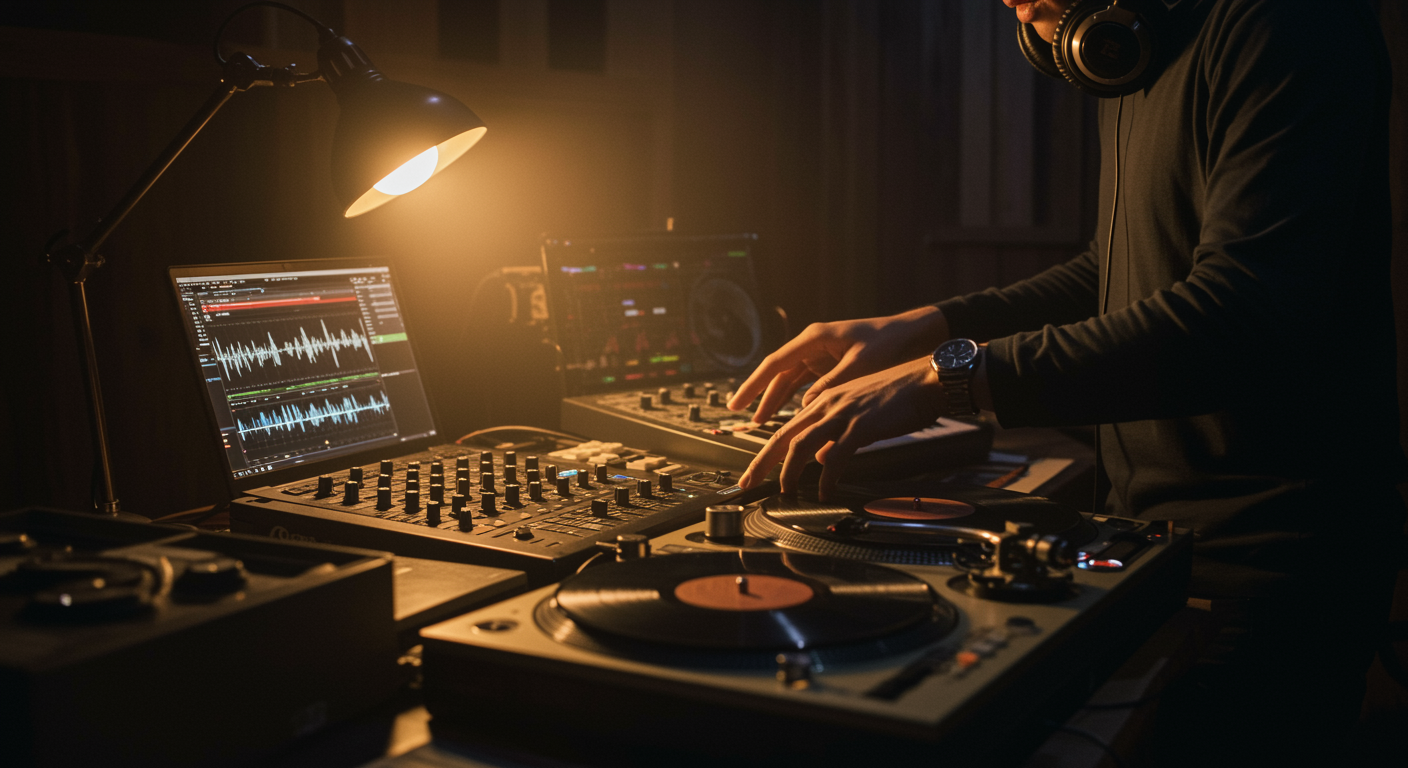
Modern hip hop sampling techniques have evolved significantly beyond the Golden Age, moving from simple loop-based methods to sophisticated digital manipulation, intricate sound design, and the integration of original compositions alongside traditional record digging, driven by continuous technological advancements and complex legal frameworks.
The Genesis of Hip Hop Sampling
The earliest days of hip hop sampling were defined by a revolutionary simplicity, centered on the physical manipulation of vinyl records. DJs like Grandmaster Flash and Kool Herc pioneered the art of isolating and extending percussive breaks from existing funk and soul records, creating the rhythmic backbone for MCs. This foundational era, often dubbed the Golden Age, saw the rise of iconic hardware like the E-mu SP-1200 and Akai MPC series, which allowed producers to chop short snippets of audio from records, sequence them, and create entirely new grooves. For a deeper dive into the genre’s roots, exploring the historical origins of classic hip hop samples provides valuable context. These early sampling techniques were often characterized by raw, gritty textures and direct sonic references to their source material, laying the groundwork for the genre’s distinct sound and creative philosophy.
Producers such as DJ Premier, Pete Rock, and RZA became masters of this craft, digging through crates of obscure records to find unique sounds and breaks. Their techniques involved meticulous listening, skillful chopping, and a deep understanding of rhythm and groove. The limitations of early samplers, in terms of memory and polyphony, often spurred immense creativity, forcing producers to be resourceful and innovative with their chosen sounds. This period established sampling as a cornerstone of hip hop production, transforming existing music into new artistic expressions and fostering a culture of sonic discovery and reinterpretation that continues to influence modern approaches.
Technological Shifts and Digital Transformation
The turn of the millennium ushered in a new era for sampling, marked by the proliferation of digital audio workstations (DAWs) and powerful software samplers. This technological evolution fundamentally altered the evolution of hip hop sampling techniques modern producers employ. No longer solely reliant on hardware with limited memory, creators gained access to virtually limitless storage, intricate waveform editing capabilities, and a vast array of digital effects. Software like Ableton Live, Logic Pro, and FL Studio became instrumental, allowing for precise, non-destructive editing and manipulation of samples in ways previously unimaginable.
Digital tools introduced unparalleled flexibility, enabling producers to fine-tune pitch, and utilize advanced sample stretching techniques to manipulate entire loops without altering pitch, and intricately layer multiple samples with ease. This shift democratized access to sophisticated sampling, moving it beyond specialized hardware and into the hands of a broader range of artists. The ability to visualize audio waveforms and apply complex algorithms transformed samples from static recordings into malleable sonic elements. Consequently, the sonic landscape of hip hop expanded dramatically, embracing cleaner, more complex, and often more polished productions while retaining the genre’s core ethos of creative sound repurposing.
Advanced Sample Deconstruction and Reconstruction
Modern sampling techniques have moved far beyond simple looping, embracing complex processes of deconstruction and reconstruction to forge entirely new sonic identities. Producers now frequently employ granular synthesis music samples, where a sound is broken down into tiny “grains” that can be individually manipulated, creating ambient textures, sweeping soundscapes, or rhythmic pulses unrecognizable from their original source. Extreme time-stretching and pitch-shifting, often using algorithms that maintain sound quality, allow for samples to be slowed down to glacial speeds or sped up drastically, revealing hidden harmonics and timbres that drastically alter perception.
This sophisticated approach to sample manipulation involves treating source material not as an end product, but as raw clay for sculpting. Filtering, resonant sweeping, modulation, and intricate effects chains are applied to transform familiar sounds into unique sonic building blocks. A short vocal phrase might become a ghostly pad, a drum hit could morph into a melodic element, or a musical passage might be completely re-contextualized by isolating specific frequencies and adding new rhythms. This deep engagement with the sonic fabric pushes the boundaries of what a “sample” can be, driving the evolution of hip hop sampling techniques modern producers utilize to craft truly original sounds within a rich tradition.
Navigating the Modern Legal Framework
The increasing scrutiny and enforcement of music sample copyright laws have profoundly shaped the evolution of hip hop sampling techniques modern producers employ. As the industry matured and commercial success grew, sample clearance became a complex and often expensive endeavor, particularly for major releases. This legal landscape has forced artists and producers to innovate, seeking alternative methods to capture the spirit of sampling without direct infringement. The direct lifting of recognizable loops, once a common practice, is now fraught with legal and financial risks, especially for commercially viable tracks.
One significant response has been the rise of interpolation, where a musical phrase or melody from an existing song is re-recorded by new musicians rather than directly sampled. This allows producers to evoke a familiar vibe while creating original, legally clear material. Another popular method involves creating “original samples”—unique sounds, melodies, or drum breaks composed from scratch, designed to sound like they could have been pulled from a vintage record. Furthermore, the proliferation of royalty-free sample packs and subscription services offers producers vast libraries of pre-cleared sounds, providing legal avenues for creative expression. This adaptation to copyright challenges has spurred a more sophisticated and often more original approach to sound sourcing and composition within hip hop production.
Hybrid Production and Original Sound Sourcing
The modern era of hip hop production is increasingly defined by a hybrid approach, where traditional sampling coexists with and is often blended with extensive original sound design and composition. This represents a significant aspect of the evolution of hip hop sampling techniques modern artists are mastering. Rather than solely relying on existing recordings, producers frequently synthesize their own sounds, record live instruments, capture foley and field recordings, and process them to achieve the distinctive textures often associated with samples. This allows for greater creative control and sidesteps many of the legal hurdles of direct sampling.
A producer might begin with a classic sample chop but then layer it with custom-designed synth basslines, drums processed through unique effects chains, or atmospheric elements created from environmental recordings. The goal is often to create a sonic identity that feels both familiar and entirely new, blurring the lines between what is sampled and what is originally produced. This approach is not merely about avoiding copyright; it’s about expanding the sonic palette and pushing the boundaries of what hip hop can sound like. It reflects a deeper engagement with sound as a raw material, whether it originates from a vinyl record, a synthesizer, or a microphone capturing the ambient world.
Algorithmic and AI-Driven Sampling Horizons
Looking to the future, the evolution of hip hop sampling techniques modern producers will adopt is poised for a significant transformation with the emergence of artificial intelligence and algorithmic tools. AI-powered platforms are beginning to offer capabilities that could revolutionize how samples are discovered, processed, and even generated. These tools can analyze vast databases of music to identify patterns, suggest complementary sounds, or even generate entirely new melodic phrases and drum beats that mimic specific styles or genres. This promises to accelerate the creative process, opening up new avenues for sonic exploration.
AI can assist in intelligent sample categorization, automatically tagging sounds by mood, key, tempo, and genre, making the “crate digging” process vastly more efficient in the digital realm. Advanced algorithms can also manipulate audio in unprecedented ways, generating variations of a sample, creating seamless loops from imperfect sources, or even synthesizing sounds that have the characteristics of sampled audio without directly using copyrighted material. While still in its nascent stages, the integration of AI into sampling workflows suggests a future where human creativity is augmented by powerful computational tools, pushing the boundaries of what is possible in sound design and production, raising new questions about authorship and the very definition of a “sample.”