
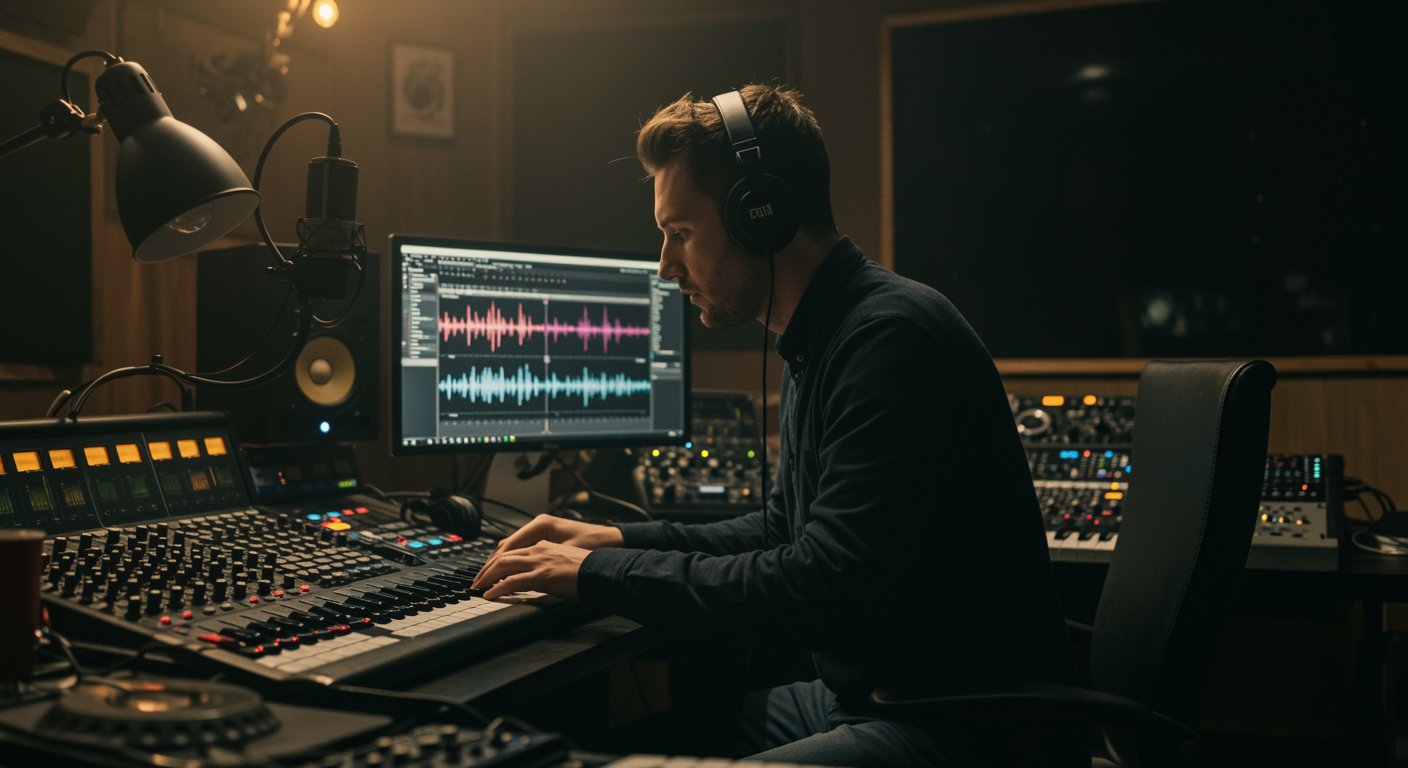
Integrating Foley sound effects into music production involves layering realistic, often subtle, everyday sounds—like footsteps, rustling clothes, or objects clinking—into a musical composition to enhance its texture, emotional depth, rhythmic complexity, and overall sonic narrative, moving beyond traditional instrumentation to create a more immersive and unique listening experience that resonates deeply with listeners.
The Distinctive Role of Foley in Music Production
Foley, traditionally a post-production technique in film to recreate everyday sounds in sync with picture, takes on a transformative role within music production. Unlike pre-recorded sound effects or samples, which are often used as static elements, Foley in music is about crafting organic, dynamic textures that complement or even drive the rhythmic and emotional core of a track. This integration moves beyond simply adding a sound; it’s about weaving a sonic tapestry where the mundane becomes musical. Producers leverage Foley to inject a sense of realism, provide atmospheric depth, or introduce unique percussive elements that can’t be achieved with conventional instruments.
The beauty of Foley in a musical context lies in its ability to humanize a track, making it feel more grounded and relatable. A subtle rustle of leaves, the distant clang of metal, or the splash of water can evoke specific environments or emotional states, painting vivid sonic pictures in the listener’s mind. When expertly applied, Foley doesn’t just sit on top of the music; it becomes an intrinsic part of its fabric, enhancing grooves, adding a unique character to melodies, and creating an overall sound that is rich, layered, and deeply immersive. This creative technique allows for boundless experimentation, pushing the boundaries of what constitutes musical instrumentation.
Innovative Methods for Seamless Foley Integration
Producers employ a variety of creative techniques to seamlessly integrate Foley sound effects into their music. One common approach is textural layering, where subtle ambient sounds, such as rain hitting a window or the hum of electricity, are placed beneath melodic pads or drones to create a rich, enveloping soundscape. This adds depth and character without distracting from the main musical elements. For a deeper dive into creating such textures, consider exploring how to make ambient pads from field recordings. For rhythmic enhancement, Foley sounds can be meticulously timed to complement or replace traditional percussion. A ticking clock can provide a subtle groove, footsteps can define a walking tempo, or the sound of keys jangling can add a unique shaker-like quality, injecting an organic feel into electronic beats. Learn how to craft unique rhythms using percussion loops from everyday objects.
Beyond texture and rhythm, Foley plays a crucial role in building narrative and emotional resonance. The sound of a distant siren can introduce an urban tension, a creaking door can hint at mystery, or gentle waves can evoke tranquility, guiding the listener through a sonic story. Furthermore, Foley can be heavily processed and transformed into abstract sound design elements. By pitch-shifting, stretching, reversing, or applying extreme effects to everyday sounds, producers can sculpt entirely new sonic textures that serve as unique synth patches, basslines, or atmospheric effects, blending the acoustic world with synthetic soundscapes in innovative ways. This approach broadens the palette available to music creators across genres, from cinematic scores and ambient electronica to hip-hop and experimental pop.
Sourcing and Recording Authentic Foley Effects
Acquiring high-quality Foley sound effects is a critical step in their successful integration into music production. Producers often choose between recording their own or utilizing commercial sound libraries. DIY recording offers unparalleled authenticity and creative control. Basic equipment, such as a portable field recorder or a quality condenser microphone connected to an audio interface, can yield excellent results. To capture the desired character and expand your sonic palette, mastering field recording techniques is crucial. When recording, attention to detail is paramount: isolating the sound source, minimizing background noise, and experimenting with microphone placement can capture the desired character of the sound. Recording in various environments also provides a diverse palette, whether it’s the specific acoustics of a wooden floor for footsteps or the quiet rustle of fabric in a controlled space.
Alternatively, numerous dedicated Foley libraries and sound effects packs are available, offering a vast array of pre-recorded sounds, often organized by category or theme. While convenient, selecting from these requires careful consideration to ensure the sounds fit the specific aesthetic and quality demands of the track. When using commercial libraries, producers should prioritize sounds that are clean, well-recorded, and offer a degree of flexibility for processing. Combining self-recorded unique sounds with curated library elements often provides the most comprehensive and distinctive sound design possibilities, ensuring both originality and a wide range of sonic textures for integration.
Processing and Mixing Foley for Musical Cohesion
Once acquired, Foley sound effects require careful processing and mixing to truly become part of a musical composition, rather than merely sitting on top of it. Equalization (EQ) is a fundamental tool for shaping the tonal character of Foley, allowing producers to remove unwanted frequencies, such as muddiness or harshness, and sculpt the sound to sit perfectly within the existing mix. For instance, high-passing ambient room tones can reduce low-end clutter, while boosting specific frequencies can enhance the ‘click’ of a switch or the ‘swish’ of fabric.
Compression is essential for controlling the dynamics of Foley, giving subtle sounds more presence and ensuring they cut through without being overly loud. Gentle compression can make footsteps more consistent or give a subtle impact sound more punch. Spatial effects like reverb and delay are crucial for placing Foley sounds within the shared acoustic environment of the music, making them feel naturally integrated. A common reverb can connect different Foley elements to the main instruments, creating a sense of unity. Furthermore, creative processing such as pitch shifting, advanced sample stretching techniques, or granular synthesis can transform realistic sounds into otherworldly textures or rhythmic motifs, expanding their musical potential. Volume automation is also vital, allowing producers to dynamically adjust the prominence of Foley elements, ensuring they support the main musical ideas without overshadowing them, guiding the listener’s ear through the sonic narrative.
Common Challenges and Solutions in Foley Integration
Integrating Foley into music production presents unique challenges that require thoughtful solutions. One primary concern is avoiding clutter in the mix. Foley sounds, by their nature, can be rich in detail, and too many or improperly mixed elements can quickly muddy a track. The solution lies in careful selection and judicious application: asking whether each Foley sound truly serves a purpose and if it contributes positively to the overall sonic landscape. Prioritizing clarity and ensuring each element has its own space in the frequency spectrum can prevent a cluttered sound.
Another challenge is maintaining musicality. Foley should enhance, not disrupt, the musical flow. This often means processing sounds to fit the key, tempo, or harmonic content of the track, even if subtly. Pitch shifting a metallic clang to harmonize with a chord progression, or time-stretching a rustle to match the rhythmic subdivision, can bridge the gap between realism and musicality. Dealing with noise and unwanted artifacts in recordings is also common. Noise reduction tools, precise EQ, and careful editing can clean up amateur recordings, while sourcing high-quality, professional libraries can mitigate this issue from the outset. Finally, balancing realism with aesthetic goals is key; sometimes, a highly stylized or exaggerated Foley sound can be more effective than a perfectly realistic one in conveying an emotion or idea within a musical context, requiring a producer to trust their creative instincts over strict adherence to realism.