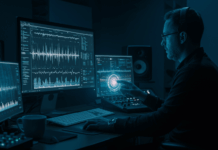

Advanced techniques for reverse vocal samples in electronic music extend far beyond a simple audio flip, involving intricate processing chains, granular manipulation, strategic layering, and dynamic automation to transform raw vocal snippets into atmospheric textures, impactful risers, rhythmic elements, or unexpected melodic motifs that add unique character and depth to a track.
The Foundational Power of Reverse Vocals
Reversing a vocal sample fundamentally alters its attack and decay, creating a distinct sonic signature where sounds swell into existence rather than striking abruptly. This inherent characteristic makes reverse vocals a powerful tool in electronic music, capable of building tension, adding ethereal ambience, or introducing unsettling textures. While the basic act of reversing audio is straightforward in any digital audio workstation (DAW), the true artistry lies in selecting the right vocal material and understanding its potential for transformation. To explore more creative reverse sample techniques, producers can delve deeper into advanced manipulation methods. A dry, percussive snippet might become a sharp, breathy intake, while a sustained note could morph into a ghostly pad.
Producers often begin by experimenting with short, isolated syllables, ad-libs, or even full phrases, paying close attention to the harmonic content and rhythmic implications of the reversed sound. The choice of vocal source is paramount; a vocal with strong sibilance or plosives might sound harsh when reversed without proper processing, while a well-recorded, clean vocal provides a more malleable canvas. Considerations also extend to the original context and pitch of the vocal, as these elements will define the character of its reversed counterpart within the new composition.
Beyond Simple Reversal: Manipulating Audio Post-Flip
Once a vocal sample is reversed, the real advanced techniques begin, turning a simple effect into complex sound design. For a broader look at transforming your tracks, consider exploring advanced vocal sample processing in electronic music. Applying time-based effects such as reverb and delay to a reversed vocal can create expansive, otherworldly atmospheres. For instance, placing a long, pre-delay reverb *before* the reverse effect, and then bouncing it, results in a vocal that sounds like it’s being pulled from a deep, cavernous space, rather than just swelling from silence. Similarly, syncing delays to specific rhythmic subdivisions can introduce intriguing counter-rhythms or perpetuate a sense of forward momentum.
Beyond traditional spatial effects, distortion, saturation, and bit-crushing can infuse reversed vocals with grit, warmth, or lo-fi character, helping them cut through a dense mix or occupy a specific frequency range. Modulating effects like phasers, flangers, or choruses, particularly with slow rates, can add a shimmering, evolving quality that makes the reversed vocal feel alive and dynamic. These processes are not merely add-ons but integral parts of sculpting the reversed sound into a unique element that serves the track’s overarching sonic narrative, often requiring careful gain staging and EQ to prevent muddiness.
Crafting Dynamic Textures with Advanced Processing
Advanced producers leverage granular synthesis and spectral processing to dissect and reassemble reversed vocal samples into entirely new sonic textures. Learning to use granular synthesis music samples can open up immense creative possibilities for unique soundscapes. By adjusting grain size, density, and playback direction, a short reversed vocal could become a sustained pad, a textural drone, or a flickering, glitchy percussion element, opening up immense creative possibilities.
Spectral processing tools provide another layer of control, allowing producers to manipulate the frequency content of reversed vocals in precise ways. Techniques such as filtering out specific harmonics, isolating formants, or even morphing the spectral characteristics with other sounds can transform the vocal’s timbre dramatically. To achieve even more dramatic textural shifts, mastering spectral sampling techniques is highly recommended. Automating these spectral parameters over time can create movements that are impossible with conventional EQ, resulting in unique textural shifts and sonic evolutions. This deep dive into the waveform’s constituent parts allows for a level of detail and originality that distinguishes advanced reverse vocal manipulation.
Integrating Reversed Vocals for Sonic Impact
The strategic placement and integration of advanced reverse vocal samples are crucial for their impact within a track. Rather than using them as isolated novelties, skilled producers weave them into the fabric of the arrangement, often for transitional purposes. A reversed vocal can serve as an effective riser, building anticipation before a drop or a new section. By carefully syncing the crescendo of the reversed sample with the onset of the next musical phrase, a powerful sense of release or transformation is achieved.
Furthermore, reversed vocals can act as subtle textural layers beneath existing elements, adding an ethereal depth or a subconscious tension without overtly drawing attention. They can also be used as rhythmic elements, chopped and sequenced to create percussive loops or unexpected grooves. When combined with sidechain compression, these reversed elements can pump and breathe with other instruments, making them feel organically integrated into the rhythm section. Experimenting with panning and stereo imaging can also create immersive effects, allowing the reversed vocal to sweep across the soundstage, further enhancing its perceived motion and depth.
Strategic Sample Selection and Preparation
The success of advanced reverse vocal techniques begins with the quality and characteristics of the initial sample. Opting for vocals that possess distinct timbral qualities, interesting phonetic structures, or a clean recording without excessive background noise will yield much more flexible and sonically pleasing results. Short, impactful one-shots, sustained vowel sounds, or whispered phrases often lend themselves well to reversing, as their inherent characteristics can be magnified or transformed into compelling soundscapes.
Before reversal, it is often beneficial to perform some preliminary processing. Gentle equalization to remove unwanted low-end rumble or harsh high frequencies can prevent muddiness or shrillness in the reversed sound. Subtle compression can help even out dynamics, making the reversed swell more consistent. Removing breaths or clicks can also improve clarity, ensuring that the reversed artefact is purely intentional. Sometimes, adding a small amount of subtle chorus or room reverb *before* reversing and bouncing the audio can embed a sense of space or thickening that becomes unique when played backwards, laying a robust foundation for subsequent advanced manipulations.
Avoiding Common Pitfalls for Polished Results
While the creative potential of advanced reverse vocal samples is vast, several common pitfalls can detract from their effectiveness. One primary concern is muddiness, especially when layering multiple reversed elements or combining them with heavy reverb. To counteract this, careful frequency sculpting with EQ is essential, often involving high-pass filtering to remove excessive low-end buildup and subtle cuts in congested mid-range areas to maintain clarity and definition within the mix. Every reversed element should have its own sonic space.
Another challenge is avoiding predictability. Simply reversing a vocal and dropping it into a track can quickly become a cliché if not handled with intention. Producers should constantly experiment with varying durations, applying different effects chains, and automating parameters like pitch, filter cutoff, or effect send levels over time. Ensuring that the reversed vocal has a clear role—whether it’s building tension, providing texture, or creating a rhythmic hook—prevents it from sounding gratuitous. Furthermore, paying attention to the transient response and ensuring the reversed sample smoothly integrates into the musical flow, rather than jarringly interrupting it, is key to achieving a polished and professional sound.