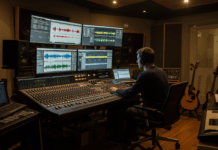

In the world of music production, the journey from raw recordings to a polished final mix is both an art and a science. To navigate this complex landscape, producers need a solid arsenal of essential tools designed to refine audio signals and enhance their mixes. From intuitive digital audio workstations to powerful mixing plugins, these tools offer unique functionalities that allow for precise manipulation of sound. Whether you’re fine-tuning frequencies with equalizers or managing dynamics with compressors, the right music production tools are key to achieving that professional sound you’ve been aiming for. In this article, we’ll explore must-have tools and techniques that will empower you to master your mixes and bring your musical vision to life.
Essential Music Production Tools to Master Your Mix
Mixing tools and plugins are crucial for music producers, allowing them to manipulate and enhance audio signals effectively.
These tools can be both hardware and software-based, making them versatile for different setups. Many Digital Audio Workstations (DAWs) come equipped with essential pre-installed tools that help achieve a polished mix right from the start. Here are some of the key production tools to consider:
Level Faders: Vital for controlling the volume of individual tracks, level faders allow producers to create a harmonious mix by adjusting levels to fit well together. It’s essential to balance all tracks simultaneously rather than soloing them to hear how they interact.
Equalizers (EQ): Used for frequency balancing, EQs let producers adjust sound layers within the mix. They break audio into different frequency bands, allowing precise control over various aspects of sound—from the low thump of kicks to the sparkle of high hats.
Compressors: Compressors manage the dynamic range of audio signals. They help smooth out volume levels by reducing peaks that may be too loud. This is done by setting parameters like threshold, ratio, attack, and release time, ensuring consistent sound across the track.
Reverb: Reverb adds depth and space to a mix, simulating the acoustic characteristics of an environment. Adjusting parameters like decay time and wet/dry mix can dramatically change the texture of the track.
Delay: Delay effects can enrich a mix, providing depth and movement. Different delay types, like tape or digital delays, have unique characteristics that can be fine-tuned to enhance musical sections.
Automation: This feature allows dynamic control over parameters throughout the track. Automation can adjust volume, panning, and effects over time, which enhances the overall dynamics of the track.
Saturation: Adding subtle saturation can warm up sounds and create a more organic feel. This technique enhances tracks without overwhelming them, differentiating it from more extreme distortion.
By utilizing these fundamental tools, music producers can significantly improve their mixing workflow and achieve high-quality results in their projects. Each tool contributes to a refined, professional sound that resonates well across various playback systems.
Mixing Plugins That Enhance Your Workflow
Mixing plugins are crucial for streamlining audio production, allowing producers to achieve polished, professional sounds efficiently. Various plugins offer features such as dynamic EQ, compression, reverb, and stereo imaging, each playing a key role in fine-tuning audio elements for clarity and depth.
Recommended Mixing Plugins
Dynamic EQ Plugins: These allow for frequency-specific adjustments without over-compressing the entire signal. They react to incoming audio levels, providing a more nuanced approach to equalization.
Compression Plugins: Essential for controlling the dynamic range, good compression tools help ensure that the loudest parts of a track don’t overshadow quieter elements. Look for features like mid/side processing to enhance stereo width further.
Reverb Plugins: Simulating various acoustic spaces, quality reverb plugins add depth and atmosphere to mixes. Different algorithms cater to specific applications, from short, subtle spaces to long, immersive tails.
Stereo Imaging Plugins: These tools help create a stereo field, allowing sounds to be placed more precisely in the mix. They can enhance the separation of instruments, making the overall track feel more expansive.
Mastering Plugins: Equipped with tools for finalizing mixes, these plugins often feature spectral analysis, loudness metering, and mastering presets tailored for various genres. They can bring your final mix up to industry standards seamlessly.
Choosing the right mixing plugins simplifies the complex mixing tasks that often challenge producers. By tailoring your plugin selection to your workflow and specific project needs, you can enhance productivity while achieving high-quality sound. Integrating these tools into your mixing strategy enables creative control and efficiency, ultimately improving your final output quality.
Audio Mixing Techniques for Optimal Results
Producers can elevate their mixes through various audio mixing techniques that focus on fundamental elements such as leveling, panning, and EQ adjustments. Here’s a closer look at effective strategies:
Proper Leveling
Balancing the volume levels of different tracks is crucial for achieving a cohesive sound.
Avoid mixing in solo mode; always listen to all elements together to identify any competing frequencies or clashes.
Panning Strategies
Placing instruments across the stereo field creates depth and width in the mix.
Experiment with panning to achieve a balanced soundstage, ensuring that no single element dominates the mix.
EQ Adjustments
Use equalizers (EQ) to carve out space in your mix.
Cutting frequencies in muddied areas helps clear up the mix while boosting areas where needed provides clarity.
A parametric EQ is particularly effective for making precise adjustments.
Multiband Compression
This technique allows for compression of different frequency ranges separately, resulting in a more controlled and polished sound without squashing the overall dynamics.
Track Layering Techniques
Layering sounds can add richness and texture to your tracks.
Combine different instruments or synths playing the same part to enhance fullness while maintaining clarity.
Utilizing Automation Tools
Automation provides dynamic control over volume, panning, and effect parameters throughout a track.
It enriches the listening experience by creating movement and interest, enhancing the overall dynamics of your mix.
Listening critically across multiple playback systems—like headphones, speakers, and car audio—helps ensure that your mix translates well in various environments.
These techniques and strategies are foundational for producing professional-quality audio, leading to mixes that not only sound great but resonate with listeners.
Tips for Effective Mixing Strategies
Effective mixing strategies require a balanced approach to all elements within a track. Here are some practical tips to enhance your mixing techniques:
Frequency Masking Solutions
Identify and resolve frequency masking by utilizing EQ. Analyze each track to pinpoint overlapping frequencies and adjust as necessary. Use subtractive EQ methods to carve out space for each instrument, ensuring clarity in your mix.
Dynamic Range Control
Employ compressors and limiters to manage the dynamic range of your tracks. Setting the right threshold and ratio is key to ensuring that the mix maintains energy without becoming overly compressed.
Collaborate and Seek Feedback
Leverage collaborative production tools and community forums. Don’t hesitate to share your work for constructive criticism. Engaging with fellow producers can not only bring fresh perspectives but also help refine your mixing skills over time.
Tailor Mixing for Genres
Different genres may require specific mixing approaches. For instance, heavily layered arrangements, such as in pop or electronic music, might benefit from a more aggressive EQ and dynamic processing, while acoustic genres may call for a warmer and more natural sound.
Use Audio Analysis Tools
Incorporate audio analysis tools to visualize your mix. These can help track frequency distributions and ensure you have a well-balanced sound. Monitoring levels and spectral content regularly will promote better mixing outcomes.
Adapting these strategies can lead to more polished mixes and a stronger production quality across various music styles.
The Importance of Learning and Adapting Mixing Techniques
Continuous learning is essential for music producers aiming to stay ahead in the ever-changing music industry.
Utilizing resources such as mixing tutorials and online mixing resources keeps producers informed about the latest techniques and trends.
Engaging in community forums can provide valuable insights, allowing producers to exchange experiences and broaden their understanding of effective mixing strategies.
Master classes on mixing offer in-depth knowledge, enabling producers to refine their skills through expert guidance.
Many producers emphasize the necessity of adapting their mixing approaches based on the feedback they receive.
This feedback loop aids in identifying areas for improvement and applying best practices that elevate mixing proficiency.
Incorporating peer reviews into the learning process can lead to significant advancements in a producer’s technique, as exposure to diverse perspectives fosters creativity and innovation.
Producers are encouraged to embrace this ongoing learning process, integrating theoretical knowledge with practical experiences.
By actively seeking educational material and participating in hands-on practice, producers can develop effective, personalized mixing strategies that enhance the quality of their work.
Navigating the complex landscape of music production requires commitment to continual growth and adaptation, ultimately leading to more polished and professional mixes.
In conclusion, mastering your mix is a multifaceted task that demands a combination of the right tools and techniques. Throughout this article, we’ve explored essential tools for music producers, including software options and engaging mixing plugins tailored to enhance your workflow. We’ve also delved into vital mixing techniques and the importance of track organization to help streamline your process and elevate the quality of your tracks.
As you embrace these practices, remember that the right tools for music producers can be game-changers in your music production journey. They empower you to refine your skills and achieve professional results with each new mix. By selecting the appropriate tools, utilizing effective mixing techniques, and maintaining a well-organized workspace, you’re well on your way to mastering your mix and producing standout music.
FAQ
Q: What are essential mixing tools and plugins for music producers?
A: Essential mixing tools include level faders, equalizers, compressors, reverb, and delay. These tools help control volume, shape sound, and add depth to mixes, enhancing overall audio quality.
Q: How does the Equalizer (EQ) function in mixing?
A: The EQ adjusts the frequency balance of audio signals, allowing precise control over different frequency ranges. It helps create cleaner mixes by enhancing or reducing specific frequencies.
Q: What is the role of compressing audio in music production?
A: Compressors reduce the dynamic range of audio, leveling out volume discrepancies. Proper use enhances clarity and ensures that each element in a mix is heard distinctly.
Q: Why is track organization important during mixing?
A: Organizing tracks improves workflow efficiency. Clear labeling and arrangement help producers quickly locate and adjust elements, leading to more polished mixes.
Q: What is the significance of mastering tools in music production?
A: Mastering tools ensure a final mix meets professional standards. They help prepare tracks for distribution, enhancing overall sound quality and consistency across playback systems.
Q: How can automation enhance a mix?
A: Automation allows for precise control over volume, panning, and effects over time. This adds dynamic movement and expression to tracks, enriching the listening experience.
Q: Are there affordable plugins for mixing and mastering?
A: Yes, many effective plugins are available at reasonable prices, typically between $50 and $100. These options deliver quality results without straining budgets.
Q: What should I look for in a Digital Audio Workstation (DAW)?
A: When selecting a DAW, consider its flexibility, features, and interface. Popular choices include Ableton Live, FL Studio, and Logic Pro X, which support versatile music production workflows.