
In the fast-evolving world of audio editing software, staying updated with the latest innovations is crucial for enhancing your creative process. Today’s software releases are not just about adding features; they are fundamentally rethinking the user experience with intuitive navigation and seamless access to vital tools. As we delve into the latest novelties, from user interface innovations to advanced audio effects, you’ll discover how these advancements cater to everyone—from beginners to seasoned professionals. Get ready to explore how cutting-edge audio editing tools are reshaping the way we engage with sound design, making workflows smoother and more efficient than ever before.
Novelties in Audio Editing Software: User Interface Innovations
Recent audio editing software releases emphasize user-friendly interfaces that significantly enhance the editing process.
These innovations focus on intuitive navigation, ensuring that both beginners and professionals can quickly access essential features without distraction.
Key enhancements include customizable layouts, which empower users to organize their workspace according to individual preferences, streamlining workflow and increasing productivity.
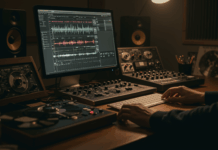
Visual representations of audio tracks, such as waveform displays and spectral views, enable users to analyze sound more effectively and make precise edits.
Additionally, many modern audio editing tools now feature drag-and-drop functionalities, making it easier to manipulate audio clips and arrangements.
These updates foster a more engaging user experience by reducing complexity and fostering creativity.
For instance, the integration of contextual tooltips and guided tutorials helps new users get acclimated, minimizing the intimidation often associated with audio editing software.
Moreover, enhanced dark and light theme options accommodate diverse user environments, reducing eye strain during extended editing sessions.
With these innovations, audio editing software increasingly caters to a broad range of skill levels while reinforcing the importance of an efficient and visually appealing workspace.
Overall, the latest user interface innovations in audio editing software are positioned to enhance usability, allowing users to focus on creativity rather than navigating cumbersome tools.
By prioritizing user experience, these advancements ensure that audio editing remains accessible and enjoyable for everyone.
Novelties in Audio Editing Software: Advanced Audio Effects Plugins
Recent advancements in audio effects plugins have transformed the landscape of sound design.
These plugins now feature real-time audio tracking, allowing users to hear changes as they edit, making the creative process more fluid and immediate.
AI-driven enhancements help automate mundane tasks, from noise reduction to intelligent equalization, enabling audio engineers to focus on the artistry of sound creation.
Specialized audio restoration tools are also becoming more prevalent, making it easy to repair damaged recordings or remove unwanted background noise without sacrificing audio integrity.
This is particularly valuable for music producers who often work with imperfect source material.
The flexibility offered by modern audio effects plugins is remarkable.
Users can intricately manipulate audio parameters—adjusting pitch, modulation, and dynamics—facilitating nuanced sound design for various applications.
This level of control empowers sound designers to craft unique soundscapes, whether for film, music production, or interactive media.
Here are some notable advantages of these advanced audio effects plugins:
Real-Time Audio Processing
Hear changes as you make them, enhancing the editing experience.AI-Driven Enhancements
Automate complex tasks like noise reduction, freeing up time for creativity.Specialized Restoration Capabilities
Restore damaged audio tracks with precision, preserving sound quality.Flexible Manipulation Options
Offer intricate control over sound aspects, aiding in unique sound creation.Compatibility Across Platforms
Easily integrate with various digital audio workstations, maximizing workflow efficiency.
The continuous evolution of audio effects plugins symbolizes a commitment to unlocking creative potential for sound designers and music producers alike.
As these advanced tools become more accessible, they redefine the possibilities in audio editing, providing users with the means to innovate and express their artistic visions freely.
Novelties in Audio Editing Software: AI Integration in Audio Editing
AI technologies are increasingly integrated into audio editing software, bringing forth an array of innovative features that greatly improve user experience and output quality.
Automatic mixing capabilities are now commonplace, where AI algorithms analyze audio content in real-time to optimize levels and EQ settings. This tool significantly reduces the time traditionally spent on manual adjustments, empowering users to focus on creative aspects rather than technical hurdles.
Noise reduction technologies leverage machine learning to identify and eliminate unwanted sounds, allowing for cleaner and more polished audio. This processing becomes seamless as AI analyzes background noise patterns and applies corrective measures without compromising the integrity of the original audio, a game-changer for podcasters and content creators working in less-than-ideal recording environments.
Intelligent sound recognition plays a crucial role as well. AI can detect specific audio elements, such as vocals or instrumentation, enabling features like automated track separation and smart equalization. This fosters an environment where users can achieve high-quality mixes without needing extensive technical knowledge.
Innovative audio routing options have emerged, allowing users to direct audio signals through various pathways efficiently, facilitated by AI’s ability to manage complex signal flows intuitively. This advancement streamlines complex layering processes, beneficial in producing intricate soundscapes.
AI-driven automated processes not only enhance workflow but also democratize professional-quality audio production, making it accessible for users at all experience levels. These technologies exemplify how AI is shaping the future of audio editing, providing powerful tools that facilitate creativity while minimizing the technical burden.
Novelties in Audio Editing Software: Real-time Collaboration Features
Modern audio editing software has made significant strides by incorporating real-time collaboration features, enabling multiple users to work on projects simultaneously.
This revolutionary approach is largely supported by cloud-based technologies, which facilitate teamwork across geographical boundaries.
Such capabilities are particularly valuable in remote music production and podcast creation, where team members may be scattered around the globe.
Editing sessions can transform from solitary tasks to dynamic collaborations.
Here’s how these features enhance workflow and project management:
Simultaneous Editing: Users can make changes in real-time, allowing for instantaneous feedback, which significantly shortens the project completion time.
Version Control: Integrated tools track edits and changes, ensuring everyone is on the same page and minimizing the risk of errors during collaboration.
Communication Tools: Many platforms now include chat and comment functionalities, allowing teams to share thoughts and feedback directly within the project.
Accessibility: Mobile audio editing applications are now commonplace, enabling collaborators to contribute from anywhere, making it easier to manage projects on the go.
Workflow Optimization: These advancements streamline the audio production process and create a more integrated experience for users, enhancing overall productivity.
With real-time collaboration features, audio editing software is becoming increasingly adaptable, allowing for more creative and efficient teamwork in audio production contexts.
Novelties in Audio Editing Software: Enhancements in Audio Workflow Efficiency
Recent advancements in audio editing software aim to enhance workflow efficiency significantly, benefiting audio engineers and producers alike.
Customizable user settings have emerged as a key feature, allowing users to tailor their interface and tools to specific project needs. This personalization not only streamlines the workflow but also makes the editing process intuitive, minimizing time spent on navigating menus.
Lightweight software solutions are becoming increasingly popular. They reduce system strain while providing robust features, enabling users to operate seamlessly without lag, particularly during real-time editing sessions. This ensures that creativity flows without interruption.
Streamlined management of audio files is another major improvement. Enhanced file organization features simplify the retrieval of multiple audio tracks, which is crucial for complex projects. Producers can now focus more on the creative aspects rather than getting bogged down by file management tasks.
Furthermore, innovative workflow optimization tools integrate automated functions that handle repetitive tasks, freeing up time for users to engage in more creative aspects of audio production. These tools provide flexibility and speed, allowing teams to enhance their collaborative efforts.
Overall, these novelties transform the editing experience, supporting editors in accomplishing tasks faster and with greater ease, ultimately leading to improved project completion rates and elevated creative expression.
In conclusion, the landscape of audio editing software is evolving rapidly, driven by innovative technologies and user-centric design.
With breakthroughs in AI integration, real-time collaboration, and advanced sound design tools, these novelties enhance creativity and productivity for both novices and seasoned professionals alike.
As audio editors continue to embrace these advancements, it’s clear that staying informed about novelties in audio editing software is crucial.
By leveraging these emerging technologies and best practices, users can maximize the potential of their projects, ultimately producing high-quality audio that meets industry standards.
The future of audio editing promises even more exciting developments, inviting everyone to explore and push the boundaries of sound creation.
FAQ
Q: What are the new features in WavePad audio editor?
A: WavePad audio editor has introduced an intuitive interface, advanced noise reduction, equalization tools, batch processing, and enhanced support for keyboard shortcuts, making it user-friendly for all skill levels.
Q: How does audio quality impact video editing?
A: High-quality audio is essential in video editing as it enhances storytelling, ensuring dialogue clarity and immersive soundscapes across formats like films, TV, and podcasts.
Q: What essential features should audio editing software have for video makers?
A: Key features include multitrack editing, comprehensive sound mixing, EQ, compression, reverb effects, and compatibility with various audio formats, enabling effective audio management for video projects.
Q: How can audio recording features benefit users?
A: Audio recording capabilities enable direct capture from microphones, streamlining the creation of original content like podcasts and voiceovers without the hassle of importing external files.
Q: Why is plug-in integration important in audio editing?
A: Plug-in integration enhances core functionality by allowing specialized effects and sound restoration tools, enabling users to tailor their audio projects without needing new software.
Q: What are the benefits of audio mixing in editing software?
A: Audio mixing allows users to blend multiple tracks, adjust volume levels, and apply effects, resulting in a balanced and engaging final audio product for various formats.
Q: What role does AI play in modern audio editing software?
A: AI technologies enhance audio editing by providing automatic sound improvement and intelligent processing, making editing more efficient and accessible for users.
Q: What are best practices for using audio editing software effectively?
A: Best practices include mastering multitrack techniques, utilizing restoration tools, and leveraging plugins. These strategies ensure high-quality audio output suitable for professional use.
Q: How have user interfaces in audio editing software evolved?
A: User interfaces have become more user-friendly, with features like customizable layouts and mobile compatibility, which enhance accessibility for beginners navigating complex tools.