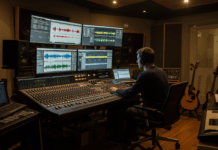

Equalizers can make or break your mix. Whether you’re a seasoned producer or just starting your journey, mastering equalizer plugins is crucial for achieving that polished sound every artist dreams of. Understanding how to manipulate frequencies effectively allows you to clarify your audio, prevent conflicts between instruments, and maintain balance in your tracks. From parametric to graphic EQs, each type has unique strengths that can enhance your music production process. In this article, we’ll dive into essential tips for using equalizer plugins, empowering you to make informed adjustments and elevate your sound to new heights. Let’s unlock the true potential of your audio.
Understanding Equalizer Plugins and Their Importance
Equalization (EQ) is a crucial process in music production that facilitates the adjustment of audio frequencies, significantly enhancing overall sound quality. EQ plugins empower producers to cut or boost specific frequency ranges, shaping the sonic character of individual tracks and the mix as a whole. This control not only enhances clarity but also prevents frequency clashes—issues that can muddy the sound when multiple instruments occupy the same frequency zones.
There are several types of EQ plugins, each suited for different tasks. The key types include:
Parametric EQ: Offers flexible control with adjustable frequency bands, enabling both wide and narrow adjustments for precise frequency targeting.
Graphic EQ: Consists of fixed frequency bands, allowing users to easily boost or cut specific frequencies in a visually intuitive manner.
Dynamic EQ: Combines elements of traditional EQ with compression, auto-adjusting based on the input signal’s dynamics, making it ideal for handling difficult frequency issues.
Shelving EQ: Provides smooth boosts or cuts above or below a certain frequency, which is helpful for enhancing highs or reducing low-end rumble without affecting adjacent frequencies.
Understanding these EQ types is essential, as they each serve unique purposes.
Utilizing EQ effectively ensures that each element within a mix has its own space, allowing for a clearer and more cohesive sound. The importance of EQ in music production cannot be overstated; it shapes the listening experience, making it a foundational tool that every producer should master.
General Tips for Using Equalizer Plugins Effectively
Effective use of equalizer plugins is essential for achieving a polished sound in any mix. Here are some practical tips to enhance your EQing skills:
Cut More Than You Boost
Always prioritize cutting unwanted frequencies over boosting desired ones. This approach helps maintain headroom in your mix and prevents the introduction of artifacts that can occur with excessive boosting.Narrow Cuts for Precision
When addressing problematic frequencies, use narrow cuts. This focused approach allows you to remove unwanted elements without affecting the overall character of the sound.Wider Boosts for Natural Sound
Conversely, apply broader boosts for frequencies you want to emphasize. This technique helps maintain a more natural sound, making the enhancements less intrusive.Establish Appropriate Gain Levels
When making EQ adjustments, keep an eye on your gain levels. Aim for moderate increases or decreases to avoid pushing signals into distortion or clipping.Avoid Excessive Loudness
Mixing at high levels can lead to ear fatigue and compromise your ability to make subtle adjustments. Keep your levels in check to maintain clarity and perspective throughout the mix.Utilize Reference Tracks
Compare your mix to professionally produced tracks within the same genre. This practice can provide valuable context, helping you make informed EQ decisions and ensuring your sound is competitive.Apply EQ in Stages
Consider using EQ at various stages of your mixing process. As different elements come together, revisit your EQ settings to refine and adapt your choices to the evolving mix.Trust Your Ears
While visual aids like spectral analyzers can be useful, don’t rely entirely on them. Your ears are your most important tool; trust your judgment when making EQ decisions.Be Mindful of Frequency Ranges
Familiarize yourself with different frequency ranges and how they affect each instrument. Understanding the spectrum from 20 Hz to 20 kHz is crucial for effective equalization.Experiment and Adapt
Finally, don’t hesitate to experiment with various EQ settings. Sound design is an evolving process, and trying different approaches can lead to unexpected yet satisfying results.
By incorporating these techniques, you can make the most of equalizer plugins and elevate your mixing skills.
Common Mistakes When Using Equalizer Plugins
New users often encounter several pitfalls when using equalizer plugins that can muddle their mixes.
One prevalent mistake is mixing too loudly. This habit leads to ear fatigue and can obscure crucial details in the mix.
Another issue is an over-reliance on visual aids like spectral analyzers. While these tools can provide helpful insights, trusting your ears is vital for making nuanced EQ decisions.
Failing to consider the acoustic environment can also hinder effective EQ usage. Room acoustics affect how sound is perceived, making it essential to have a suitable listening space to make informed decisions.
It’s easy to over-process when applying EQ, which often leads to a muddier sound. Instead of stacking multiple EQ plugins on a single track, aim to achieve clarity with minimal adjustments.
Ignoring frequency clashes among instruments can create unwanted resonance. Always monitor how different elements interact within the mix; this helps identify and resolve problematic frequencies.
Here are common mistakes to avoid:
- Mixing too loudly
- Over-relying on visual aids
- Not considering acoustic environments
- Over-processing with excessive EQ adjustments
- Ignoring frequency clashes
By understanding these pitfalls, you can greatly improve your EQ process, resulting in a cleaner, clearer mix.
Creative Applications of Equalizer Plugins in Music Production
EQ can be a powerful tool not just for basic adjustments, but also for creative sound design. Here are a few inventive applications to consider when using EQ plugins in your productions:
Sound Design: EQ can shape instrument sounds beyond simple corrections. For example, you can scoop out certain frequencies to create space and texture, enhancing the ethereal quality in synth pads or delayed effects.
Vocal Emphasis: An effective use of EQ on vocals involves enhancing specific characteristics, like airiness or warmth. Boosting frequencies around 10kHz can add sparkle to a vocal, while cutting around 300-700Hz can reduce muddiness, making the vocal sit more prominently in the mix.
Instrument Tailoring: Each instrument has its unique place in the frequency spectrum. Using EQ creatively allows you to tailor instruments so they blend harmoniously. For instance, cutting low frequencies on guitars or keys frees up space for the bass, making the overall mix tighter and more cohesive.
Filter Sweeps: This technique involves automating EQ settings to sweep through frequency ranges, which creates dynamic movement in your tracks. It can be particularly effective during build-ups to add tension and excitement before a drop, adding an extra layer of creativity to transitions.
Creating Stereo Width: Utilizing EQ can also enhance the stereo image of a mix. By slightly boosting high frequencies on one side and cutting them on the other, you can create an impression of space and depth, giving a more immersive listening experience.
Understanding these creative uses of EQ can expand your musical expression and transport your sound design to new heights. Experimenting with these techniques will not only improve your productions but also inspire unique sonic exploration.
Real-Life Examples of EQ in Mixes
Several popular tracks showcase the effective use of EQ across diverse genres.
Analyzing these songs illustrates practical adjustments that can inspire your mixing techniques.
For instance, in many vocal tracks, you’ll notice engineers boost mid-range frequencies between 1kHz and 3kHz. This enhancement amplifies presence and clarity, allowing vocals to cut through the mix effortlessly.
Similarly, in rock songs, the guitars may receive a slight boost around 3kHz to 5kHz to emphasize their crunch. To avoid frequency clashes, low frequencies are often cut using high-pass filters, creating more space for the kick drum and bass.
In electronic music, EQ automation is a powerful tool. Producers frequently use it to dynamically adjust frequencies in breakdowns and drops. For instance, gradually cutting mids while increasing highs during build-ups helps create a sense of anticipation before the full drop hits.
Jazz tracks exemplify the subtleties of EQ. A common approach is to lightly cut the muddiness around 200Hz to enhance the clarity of the upright bass, ensuring it doesn’t overpower other instruments. The result is a well-balanced sound that maintains the character of each instrument.
In pop music, EQ often plays a crucial role in balancing audio levels, especially between backing vocals and lead vocals. By slightly attenuating the backing vocals in the 300Hz to 400Hz range, the lead can shine without losing its lushness.
Implementing these techniques can bring clarity and balance to your mixes by applying demonstrated practices that have already proven effective in popular music.
In conclusion, navigating the world of equalization plugins can be a transformative experience for your music production journey. By grasping the essential functions of EQ and the importance of understanding audio frequency ranges, you lay the groundwork for crafting clearer, more balanced mixes.
Incorporating practical tips for using equalizer plugins will empower you to avoid common pitfalls, leading to better sound quality. Always remember that cutting frequencies often yields more tactile results than boosting, and utilizing advanced techniques can elevate your mixes to a professional level.
Embrace these general tips for using equalizer plugins, and watch as your music productions evolve into a polished auditory experience that resonates with listeners. Keep practicing, experimenting, and refining your skills, and the results will certainly reflect your dedication and creativity.
FAQ
Q: What is the role of equalization (EQ) in audio production?
A: EQ balances frequencies in a mix, enhancing sound quality by allowing producers to cut or boost specific frequency ranges, shaping the overall sound and preventing audio clashes.
Q: How can I effectively use EQ plugins in my music production?
A: Start by cutting frequencies more than you boost. Use narrow cuts for issues and broader boosts for enhancement. Monitor levels and avoid mixing too loudly to maintain clarity.
Q: What are common mistakes to avoid when using EQ?
A: Avoid over-reliance on boosting frequencies, as it can muddy mixes. Also, mixing too loudly and failing to address frequency clashes can compromise sound quality.
Q: What types of EQ plugins should I consider using?
A: Consider parametric EQ for versatility, high/low-pass filters for clarity, shelving EQ for overall tonal adjustments, and graphic EQ for multiple fixed-band adjustments.
Q: What frequency ranges should I focus on for different instruments?
A: Boost 50-75Hz for kick drums, 80-200Hz for snare body, and 2-5kHz for vocal clarity. Understanding these frequencies enhances clarity and presence in your mix.
Q: How can I learn advanced EQ techniques for mastering?
A: Explore dynamic EQ for managing frequency issues, match EQ profiles from reference tracks, and use notch filters to eliminate problem frequencies without altering the mix.