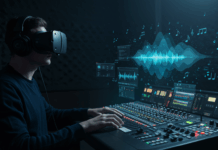

Psychoacoustics plays a fundamental role in crafting engaging music samples by informing how producers manipulate sound elements to align with human auditory perception, thereby maximizing impact, clarity, and emotional resonance. Understanding principles such as perceived loudness, timbre, spatialization, and masking allows creators to design samples that are not only technically proficient but also psychologically compelling. This deep connection with listeners highlights the profound psychological impact of music samples, ensuring they cut through a mix and deeply connect with listeners.
Foundations of Psychoacoustics in Audio Production
Psychoacoustics is the scientific study of sound perception and how the human auditory system interprets sound. In the realm of music samples production, this discipline is not merely theoretical; it provides a vital framework for understanding why certain sounds resonate with listeners while others fall flat. Producers who grasp psychoacoustic principles can move beyond arbitrary adjustments, instead making informed decisions about every aspect of a sample’s sonic character. This includes understanding the ear’s non-linear response to frequency and amplitude, the intricacies of how complex waveforms are decoded into perceived timbre, and the remarkable ability of the brain to localize sounds in space. Applying this knowledge means optimizing samples not just for technical specifications, but for the inherent biases and capabilities of human hearing, ensuring they translate effectively from studio monitors to consumer headphones and elicit the desired emotional or rhythmic response.
The journey from a raw audio signal to a perceived sound is filled with complex processing performed by the ear and brain. For example, humans are most sensitive to frequencies in the mid-range (around 2-5 kHz), a crucial detail when EQing vocals or lead instruments in a sample to ensure presence. Similarly, our perception of loudness is not directly proportional to sound pressure level; a phenomenon described by equal loudness contours (Fletcher-Munson curves) dictates that low and high frequencies require more energy to be perceived at the same loudness as mid-range frequencies. Ignoring these perceptual realities in music samples production can lead to samples that sound imbalanced, fatiguing, or simply lack impact, regardless of their objective volume. A psychoacoustically informed approach allows for strategic shaping of samples to exploit these auditory characteristics, creating a more vivid and impactful listening experience.
Harnessing Loudness and Dynamics for Impact
The perception of loudness is one of the most critical psychoacoustic elements influencing the impact of music samples. It’s not just about the peak decibel level; it’s about how loud a sound *feels* to the listener. This subjective perception is heavily influenced by factors like frequency content, duration, and the presence of other sounds. Producers often employ techniques like psychoacoustic compression, which subtly enhances perceived loudness and density without necessarily increasing the peak levels, thereby making a sample feel more “present” or “punchy.” For more detailed insights into tools that help achieve this, consider exploring various compressor plugins. This often involves carefully managing transients and the RMS (root mean square) level, ensuring that the dynamic envelope of a sample is optimized for sustained perceived energy rather than just transient spikes.
Dynamic range also plays a pivotal role in how engaging a sample is. While highly compressed, “loud” samples have become common in modern production, a complete absence of dynamics can lead to listener fatigue. Psychoacoustics teaches us that contrast is key to engagement. A sample that is meticulously crafted with intentional variations in its dynamic range—from subtle nuances to explosive peaks—can create a far more captivating experience. For instance, percussive samples often benefit from carefully preserved transients that provide initial impact, followed by a controlled decay. This dynamic shaping, rooted in an understanding of how the brain processes changes in amplitude over time, allows producers to craft samples that possess both power and detail, preventing them from blending into a monotonous sonic landscape.
The Perceptual Palette: Timbre and Frequency Response
Timbre, often described as the “color” or “quality” of a sound, is perhaps the most defining characteristic of any music sample, and its perception is deeply psychoacoustic. It’s what allows us to distinguish between a trumpet and a violin playing the same note at the same loudness. Timbre is primarily determined by the harmonic content (the presence and relative amplitudes of overtones) and the transient behavior of a sound. When crafting samples, understanding how harmonic series interact and how our ears process complex waveforms is paramount. For instance, subtle changes in the attack phase of a sample can drastically alter its perceived timbre and character, turning a dull hit into a crisp percussive element or a soft pad into an ethereal texture.
Beyond harmonics, the overall frequency response of a sample is crucial for its perceived timbre and clarity. The human ear’s sensitivity varies across the frequency spectrum, meaning that a boost or cut at one frequency will have a different psychoacoustic impact than the same adjustment at another. Strategic equalization (EQ) in music samples production, therefore, isn’t just about balancing frequencies; it’s about shaping the perceived timbre to achieve a desired emotional or functional effect. High-frequency content often contributes to “air” and “sparkle,” while low-mid frequencies can impart “warmth” or “mud.” By carefully sculpting the frequency spectrum, producers can enhance the unique character of a sample, ensuring it occupies its own distinct space within a mix and contributes effectively to the overall sonic narrative without conflicting with other elements.
Spatial Immersion: Crafting Depth and Width in Samples
Spatialization, the perception of a sound’s location in space, is a powerful psychoacoustic tool for creating immersive and engaging music samples. Our brains use cues like interaural time difference (ITD) and interaural level difference (ILD) to pinpoint sound sources. In music samples production, this translates to utilizing panning, stereo imaging, and reverb to place samples not just left or right, but also to create a sense of depth and distance. A drum hit placed hard left with a dry, immediate reverb will feel close and aggressive, whereas a pad with wide stereo spread and a long, distant reverb tail will create a sense of vastness and background texture. These spatial cues are critical for building complex sonic environments and preventing samples from sounding flat or unidimensional.
Effective stereo imaging is not just about making a sample sound “wide”; it’s about carefully manipulating phase and amplitude relationships between the left and right channels to create a believable spatial presence. Tools like stereo enhancers or M/S processing can be used to control the width of a sample, making elements feel more expansive or focused as needed. Reverb, delays, and pre-delay settings are also crucial for dictating a sample’s perceived distance and the size of its acoustic environment. By understanding how these psychoacoustic effects influence our perception of space, producers can craft samples that invite listeners into a three-dimensional soundscape, enhancing engagement and emotional depth within the broader musical context.
Masking and Transients: Ensuring Clarity and Punch
Auditory masking is a fundamental psychoacoustic phenomenon where one sound makes another sound difficult or impossible to hear. This is particularly relevant in music samples production when layering multiple sounds, a technique where percussion sample layering can be especially intricate. Understanding both simultaneous masking (when sounds occur at the same time) and temporal masking (when a louder sound either precedes or follows a quieter one) allows producers to make informed decisions about EQ, volume balance, and sample selection. By identifying potential masking conflicts, producers can strategically carve out frequency space for each sample, ensuring that every element retains its integrity and contributes to the overall sonic picture without being overshadowed.
Transients, the initial high-energy bursts of a sound, are another critical psychoacoustic element for clarity and punch, especially in percussive samples. Our auditory system relies heavily on these rapid changes in amplitude to identify the onset of sounds and to perceive rhythmic information. Preserving or accentuating transients in samples, particularly drums and percussive elements, is vital for maintaining their attack and definition. Conversely, excessive compression or processing that smears transients can make a sample sound dull, lifeless, and less impactful. Techniques like careful gain staging, transient shapers, and multi-band compression, all applied with psychoacoustic awareness, can help control and enhance these crucial sonic events, ensuring that each sample delivers its intended punch and articulates clearly within a dense mix.
Practical Psychoacoustic Techniques for Sample Design
Applying psychoacoustic principles in the practical design of music samples involves a range of techniques that go beyond simply adjusting parameters. One key aspect is the deliberate use of distortion or saturation. While often perceived as adding “warmth” or “grit,” these effects also introduce new harmonic content, which can psychoacoustically enhance perceived loudness and density, making a sample feel more powerful and present, even at lower volumes. Exploring various distortion plugins can open up many creative avenues for producers. The type and amount of harmonic distortion should be chosen carefully, considering how these added harmonics interact with the fundamental frequencies and overtones already present in the sample, to avoid harshness or muddiness.
Another powerful technique involves the manipulation of formants. Formants are fixed frequency ranges that are emphasized by the resonant properties of an instrument or the human vocal tract, largely determining its characteristic timbre. By subtly shifting or emphasizing specific formants within a sample, producers can dramatically alter its perceived character, making it sound more “vocal-like,” “metallic,” or “wooden.” This goes beyond simple EQ and delves into spectral shaping that mimics how our ears and brains interpret acoustic spaces and physical sound sources. Such precise control over spectral envelopes allows for the creation of unique and highly expressive samples that can evoke specific textures and emotions, elevating the overall quality of music samples production.
The Emotional Resonance of Sound: Beyond Technicalities
While the technical aspects of psychoacoustics are essential, its ultimate application in music samples production extends to the emotional impact of sound. The human brain doesn’t just process sounds as data; it associates them with emotions, memories, and cultural contexts. Certain harmonic intervals evoke specific feelings (e.g., dissonance for tension, consonance for resolution). Similarly, the tempo and rhythmic complexity of a percussive sample can directly influence perceived energy levels and psychological arousal. Understanding these deeper connections allows producers to intentionally design samples that don’t just sound “good,” but also resonate on a profound, emotional level with the listener.
The subtle nuances of psychoacoustics can also be harnessed to create a sense of realism or artificiality as desired. A sample with precise transients, natural spatial cues, and a rich, balanced timbre might evoke the feeling of a live instrument, while highly processed sounds with manipulated formants and extreme dynamics can create otherworldly or futuristic textures. This ability to intentionally steer the listener’s emotional and imaginative experience through sound design is where the true artistry of psychoacoustically informed music samples production shines. By mastering not just how sounds are heard, but how they are *felt*, producers can craft samples that are not only engaging but truly transformative for any musical composition.