Deconstructing famous hip hop sample flips involves meticulously analyzing the original source material, identifying the specific segments or elements used, and then understanding the production techniques—such as chopping, pitching, filtering, looping, and re-sequencing—that transform the sample into a new, unique musical phrase within a hip hop track, often revealing the ingenuity and creative vision of the producer.
Defining the Sample Flip in Hip Hop
A sample flip, at its core, transcends the simple act of taking an audio snippet from an existing recording; it is the art of transformation, where a source material is creatively re-imagined and manipulated to form an entirely new musical foundation within a hip hop track. This process often involves dissecting a few seconds of a jazz, soul, funk, or even classical recording, isolating specific sounds like a drum break, a bassline, a vocal harmony, or a melodic motif, and then radically altering its context, rhythm, and timbre. Early hip hop producers, often working with limited technology, pioneered this technique out of necessity and turned it into a cornerstone of the genre’s innovation. To understand how these methods have changed, delve deeper into the evolution of hip hop sampling techniques.
The distinction between merely sampling and “flipping” lies in the degree of creative intervention. A mere sample might be a direct loop or an unaltered segment, whereas a flip involves significant processing and artistic interpretation. Producers might find an unexpected groove in a seemingly mundane record, extract a series of notes, and then reconstruct them into a completely different melody, rhythm, or harmonic progression. This transformative approach is what gives hip hop its unique sonic identity, allowing producers to build rich, layered soundscapes from disparate sources, creating something fresh and often more compelling than the original.
Core Production Techniques for Iconic Flips
The magic behind many legendary hip hop tracks lies in a suite of fundamental production techniques that turn an ordinary sample into an extraordinary element. **Chopping** is arguably the most prevalent technique, where a continuous audio segment is sliced into individual, discrete pieces. This allows producers to re-sequence these fragments, creating entirely new melodic patterns, drum beats, or vocal phrases that bear little resemblance to the original flow. For those looking to refine their skills, exploring an advanced drum break chopping workflow can unlock new creative possibilities.
**Pitching** involves altering the speed and key of a sample. By slowing down or speeding up a segment, producers can change its mood, create new harmonies, or make it fit a desired tempo. Often, a sample pitched down gains a grittier, heavier feel, while pitching it up can make it sound more ethereal or playful. **Looping** is another foundational technique, where a chosen segment, often a short phrase or a drum break, is repeated seamlessly to form a continuous rhythmic or melodic bed. When combined with chopping, producers can create intricate, evolving loops that never quite repeat in the same way.
**Filtering and EQ** are crucial for shaping the sonic character of a flipped sample. Producers use filters to remove unwanted frequencies, isolate specific instruments, or create dramatic sweeps and buildups. Equalization helps in blending the sample with other elements of the track, ensuring it sits well in the mix. Beyond these, techniques like reverse playback, **gating**, **stuttering effects**, and the strategic **layering of multiple samples** all contribute to the complex tapestry of a truly deconstructed and reimagined piece of audio. These methods allow producers to take sounds from diverse origins and weave them into a cohesive, innovative whole.
Landmark Sample Flips: Case Studies
Examining specific examples brings the art of sample flipping to life. One of the most celebrated instances is **Pete Rock & C.L. Smooth’s “They Reminisce Over You (T.R.O.Y.)”**. The iconic saxophone melody and main loop are ingeniously flipped from Tom Scott’s “Today.” Pete Rock masterfully chopped and rearranged multiple segments of the original jazz track, transforming its smooth, melancholic vibe into a driving, soulful hip hop anthem. The subtle rhythmic displacement and layering of different chops create a lush, instantly recognizable texture that stands as a testament to his genius.
Another profound example is **Nas’s “N.Y. State of Mind,”** produced by DJ Premier. Premier crafts the track’s dark, gritty atmosphere by intricately chopping and looping two distinct jazz samples: Donald Byrd’s “Flight Time” for the main melodic loop and Joe Chambers’ “Mind Rain” for the eerie, dissonant piano stabs. The way Premier isolates specific, short piano chords and re-sequences them creates a sense of urban tension and sophistication, perfectly complementing Nas’s vivid storytelling. This showcases how subtle manipulation can drastically alter the emotional resonance of a sample.
The work of **J Dilla** is a masterclass in pushing the boundaries of sample deconstruction. His signature “Dilla feel” often involved unconventional quantizing, where drum samples were slightly off-grid, giving his beats a humanized, swinging, almost drunken groove. For example, on Slum Village’s “Don’t Cry,” Dilla takes Ronald Kirk’s “Effendi” and chops it into tiny fragments, reassembling them with an almost improvisational feel. He wouldn’t just loop; he’d reinterpret, subtly shifting elements and adding unexpected hits, transforming a smooth jazz piece into a funky, laid-back head-nodder that felt entirely new.
Beyond melodic flips, **drum breaks** represent another crucial aspect. The **Amen Break**, sourced from The Winstons’ “Amen, Brother,” is perhaps the most sampled drum loop in history. While not a “flip” in the same transformative sense as melodic samples, its constant re-use, chopping, and re-contextualization across countless hip hop, jungle, and drum and bass tracks demonstrates the power of a foundational sample. Producers manipulate its tempo, apply effects, and layer it with other percussive elements, continuously breathing new life into a nearly sixty-year-old recording.
Modern Production Workflows and Tools
The landscape of hip hop production has evolved significantly, yet the core principles of deconstructing samples remain. Historically, hardware samplers like the **Akai MPC series (e.g., MPC60, MPC3000)** and the **E-mu SP-1200** were the workhorses, forcing producers to develop an intimate understanding of their samples due to limited memory and processing power. These machines emphasized precise chopping and groove-oriented sequencing, laying the groundwork for the feel of classic hip hop. Their tactile interfaces and dedicated pads provided a unique workflow that many still seek to emulate today.
Today, **Digital Audio Workstations (DAWs)** such as Ableton Live, Logic Pro, FL Studio, and Native Instruments Maschine have integrated powerful sampling capabilities directly into their software environments. These platforms offer unparalleled flexibility, allowing for non-destructive editing, intricate time-stretching, advanced pitch manipulation, and a vast array of effects plugins. Features like Ableton’s “Slice to New MIDI Track” or Logic’s Quick Sampler streamline the chopping process, while dedicated plugins like **Serato Sample** and **Native Instruments Kontakt** provide specialized tools for sample management and creative manipulation, often with built-in algorithms for automatic chopping and key detection.
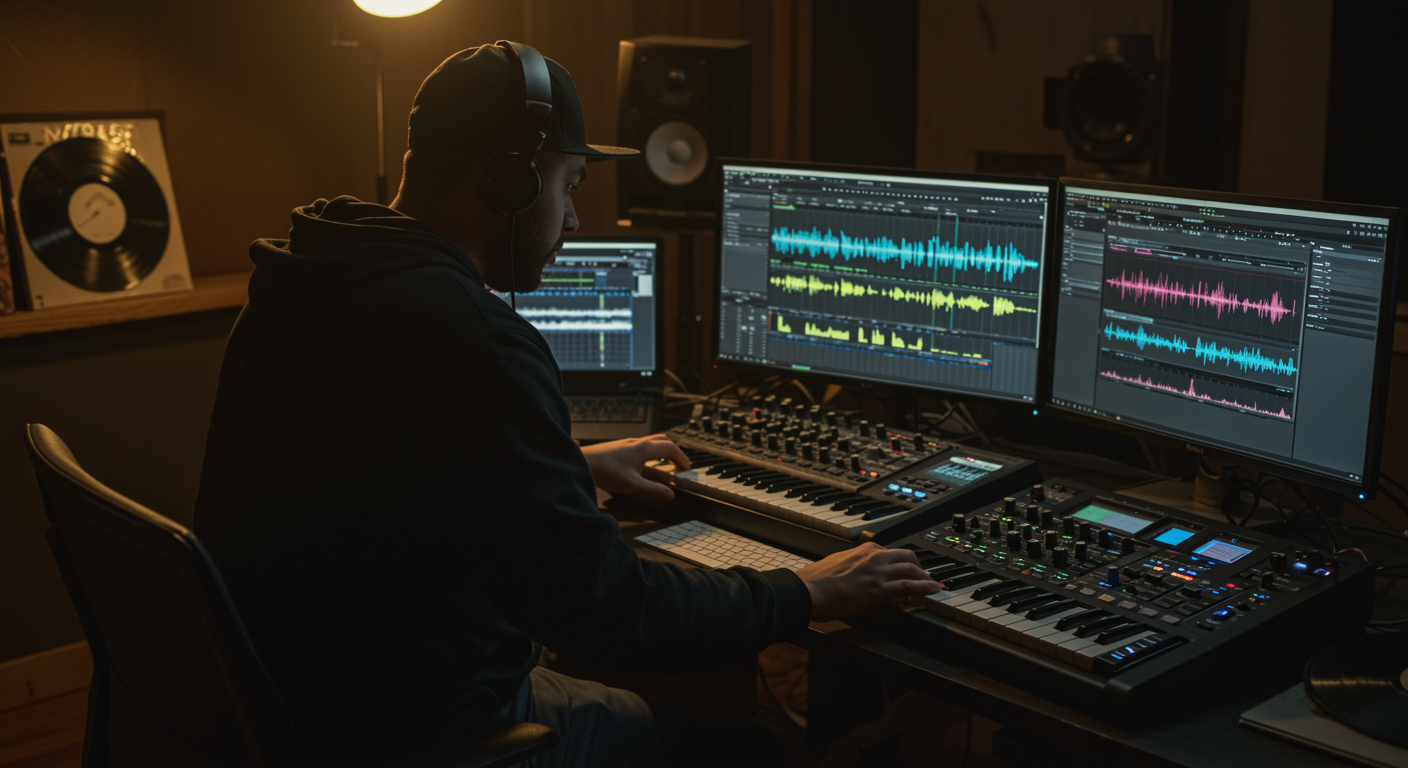
Modern producers often combine these digital tools with a discerning ear for obscure records, leveraging online databases and digital crates to unearth new source material. The workflow typically involves carefully listening for interesting melodic phrases, drum breaks, or sonic textures within a track, isolating them, and then importing them into a DAW or sampler. From there, the digital environment allows for precise slicing, pitching, filtering, and re-arrangement, often far beyond what was possible with early hardware. The ability to quickly experiment with different parameters and layer multiple sounds has transformed how producers approach sample deconstruction, enabling them to create incredibly complex and nuanced sonic tapestries.
Beyond the Loop: Artistic Vision and Re-Contextualization
While technical proficiency in chopping and manipulation is essential, the true mastery of a sample flip lies in a producer’s artistic vision and their ability to re-contextualize sound. This goes beyond simply finding a “good” loop; it involves discerning the hidden potential within a seemingly unrelated piece of music and transforming it to serve a new narrative or emotional purpose. A great flip doesn’t just sound good; it evokes a feeling, sets a mood, or creates a sonic landscape that is entirely original, even if built from existing components.
Producers with a keen artistic eye often unearth obscure sounds from forgotten records across diverse genres—be it dusty jazz LPs, psychedelic rock gems, or vintage film scores—and inject them into a contemporary hip hop framework. This act of re-contextualization can dramatically alter the perception of the original sound, giving it a new life and meaning it never had before. For instance, a melancholic string section from a 70s soul ballad might be transformed into a dark, cinematic backdrop for a hard-hitting rap verse, entirely shifting its emotional weight.
The art also involves building an entire sonic world around a flipped sample. It’s not just the sample itself but how it interacts with the drums, bassline, and other melodic elements that defines its impact. A producer might strategically layer multiple subtle chops from different sources, creating a rich harmonic bed, or juxtapose contrasting sounds to create tension and release. This creative alchemy transforms raw audio into a piece of art that stands on its own, showcasing the producer’s unique voice and their ability to sculpt sound into something both familiar and profoundly new.
Legal Frameworks and Ethical Considerations
While the creative possibilities of sample flipping are vast, navigating the legal and ethical landscape of sampling is a critical aspect for any producer aiming for commercial success. In most jurisdictions, using copyrighted material without permission constitutes copyright infringement. This means that a seemingly innocent four-second chop from a famous song, if recognizable, can lead to significant legal repercussions, including lawsuits, fines, and the loss of royalties.
The “fair use” doctrine, often cited in discussions around sampling, is a complex legal defense that rarely applies to commercial music production. Fair use typically considers factors like the purpose and character of the use (commercial vs. non-profit), the nature of the copyrighted work, the amount and substantiality of the portion used, and the effect of the use upon the potential market for or value of the copyrighted work. In commercial hip hop, where samples are often integral to the track and directly profit the artist, it’s exceedingly difficult to claim fair use.
Consequently, music sample legal clearance has become an indispensable process for producers and labels. This involves obtaining permission from all copyright holders of the original work, which typically includes both the sound recording owner (usually the record label) and the musical composition owner (the publisher or songwriter). The process can be lengthy, expensive, and may involve royalty splits or flat fees, sometimes making it impractical to clear certain samples, especially from well-known or multiple sources. Many classic hip hop tracks from the golden era are now saddled with hefty clearance fees or have been pulled from distribution due to uncleared samples.
To avoid these legal pitfalls, producers increasingly turn to alternatives such as **royalty-free sample libraries** (like Splice or Tracklib), which offer pre-cleared sounds for a subscription or one-time fee. Another approach is **interpolation**, where a melodic line or lyrical phrase from another song is re-recorded by live musicians or a vocalist, thereby only requiring clearance for the musical composition, which is often less costly and complex than clearing a sound recording. Understanding these legal frameworks is not just about avoiding trouble, but also about building a sustainable and ethical career in music production.