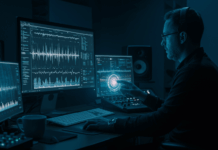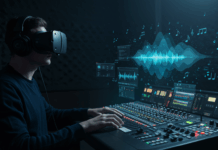

Procedural audio generation for music samples involves algorithms and computational methods to synthesize sounds from rules and parameters rather than relying on pre-recorded audio files. This approach allows for the creation of unique, dynamic, and highly customizable sound elements, offering an infinite palette for musicians and sound designers to generate novel sonic textures and variations far beyond traditional sample libraries.
The Core Mechanics of Procedural Audio Synthesis
Procedural audio generation fundamentally diverges from traditional sound design by constructing sounds algorithmically. Instead of capturing a real-world event with a microphone or using pre-existing digital recordings, procedural synthesis creates sound by modeling its physical properties or abstract characteristics. This process typically starts with mathematical functions or a set of rules that describe how a sound should behave, resonate, or evolve over time. For instance, simulating the sound of a rain drop might involve parameters for droplet size, impact surface, and ambient acoustics, all calculated in real-time or pre-rendered based on the defined rules. This capability allows for an unparalleled degree of control and variation, as even minute adjustments to a parameter can yield entirely new sonic outcomes, fostering truly unique music samples.
At its heart, procedural audio relies on various synthesis techniques, including physical modeling, granular synthesis, additive synthesis, subtractive synthesis, and frequency modulation (FM) synthesis. Physical modeling, for example, mimics the acoustic behavior of real-world objects, simulating how a string vibrates or air moves through a pipe. Granular synthesis breaks down a sound into tiny “grains” that can then be rearranged, layered, and manipulated to form new textures. The common thread among these methods is the generation of waveforms directly from computational instructions, offering a dynamic and flexible approach to sound creation that stands in stark contrast to the static nature of pre-recorded audio samples. This allows producers to generate sounds that are not only unique but also capable of evolving and responding dynamically within a musical context.
Benefits for Music Production and Sound Design
The application of procedural audio generation brings significant advantages to contemporary music production and sound design workflows. One of the most compelling benefits is the ability to produce truly unique music samples. Unlike traditional sample libraries, which are finite and widely accessible, procedurally generated sounds are custom-made, providing artists with an exclusive sonic identity. This uniqueness helps combat creative stagnation and allows for fresh, unheard textures that can define a track or an entire musical genre. For producers looking for highly personalized sounds, exploring methods for synthesizing custom synth samples can unlock truly novel sonic possibilities. The potential for endless variation means a producer can generate hundreds or thousands of distinct snare hits, synth pads, or atmospheric drones from a single set of parameters, each subtly different, without ever repeating a sound.
Beyond uniqueness, procedural generation offers unparalleled flexibility and customization. Parameters can be tweaked in real-time, allowing for immediate auditory feedback and iterative design. This makes the process highly interactive and intuitive, enabling artists to sculpt sounds with precision that would be impossible with fixed samples. For instance, instead of searching for the perfect kick drum sample, a producer can design one from scratch, adjusting attack, decay, tone, and resonance until it perfectly fits the mix. This granular control extends to automating parameter changes over time, facilitating dynamic and evolving soundscapes or responsive musical elements. The efficiency gained by generating variations on the fly also streamlines the creative process, reducing reliance on extensive sample libraries and enhancing workflow agility.
Key Techniques in Generating Dynamic Samples
Procedural audio employs a diverse array of synthesis techniques to achieve its dynamic and varied outputs for music samples. One prominent method is **physical modeling**, where algorithms simulate the physical properties of sound-producing objects and environments. This includes modeling the vibration of strings, the resonance of tubes, or the impact of surfaces, allowing for highly realistic and expressive sounds like a cello bowed with specific pressure or a drum struck with varying force. These models offer a direct pathway to creating acoustic instrument sounds with an organic responsiveness that static samples lack.
**Granular synthesis** is another powerful technique, which involves dissecting an audio waveform into tiny fragments, or “grains,” typically ranging from 1 to 50 milliseconds. These grains can then be rearranged, layered, stretched, transposed, and manipulated in numerous ways to create entirely new textures, drones, pads, or percussive elements. The individual grains can be played back at different speeds, volumes, and pitches, creating a rich tapestry of evolving sound. To delve deeper into this powerful method, explore tutorials on granular synthesis music samples and crafting unique soundscapes. Furthermore, **FM synthesis** (Frequency Modulation) and **wavetable synthesis** are crucial for generating complex timbres digitally. FM synthesis modulates one waveform’s frequency with another, yielding metallic, bell-like, or harsh digital sounds characteristic of many classic synthesizers. Wavetable synthesis uses short, looping waveforms (wavetables) that can be swept through to create dynamic and evolving tonal shifts, providing a robust foundation for unique melodic and harmonic samples. The combination and creative application of these techniques empower producers to craft intricate, evolving, and truly original music samples.
Real-World Applications Beyond Traditional Sampling
The utility of procedural audio generation extends far beyond merely creating unique music samples; it profoundly impacts various multimedia domains. In **game audio**, procedural methods are revolutionary for creating adaptive and dynamic soundscapes. Instead of triggering fixed sound files, a game engine can procedurally generate footsteps based on surface material, player speed, and character weight in real-time, leading to incredibly immersive and responsive environments. Similarly, environmental sounds like wind, rain, or flowing water can be infinitely varied, ensuring no two moments sound exactly alike. This dynamic generation capability is crucial for enhancing player immersion and replayability.
In **film and television post-production**, procedural audio offers new avenues for sound design, particularly for science fiction, fantasy, or abstract sequences where traditional sounds may not suffice. Designers can create entirely alien creature vocalizations, futuristic machinery hums, or otherworldly atmospheric textures that are impossible to record naturally. This allows for unparalleled creative freedom and the ability to craft unique sonic identities for fictional elements. Moreover, in **interactive art installations** and **virtual reality (VR) experiences**, procedural audio is indispensable. It enables sounds to react dynamically to user input, spatial positioning, or changing environmental conditions, providing a level of interactivity and realism that significantly enhances the user’s engagement. This move beyond static sound libraries unlocks a new dimension of sonic interaction and environmental responsiveness across creative industries.
Tools and Platforms for Creative Implementation
Engaging with procedural audio generation for music samples requires access to specialized tools and platforms, ranging from dedicated software to programming environments. **Generative music software** like Max/MSP, Pure Data, or SuperCollider provide visual programming environments or code-based interfaces that allow users to design complex sound synthesis algorithms from the ground up. These platforms offer granular control over every aspect of sound generation, making them ideal for experimental artists and researchers looking to push the boundaries of sonic creation. They are highly flexible, enabling the creation of bespoke synthesizers, effects processors, and complete generative musical systems.
For those within more traditional digital audio workstations (DAWs), **plugins** and **virtual instruments** are increasingly integrating procedural capabilities. Synthesizers like Native Instruments Reaktor, Xfer Records Serum, and Arturia Pigments often include sophisticated modulation matrices, granular engines, or wavetable editors that allow for procedural manipulation of sound parameters. A deeper understanding of VST synthesizers can further enhance a producer’s ability to leverage these tools for procedural sound design. Some plugins specifically focus on physical modeling (e.g., AAS Lounge Lizard, Chromaphone) or advanced granular synthesis (e.g., Output Portal), offering accessible interfaces for complex procedural sound design. Furthermore, some modern DAWs themselves are starting to incorporate more generative tools, providing built-in capabilities for algorithmic composition and sound synthesis, bridging the gap between coding-centric approaches and user-friendly music production environments. The diverse array of tools ensures that artists across various skill levels can explore and implement procedural audio techniques into their workflow.
Navigating Challenges in Procedural Audio Creation
While procedural audio generation offers immense creative potential, its implementation comes with its own set of challenges that creators must navigate. One primary hurdle is the **complexity of algorithm design**. Crafting effective algorithms that produce musically pleasing or functionally appropriate sounds often requires a deep understanding of acoustics, digital signal processing, and programming. Unlike simply dropping a sample into a track, designing a procedural system demands foresight into how various parameters will interact and evolve, which can be a steep learning curve for many musicians and sound designers. The iterative process of refining these algorithms to achieve desired sonic characteristics can be time-consuming and technically demanding.
Another significant challenge lies in **maintaining creative control and predictability**. While the infinite variation offered by procedural methods is a strength, it can also be a weakness. Achieving a specific, desired sound can sometimes feel like searching for a needle in a haystack of possibilities, as small parameter changes can lead to drastically different outcomes. This can make the process less intuitive than directly manipulating a pre-recorded sound. Furthermore, the **computational demands** of real-time procedural audio can be substantial, especially for complex models or multiple simultaneous generators. This can strain CPU resources, potentially leading to latency or dropped audio during live performance or intense production sessions. Balancing sonic complexity with performance efficiency remains a critical consideration for developers and users alike, requiring careful optimization and resource management.
The Future Landscape of Algorithmic Sound
The trajectory of procedural audio generation for music samples points towards an increasingly integrated and intelligent future. One of the most significant developments is the burgeoning role of **Artificial Intelligence (AI) and Machine Learning (ML)**. AI can be leveraged to learn from existing audio data and generate new samples that adhere to specific stylistic or timbral characteristics, effectively automating parts of the procedural design process. For those curious about the current landscape, many excellent AI music sample generation tools are already available to creative producers. This could involve AI generating new drum patterns, synth melodies, or even entire soundscapes based on user prompts or analysis of existing musical works, offering an unprecedented level of creative assistance and expanding the definition of an “algorithm.”
We can also anticipate advancements in **real-time adaptive music systems**, where procedural audio drives entire musical compositions that dynamically respond to environmental cues, user interaction, or narrative progression. This moves beyond merely generating individual samples to crafting entire evolving scores that are always unique and perfectly synchronized with ongoing events, particularly impactful for interactive media. Furthermore, the continuous improvement in **computational power and optimization techniques** will make increasingly complex procedural models feasible on a wider range of hardware, making sophisticated algorithmic sound design more accessible. This evolution promises to empower musicians and sound designers with even more potent tools, blurring the lines between creation and exploration, and ushering in an era of truly dynamic and infinitely varied sonic possibilities.