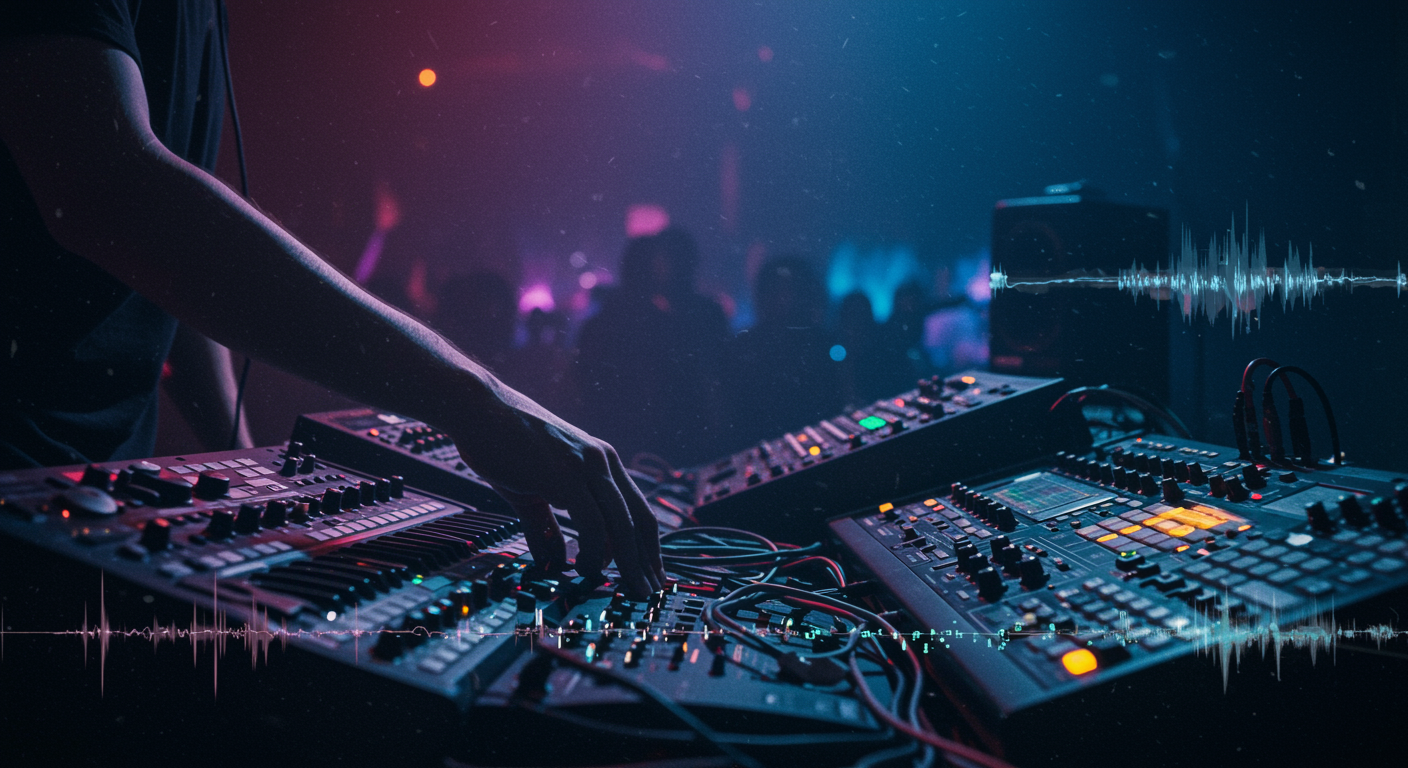
The history of sampling in electronic dance music is intrinsically linked to the genre’s development, serving as a fundamental technique that has shaped its sonic identity, enabled profound innovation, and propelled its continuous evolution from obscure underground movements to global cultural phenomena.
Early Sonic Experiments and Influential Precursors
Before the widespread adoption of digital technology, the concept of utilizing pre-recorded sounds as musical elements found its roots in early experimental music. Musique concrète, pioneered by Pierre Schaeffer in the late 1940s, involved manipulating recorded everyday sounds, often on tape recorders, to create new sonic compositions. While not directly electronic dance music, this approach laid the intellectual groundwork for treating sound recordings as malleable material rather than fixed performances. Further influence stemmed from Jamaican dub reggae in the 1970s, where producers like King Tubby and Lee “Scratch” Perry famously re-edited, stripped down, and effects-processed existing recordings, effectively creating new versions or “versions” of tracks, marking an early form of audio manipulation and recontextualization that heavily prefigured modern sampling techniques.
The most direct ancestor to sampling in electronic dance music undoubtedly came from early hip-hop in the Bronx during the late 1970s and early 1980s. For a deeper dive into the historical origins of hip hop samples, exploring their roots offers valuable insight. DJs like Grandmaster Flash and Afrika Bambaataa pioneered the technique of isolating and looping drum breaks from funk and soul records using two turntables and a mixer. This live, rhythmic manipulation provided the foundational grooves for rappers and dancers, demonstrating the power of re-using existing audio to create entirely new musical pieces. This practice rapidly evolved with the introduction of early samplers, bringing the spontaneity of DJing into the studio and transforming it into a precise, repeatable production method that would soon define genres beyond hip-hop.
The Advent of Digital Samplers and Genre Formation
The mid-1980s marked a pivotal era with the proliferation of more accessible and affordable digital samplers. Machines like the E-mu SP-1200, Akai MPC60, and later the Akai S-series (S900, S950, S1000) became indispensable tools for producers. These samplers allowed artists to capture short segments of audio, manipulate their pitch, duration, and playback, and then sequence them to form entirely new compositions. This technological leap democratized music production, moving it from expensive, professional studios into home setups, fostering an explosion of creativity in nascent electronic music scenes across Chicago, Detroit, and New York.
In Chicago, this new technology was instrumental in the birth of House music. Producers like Frankie Knuckles and Marshall Jefferson would sample disco basslines, vocal snippets, and drum hits, re-contextualizing them over new drum machine rhythms (often from the Roland TR-909 or TR-808). This ability to take familiar elements and layer them into repetitive, hypnotic grooves was central to House’s appeal. Similarly, in Detroit, the architects of Techno – Juan Atkins, Derrick May, and Kevin Saunderson – utilized samplers to weave intricate textures, rhythmic patterns, and vocal fragments, often drawing inspiration from industrial sounds and European synth-pop to forge a futuristic, mechanical, yet soulful sound. The ease of sampling allowed producers to create complex, multi-layered tracks quickly, defining the raw, energetic aesthetics of early rave culture.
Sampling as a Creative Art Form and Sonic Reconstruction
As the technology matured, so did the creative applications of sampling within electronic dance music. Producers moved beyond simple looping to complex sonic reconstruction. In genres like Jungle and later Drum & Bass, which emerged in the early 1990s in the UK, the art of “chopping breaks” became paramount. Iconic drum breaks, particularly the “Amen break” from The Winstons’ “Amen, Brother,” were intricately sliced, re-arranged, pitched, and processed to create intricate, syncopated rhythms that were often unrecognizable from their original form. This level of manipulation transformed sampling from a mere re-use of material into a sophisticated form of sound design and rhythmic architecture.
Beyond drum breaks, sampling extended to vocals, instrumental loops, and even environmental sounds. Understanding vocal sample manipulation techniques became crucial for producers. Producers meticulously scoured obscure records, B-sides, and film soundtracks for unique sonic textures, spoken-word fragments, or melodic phrases. These snippets were often timestretched, granulated, or filtered to create entirely new atmospheres and hooks. The act of “crate digging” became a revered ritual, with producers seeking out rare vinyl not just for inspiration, but for the very building blocks of their tracks. This artistic approach fostered a rich tapestry of sounds, allowing artists to inject nostalgic warmth, exoticism, or a sense of otherworldliness into their compositions, pushing the boundaries of what electronic music could convey.
Navigating Legalities and the Shift in Industry Practices
The explosive growth and commercial success of electronic dance music, heavily reliant on sampled material, eventually brought it into direct confrontation with copyright law. For a comprehensive understanding, every producer should be familiar with music sample copyright laws. In the early days, particularly within underground scenes, the use of samples was often unchecked, seen as a form of homage or simply part of the creative process. However, as EDM tracks gained mainstream traction, copyright holders of the original sampled works began to take notice. Landmark legal cases throughout the 1990s and early 2000s, such as the Grand Upright Music, Ltd. v. Warner Bros. Records Inc. case concerning Biz Markie’s “Alone Again,” set precedents that significantly altered the landscape for sampling.
These legal challenges forced a shift in industry practices. Producers and labels began to implement rigorous sample clearance procedures, which involve identifying all sampled material, negotiating licenses with the original copyright holders, and often paying substantial fees or sharing royalties. This process, while ensuring fair compensation for original creators, also introduced significant hurdles for emerging artists and independent labels. It led to a more strategic and often more subtle use of sampling, encouraging artists to either create their own sounds, heavily process samples to avoid detection, or turn to royalty-free sample packs and synthesis, thus influencing the evolution of sonic aesthetics in subsequent years.
Modern Sampling Approaches and Evolving Techniques
The evolution of sampling in electronic dance music continues into the present day, propelled by advancements in software and digital audio workstations (DAWs). Modern producers have access to sophisticated software samplers like Native Instruments Kontakt, Ableton Sampler, and various plug-ins that offer unprecedented control over audio manipulation. These tools allow for complex timestretching, granular synthesis, spectral processing, and intricate slicing, making it possible to transform source material beyond recognition or to create entirely new instruments from a single sound.
The rise of curated sample pack libraries has also significantly impacted modern production. These professionally recorded and processed collections offer royalty-free sample packs, providing a vast palette for producers without the legal complexities of traditional record sampling. While some argue this reduces the “crate-digging” element, it has democratized access to high-quality audio and allowed producers to focus more on arrangement and sound design. Furthermore, the integration of sampling with other synthesis techniques means that the line between “sampled” and “synthesized” sounds often blur, enabling hybrid soundscapes that continue to push the boundaries of what electronic dance music sounds like, ensuring sampling remains a vibrant and essential component of the genre’s ongoing innovation.