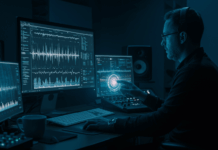

Micro-sampling techniques in experimental electronic music involve extracting minute fragments of audio, often just milliseconds in duration, from existing sound sources and reassembling or manipulating them to create entirely new textures, rhythms, and sonic landscapes. This process moves beyond conventional sampling by focusing on the microscopic detail of sound, transforming familiar audio into abstract, unique elements essential for pushing the boundaries of traditional musical forms.
The Essence of Micro-Sampling in Experimental Electronic Music
Micro-sampling is a specialized approach within sound design that focuses on the extremely short-duration manipulation of audio. Unlike traditional sampling, which might involve looping or chopping larger musical phrases, micro-sampling deals with ‘grains’ of sound, typically ranging from a few milliseconds to a fraction of a second. This granular approach allows producers to deconstruct sounds to their fundamental sonic components, revealing hidden textures and creating entirely new timbres. In experimental electronic music, these micro-sampling techniques are instrumental for crafting alien soundscapes, intricate rhythmic patterns, and evolving ambient textures that challenge conventional harmonic and melodic structures. The technique leverages the inherent qualities of sound itself, bending and reshaping them at a microscopic level to generate unforeseen sonic outcomes.
The philosophical underpinning of micro-sampling aligns perfectly with the ethos of experimental electronic music, which often seeks to dismantle established musical norms and explore uncharted sonic territories. By reducing sounds to their most elemental forms, producers gain unprecedented control over their intrinsic characteristics, such as attack, decay, pitch, and formants. This allows for a level of sonic sculpting that can transform anything from a field recording to a synthesizer patch into an unrecognizable, yet compelling, musical ingredient. The focus shifts from the source material’s original identity to its potential as raw sonic data, ready to be recontextualized and reimagined within a broader experimental composition.
Unlocking New Timbres and Textures
One of the primary applications of micro-sampling techniques is the generation of novel timbres and rich, evolving textures that are difficult to achieve through traditional synthesis or sampling methods. By rapidly sequencing, layering, and modulating tiny audio fragments, producers can create complex sound events that pulsate, shimmer, or dissolve into abstract sonic clouds. For example, a single drum hit can be micro-sampled into hundreds of tiny grains, each with slightly varied pitch or amplitude, then spread across the stereo field to form a vast, resonant wash rather than a percussive impact. This kind of manipulation is crucial for experimental electronic music, where the emphasis often lies on sonic atmosphere and the intricate interplay of subtle, shifting soundscapes.
Beyond abstract textures, micro-sampling can also be used to imbue sounds with a unique sense of movement and internal life. Through granular synthesis, which is a key micro-sampling technique, individual grains can be played back at varying rates, densities, and positions within a buffer, leading to sounds that morph, stretch, and contort in real-time. This dynamic capability allows for the creation of sounds that are not static but possess an inherent evolution, making them ideal for creating tension, release, and narrative within an experimental electronic track. The ability to sculpt the micro-details of a sound directly contributes to the overall expressiveness and distinct character of the musical piece.
Fundamental Techniques for Fragment Manipulation
Effective micro-sampling relies on several fundamental techniques for manipulating audio fragments. Beyond basic cutting, these include granular playback, time-stretching, pitch-shifting, and looping at extremely short intervals. Granular playback involves breaking a sound into tiny “grains” and then controlling their density, spread, and playback direction, often resulting in shimmering, textural effects or stretched-out, ethereal drones. Time-stretching samples, when applied at the micro-level, can either freeze a moment in time or dramatically expand it without altering pitch, revealing hidden spectral components or creating ghostly reverberations. Pitch-shifting, when applied to individual grains, can generate complex harmonic structures or dissonant clusters from a single monophonic source.
Another crucial technique involves intricate looping of very short segments. By isolating a mere millisecond of a waveform and looping it rapidly, producers can create new waveforms entirely, generating unique oscillator-like sounds with distinct timbres. Modulating the loop length, playback speed, or fade-ins/outs of these micro-loops allows for continuous sonic transformation. Furthermore, layering multiple micro-sampled elements, each processed with different parameters, contributes to dense, multifaceted soundscapes. These combined micro-sampling techniques offer a robust toolkit for creators seeking to delve into the microscopic details of sound and construct entirely novel sonic identities within experimental electronic music compositions.
Granular Synthesis: A Cornerstone Approach
Granular synthesis stands as one of the most powerful and distinctive micro-sampling techniques, intrinsically tied to the production of experimental electronic music. For a deeper dive into this transformative process, consider exploring a dedicated granular synthesis tutorial to create unique soundscapes. This method involves the decomposition of a sound into tiny, independent “grains,” each typically between 1 to 50 milliseconds in duration. Producers then manipulate parameters such as grain density, pitch, amplitude, position within the source buffer, and stereo spread to reassemble these grains into entirely new sonic entities. The result is often textural, amorphous, and highly dynamic, moving far beyond the scope of traditional synthesis or sampling. It excels at creating evolving soundscapes, shimmering pads, glitchy rhythmic elements, and abstract noise textures.
The beauty of granular synthesis lies in its ability to extract and highlight specific timbral characteristics of the original sound while divorcing it from its temporal context. A sustained vocal note can become a swirling atmospheric texture, or a sharp percussive hit can transform into a metallic drone. Advanced granular synthesizers allow for real-time manipulation, enabling artists to perform and improvise with these sound grains, making it a highly interactive and expressive micro-sampling technique. Its capacity for transforming any audio input into a malleable sonic clay makes it an indispensable tool for experimental electronic music composers aiming for unparalleled sound design and sonic innovation.
Essential Software and Tools for Micro-Sampling
To effectively implement micro-sampling techniques, experimental electronic music producers rely on a range of specialized software and digital audio workstations (DAWs). Modern DAWs like Ableton Live, Logic Pro, and FL Studio provide robust built-in sampling and audio manipulation capabilities that can be pushed to granular extremes. However, dedicated granular synthesis plugins and standalone applications offer even greater precision and creative control. Examples include Izotope Iris, Native Instruments Reaktor (especially its various granular ensembles), granular modules within VCV Rack, and dedicated plugins like GRM Tools Grinder or Max for Live devices such as Granulator.
These tools enable producers to load any audio file and immediately begin extracting, processing, and reassembling micro-fragments. Features often include adjustable grain size, density, playback direction (forward, reverse, random), pitch randomization, and spatialization. The interplay between these parameters allows for intricate sound sculpting, turning simple samples into complex, evolving sonic textures. Furthermore, creative use of envelopes, LFOs, and external modulation sources within these software environments can automate and add further dynamism to the micro-sampling process, making them indispensable for anyone serious about exploring advanced micro-sampling techniques in experimental electronic music.
Structuring Your Micro-Sampling Workflow
A structured workflow is crucial for mastering micro-sampling techniques and integrating them effectively into experimental electronic music production. The process typically begins with meticulous source material selection. Any sound can be a source, from field recording techniques and dialogue to instrumental phrases or synthesized tones, but choosing material with interesting timbral characteristics at a microscopic level is key. Once a sound source is chosen, the next step involves loading it into a granular synthesizer or a capable sampler within your DAW.
From there, experimentation with parameters such as grain size, density, and spread begins. Producers often record or “perform” these parameter changes to capture evolving textures. The resulting micro-sampled elements can then be further processed with effects like reverb, delay, distortion, or spectral shapers to enhance their unique qualities. Arrangement and layering follow, where these distinct micro-sampled textures are combined with other musical elements to build a coherent, yet experimental, composition. An iterative approach of sampling, manipulating, processing, and arranging allows for deep sonic exploration and refinement, ensuring that the micro-samples contribute meaningfully to the overall artistic vision of the experimental electronic music piece.
Crafting Dynamic Compositions with Micro-Samples
Beyond individual sound design, the true power of micro-sampling techniques in experimental electronic music emerges in the compositional phase, where these intricately sculpted fragments are woven into dynamic and engaging musical structures. Micro-samples can serve as the foundation for entire tracks, forming evolving melodic motifs, abstract rhythmic patterns, or continuous atmospheric beds. The key lies in thinking about how these short bursts of sound interact and develop over time, creating a sense of movement and narrative without relying on traditional harmonic progressions or conventional rhythm.
Producers often employ automation extensively to animate the micro-sampled elements, modulating parameters such as grain density, pitch, and stereo position to create shifting soundscapes. This allows a single micro-sampled texture to morph dramatically throughout a composition, providing constant sonic interest. Layering different micro-sampled sounds, each with its own unique characteristics and processing, also contributes to a rich, multidimensional sonic fabric. The juxtaposition of granular textures with more traditional synth lines or percussive elements can lead to compelling contrasts, pushing the boundaries of what is conventionally considered “music” and firmly establishing the track within the experimental electronic music genre.
Overcoming Challenges in Micro-Sampled Sound Design
While micro-sampling techniques offer immense creative potential, they also present unique challenges in sound design for experimental electronic music. One primary hurdle is maintaining musicality or cohesion when dealing with highly fragmented and often abstract sounds. Without careful attention, micro-sampled textures can quickly become chaotic or thin. Producers must develop an ear for how these minute sonic elements contribute to the broader sonic picture, ensuring they serve a purpose within the composition, whether it’s creating ambience, rhythmic drive, or textural interest.
Another challenge is avoiding repetition, even when working with seemingly infinite variations. It’s easy for micro-sampled sounds to develop a similar “glitchy” or “shimmering” character if parameters are not varied sufficiently. To combat this, experimentation with a wide array of source materials, diverse granular algorithms, and creative post-processing effects is essential. Furthermore, careful consideration of gain staging and dynamic range is crucial, as highly processed micro-samples can sometimes result in unforeseen peaks or muddy frequency builds, requiring diligent mixing and mastering to bring out their intricate details and ensure a clean, impactful final sound.