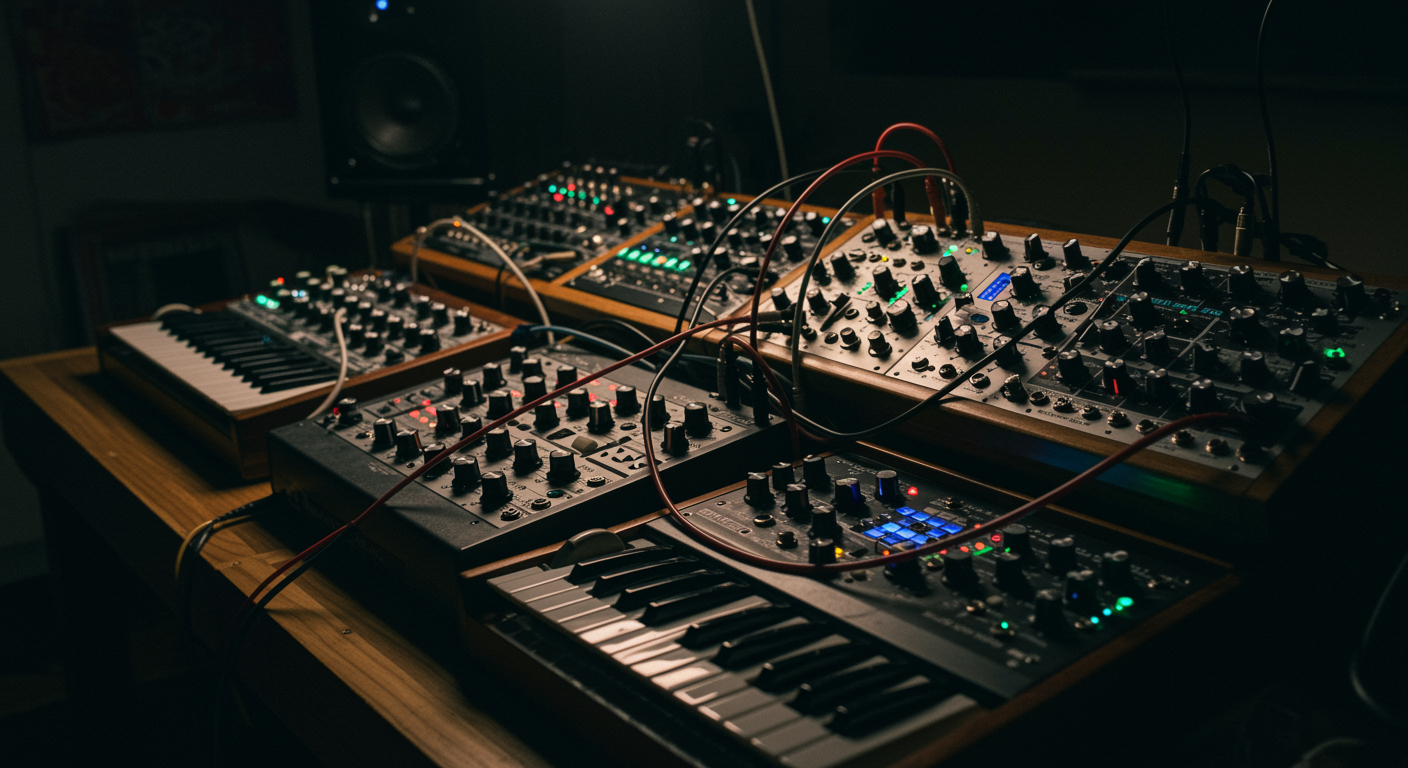
Modular synthesis patching with recorded audio samples involves integrating pre-existing sound files into a modular synthesizer system, treating them as sound sources or modulators that can be manipulated and processed by various modules like granular processors, samplers, filters, and effects, thereby opening up vast possibilities for unique sound design, experimental music, and dynamic performances.
Key Modules for Audio Sample Integration
Incorporating recorded audio samples into a modular synthesis setup requires specific modules designed for sample playback and manipulation. Dedicated sampling modules, such as granular synthesizers or traditional samplers, are at the core of this process. Granular synthesis modules (e.g., Make Noise Morphagene, Instruo Arbhar, Qu-Bit Nebulae) excel at deconstructing samples into tiny “grains” that can be individually manipulated in terms of pitch, speed, density, and position, creating evolving textures and otherworldly soundscapes. Traditional sampler modules often provide more direct control over playback, looping, and slicing, making them suitable for drum breaks, melodic phrases, or one-shot effects. Beyond dedicated samplers, modules with built-in micro-SD card slots or USB connectivity can act as playback devices, feeding audio directly into the system for further processing.
For those looking to integrate real-time audio or longer samples without dedicated modules, an audio interface that converts line-level signals to Eurorack levels is essential. This allows external sources like field recordings, vocals, or instruments to be brought into the modular environment. Once audio is introduced, a suite of processing modules becomes invaluable. Voltage-controlled filters (VCFs) can sculpt the tonal characteristics of samples, while voltage-controlled amplifiers (VCAs) allow dynamic control over their amplitude. Envelope generators are crucial for shaping the attack, decay, sustain, and release of sample playback, making them sound more musical or percussive. Effects modules like delays, reverbs, and wavefolders can further transform raw samples into complex sonic textures.
Advanced Sample Manipulation Techniques
Beyond basic playback, modular synthesis offers an unparalleled environment for advanced sample manipulation. Granular synthesis is a prime example, allowing users to freeze, stretch, reverse, and re-sequence microscopic portions of a sample using control voltages (CV). By modulating grain size, position within the sample, and density, new timbres can emerge that bear little resemblance to the original source material. Time-stretching and pitch-shifting without altering playback speed are also achievable, especially with modules designed for varispeed playback or specific DSP algorithms.
Looping and slicing techniques are fundamental. Many sampling modules allow users to define loop points within a sample, which can then be modulated to create dynamic loops that shift and evolve. Slicing enables a single sample to be divided into multiple segments, each triggerable independently via gates or sequencers. This is particularly powerful for creating complex drum patterns from a single breakbeat or arranging melodic phrases. Discovering and utilizing high-quality free sample loops can further enhance these techniques. Further manipulation can involve using LFOs or sequencers to modulate playback speed, start/end points, or even the amount of a particular effect applied to a sample, ensuring that sounds are constantly in motion and full of life.
Creative Patching with Samples and Synthesis
The true power of modular synthesis with samples lies in the interaction between recorded audio and traditional synthesis elements. A recorded percussive hit, for instance, can trigger an envelope that simultaneously shapes the VCA of the sample and sweeps a filter on an oscillator, creating a layered sound where the sample provides the initial transient and the oscillator adds body or sustain. Using samples as modulation sources is another potent avenue. The amplitude envelope of a vocal sample could be extracted and used to modulate the cutoff frequency of a filter applied to a drone, creating a responsive, vocal-like filter sweep. For more creative applications, explore specific vocal sample manipulation techniques.
Cross-synthesis techniques are also highly effective. By feeding a sample into the external input of a wavefolder or a ring modulator, the sample’s characteristics can be imprinted onto another oscillator, generating rich and complex harmonics. Similarly, using a sample’s gate output (if available) or a dedicated trigger extractor to fire off other events in the patch – such as advancing a sequencer or triggering another sample – creates intricate rhythmic and melodic interdependencies. This integration blurs the lines between pre-recorded audio and generated sound, leading to unique sonic results not easily achievable with other synthesis methods.
Performance and Live Sample Processing
Integrating recorded audio samples into a modular setup significantly enhances live performance capabilities. Performers can dynamically manipulate samples in real-time, making each rendition unique. Modules with performance-oriented features, such as large tactile controls, dedicated CV inputs for key parameters, and easy sample loading, are invaluable. For instance, a performer might use a joystick or touch plate to sweep through a granular cloud derived from a field recording, while simultaneously using a sequencer to trigger rhythmic slices of a drum loop.
Live processing of external audio sources also expands the performance palette. Musicians can feed guitars, vocals, or other instruments into the modular system, treating them as raw material for real-time synthesis and effects. This allows for dynamic transformations, from subtle textural enhancements to extreme sonic mangling, all under voltage control. The ability to record snippets of live input directly into a sampling module and then immediately manipulate them further blurs the line between live performance and studio production, offering spontaneous creativity and evolving soundscapes on stage.
Optimizing Sample Sourcing and Preparation
The quality and characteristics of the recorded audio samples significantly impact the outcome of modular patching. Sourcing high-quality, clean samples is paramount, as noise or unwanted artifacts will be amplified and manipulated within the system. Field recordings, personal libraries, or royalty-free sample packs are excellent starting points. To capture truly unique sounds, consider delving into advanced field recording techniques. When selecting samples, consider their inherent sonic qualities: do they have interesting transients, long sustains, or rich harmonic content that lends itself to manipulation?
Sample preparation before loading into modules can drastically improve workflow and results. This often involves basic editing in a digital audio workstation (DAW) – trimming silence, normalizing volume, and potentially removing unwanted frequencies or clicks. Understanding various audio editing software options can greatly assist this process. For granular synthesis, samples with diverse spectral content can yield more interesting results than overly simple waveforms. For looping, ensuring precise loop points to avoid clicks and pops is crucial. Understanding the sample rate and bit depth compatibility of your modular sampler modules is also important to prevent conversion issues. Thoughtful preparation ensures that your modular system can focus on creative transformation rather than compensating for poorly prepared source material.