In the ever-evolving landscape of music production, VST synthesizers stand out as essential tools for musicians and producers alike. These software marvels emulate traditional hardware synthesizers, granting you the power to create, manipulate, and design unique sounds directly from your digital audio workstation (DAW). With a diverse array of synthesis types—ranging from subtractive to wavetable—VST synthesizers offer endless possibilities for sound exploration. This comprehensive overview aims to demystify VST synthesizers, illuminating their functionality, the different types available, and the benefits they bring to your music-making journey. Whether you’re a seasoned producer or just starting out, understanding these virtual synthesizers can elevate your creative process to new heights. Dive in and discover the sounds waiting for you!
Overview of VST Synthesizers
VST synthesizers are powerful software tools designed to emulate traditional hardware synthesizers, enabling music producers to craft, manipulate, and design an extensive array of sounds within digital audio workstations (DAWs). These virtual instruments provide an impressive range of synthesis types, including subtractive, additive, and wavetable synthesis, each offering unique sound creation capabilities.
The functionality of VST synthesizers transcends basic sound generation. They allow for intricate sound design through various methods, such as layering, modulation, and applying effects. This versatility makes them indispensable in modern music production, appealing to both novices and seasoned professionals looking to expand their sonic palettes.
Many VSTs come equipped with expansive sound libraries, offering presets that cater to different genres and styles. This library access enhances productivity by providing immediate inspiration and a foundation for further sound manipulation. Additionally, their compatibility with a variety of DAWs ensures seamless integration into most music production workflows, thus simplifying the creative process.
Overall, VST synthesizers stand at the forefront of digital sound engineering, embodying a blend of innovation, accessibility, and depth that continues to shape the landscape of music production today.
Popular Types of VST Synthesizers
VST synthesizers encompass a variety of synthesis methods that cater to different artistic needs and production styles.
Subtractive synthesis is a widely-used technique in which harmonic content is created by removing frequencies from a rich sound source. Synths like Sylenth1 exemplify this approach, allowing users to sculpt warm, lush tones through oscillators and filters. This type is particularly popular in genres like house and trance, where warmth and depth are essential.
In contrast, additive synthesis builds sounds by layering individual sine waves. Each wave contributes to create complex tones, making it a powerful tool for sound design. Synths that utilize additive techniques often excel in producing bell-like sounds or evolving textures, appealing to experimental music genres.
FM synthesis, a cornerstone of many classic hardware synthesizers, involves modulating the frequency of one oscillator with another. This method offers a unique range of sounds, suitable for everything from metallic timbres to rich pads. A notable VST using this technique is FM8, known for its user-friendly interface and extensive preset library.
Granular synthesis breaks sounds into tiny grains, which can then be manipulated independently. This innovative approach allows musicians to create evolving soundscapes and textures, perfect for ambient or experimental music. This method encourages creative exploration, often resulting in unexpected sonic results.
Wavetable synthesis, as seen in popular synths like Serum, provides immense flexibility for sound design by offering a range of waveforms that can be varied over time. This technique is ideal for crafting evolving sounds, making it appealing for genres like electronic and pop.
Each of these synthesis methods offers distinct advantages, enabling music producers to explore and create unique sounds tailored to their styles.
Key Features and Functionality of VST Synthesizers
VST synthesizers come packed with features that are essential for any music production toolkit.
MIDI compatibility is fundamental, allowing seamless interactions with MIDI controllers for real-time playing and triggering of sounds.
Sound modulation techniques, such as Low-Frequency Oscillators (LFOs) and envelope generators, play a crucial role in shaping sounds.
LFOs enable rhythmic modulation of parameters like pitch or filter cutoff, creating dynamic sound movements. Envelope generators control how a sound evolves over time, affecting its attack, decay, sustain, and release (ADSR), which is vital for crafting expressive voices.
Many VSTs also include a variety of built-in presets, catering to a wide range of musical styles and helping users quickly find inspiring sounds.
The user interface is another important aspect, designed for efficiency in programming and sound manipulation.
A well-organized layout allows users to access parameters easily, facilitating effective sound design without overwhelming complexity.
This combination of features empowers both beginners and seasoned producers to explore creative sound possibilities, making VST synthesizers an integral part of modern music production.
Moreover, the ability to integrate with Digital Audio Workstations (DAWs) streamlines workflow, ensuring that sound design becomes a fluid part of the creative process.
Integrating VST Synthesizers with Digital Audio Workstations
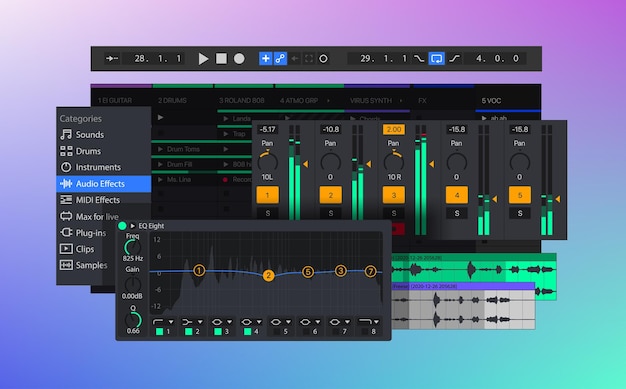
VST synthesizers can be easily integrated into popular DAWs such as Ableton Live and FL Studio, making music production a streamlined and efficient process. This integration allows producers to leverage the vast array of sounds these synthesizers provide while maintaining the flexibility of their DAW environments.
When comparing VSTs to hardware synths, VSTs offer the unique advantage of real-time editing and automation, enabling more fluid experimentation with sound design. The ability to route audio easily within a DAW promotes understanding signal flow, which is crucial in achieving desired sounds and mixing results.
Effective audio routing can enhance workflow, allowing users to apply effects to individual VST tracks or combine them in various ways for richer textures. With digital audio workstation integration, producers benefit from functionalities like MIDI mapping and automation, optimizing their creative process.
Thus, mastering the integration of VST synthesizers not only fine-tunes your production skills but also fosters a deeper connection with the sonic possibilities available within your chosen DAW. This seamless collaboration between VSTs and DAWs elevates the overall music production experience.
Tips for Selecting and Using VST Synthesizers
Choosing the right VST synthesizer involves assessing your specific music production needs, compatibility with your DAW, and the type of sound you’re aiming to create.
Consider these key factors:
Determine Your Sound Goals: Identify the genres you want to produce and select synths that excel in those styles. For example, wavetable synths like Serum are great for electronic genres, while analog emulations suit warmer tones.
Check Compatibility: Ensure that the VST works seamlessly with your DAW. Read user reviews and documentation to ascertain how well the plugin integrates.
User Interface and Ease of Use: Opt for synthesizers with intuitive interfaces, especially if you’re a beginner. A user-friendly design can make it easier to navigate sound creation and editing.
Explore Learning Resources: Look for synths that have a supportive community and plenty of tutorials or documentation available. This can help you quickly learn how to get the most out of the synthesizer.
Trial Versions: Whenever possible, take advantage of demo versions before purchasing. This allows you to evaluate the sound quality and features directly, ensuring it meets your expectations.
Gather Community Insights: Engaging in forums and social media groups can provide additional perspectives and recommendations based on real user experiences.
Stay Organized: Once you’ve integrated a VST into your setup, maintain an organized library of presets, sounds, and samples to streamline your workflow.
Troubleshoot Wisely: If you encounter issues, consult community forums, user manuals, or dedicated troubleshooting guides related to the specific VST plugin to resolve problems efficiently.
By utilizing these tips, you can maximize the effectiveness of the VST synthesizers in your music production toolkit, cultivating a productive and creative environment.
In conclusion, VST synthesizers have become an integral part of modern music production, providing endless creative possibilities for sound designers and musicians alike. Their wide variety of synthesis types—ranging from wavetable to FM—offers unique attributes that cater to different artistic needs. By understanding these tools and integrating them effectively into workflows, creators can maximize their potential and streamline their processes.
As technology continues to advance, the future of VST synthesizers promises exciting developments. Embracing these changes will not only improve sound quality and flexibility but also foster innovation in sound design techniques. Overall, the overview of VST synthesizers showcases their significance in contemporary music production and invites musicians to explore their full capabilities.
FAQ
Q: What are VST synthesizers?
A: VST synthesizers are software plugins used within digital audio workstations (DAWs) to create a wide range of sounds through various synthesis techniques, enhancing music production flexibility.
Q: What types of VST synthesizers are available?
A: Common types include wavetable, subtractive, FM, and granular synthesizers, each offering unique features suited for different sound design applications in music production.
Q: What are some popular VST synthesizers in the market today?
A: Notable VST synthesizers include Serum, Omnisphere, and Massive, celebrated for their quality sound, versatility, and user-friendly interfaces, appealing to both novice and experienced producers.
Q: How can I effectively use VST synthesizers in my music production workflow?
A: Proper installation and understanding DAW compatibility are essential for integrating VST synthesizers. Familiarizing yourself with each synth’s interface streamlines workflow and enhances productivity.
Q: What sound design techniques can I use with VST synthesizers?
A: Techniques like layering sounds, applying filters, and utilizing modulation sources allow for custom sound creation. Exploring presets enhances creativity and leads to innovative soundscapes.
Q: What are the future trends in VST synthesizers?
A: Trends point toward increased cloud integration, subscription-based models, and the incorporation of AI-assisted plugins, promising expanded possibilities in sound design and music production.