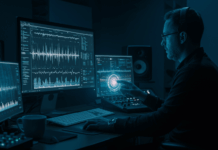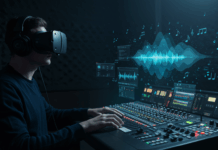
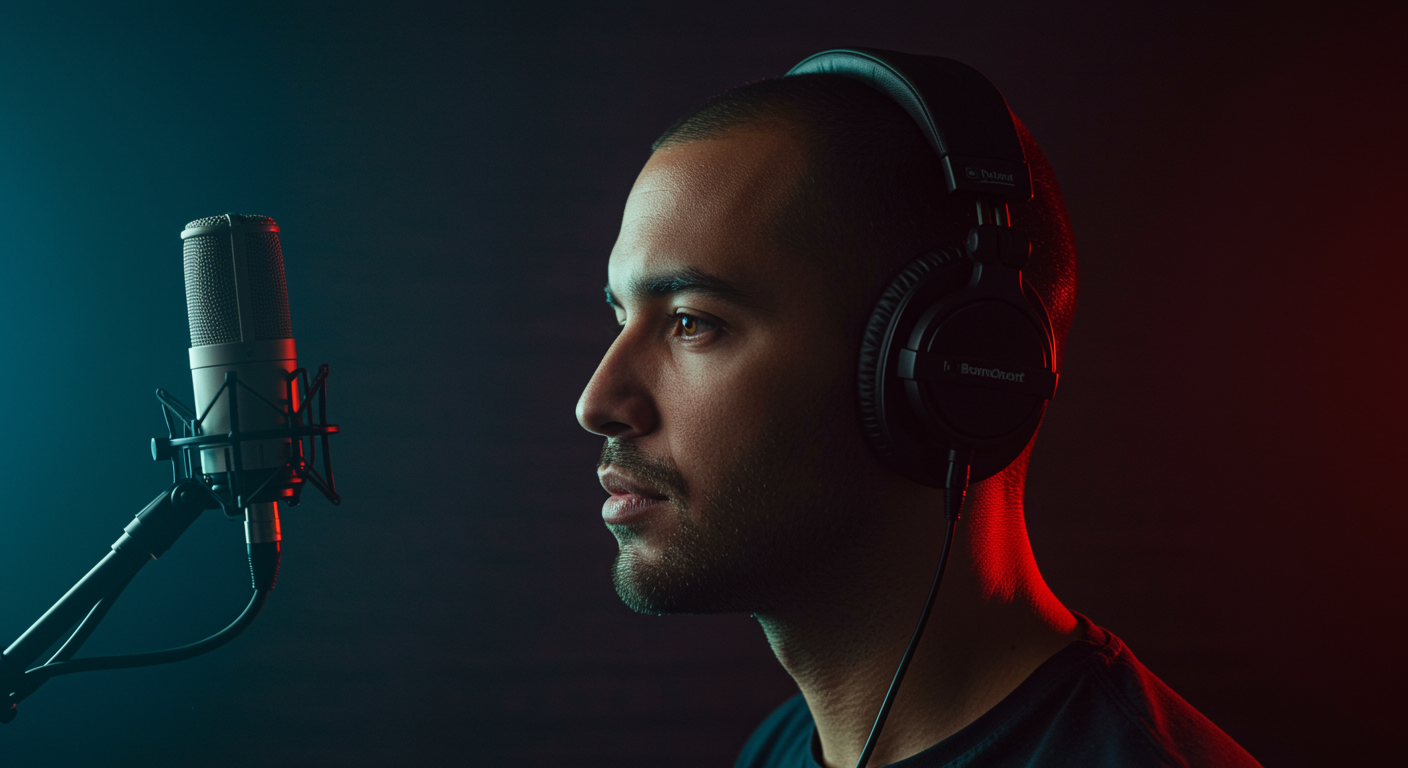
Binaural audio samples create truly immersive music experiences by simulating how humans naturally hear sound in a three-dimensional space, using specialized recording and processing techniques to reproduce spatial cues that trick the brain into perceiving sounds originating from specific directions and distances around the listener, leading to a profound sense of presence and depth not achievable with traditional stereo. Techniques for working with acoustic space samples are crucial for such immersive results.
The Science Behind Binaural Perception
Binaural audio leverages the intricate way the human auditory system localizes sounds. Our ears, separated by the head, receive sounds at slightly different times and with varying intensity and spectral characteristics, known as interaural time differences (ITD) and interaural level differences (ILD) respectively. These subtle discrepancies are crucial spatial cues that the brain processes to determine the origin of a sound. Beyond ITDs and ILDs, the unique shape of our outer ears (pinnae), head, and torso subtly filters and reflects sound waves before they reach the eardrums, imparting further directional information. This personalized filtering effect, captured by a Head-Related Transfer Function (HRTF), is what makes sounds appear to come from in front, behind, above, or below, rather than just left or right.
When binaural audio samples are created, they aim to accurately replicate these natural cues. Unlike conventional stereo, which primarily manipulates left and right channel volume and panning, binaural recording attempts to capture and reproduce the exact sound waves that would arrive at a listener’s eardrums if they were present at the recording location. This precise replication of spatial information, when played back through headphones, bypasses the natural filtering of the listener’s own head and ears, directly delivering the pre-filtered, directionally encoded sound, thus immersing the listener in a convincing three-dimensional soundscape that feels remarkably real and immediate.
Recording Techniques for Binaural Audio
Creating effective binaural audio samples for immersive music hinges on specialized recording techniques designed to capture sound as a human would perceive it. These methods often draw inspiration from advanced field recording techniques to capture unique sounds from real-world environments. The most common method involves using a dummy head microphone, often referred to as a “binaural head” or “KU 100 type microphone.” This device features two omnidirectional microphones precisely placed within realistic ear canals embedded in an anatomically accurate model of a human head. The dummy head inherently mimics the acoustic shadow of the head and the filtering effects of the pinnae, directly capturing the ITDs, ILDs, and HRTFs that are critical for spatial localization.
While dummy heads offer a high degree of authenticity, alternative approaches exist. In-ear microphones, which are miniature microphones inserted directly into a person’s ear canals, can also record personalized binaural audio. This method captures the listener’s unique HRTF, potentially offering an even more convincing personal immersion, though it can be less practical for general music production. Moreover, sophisticated software algorithms and plugins can synthesize binaural effects from standard multi-channel or even stereo recordings. These tools apply generic HRTFs or allow for custom HRTF loading to create a spatialized sound field, offering flexibility for producers who don’t have access to dedicated binaural recording equipment but still wish to experiment with binaural audio samples in their music production.
Integrating Binaural Sound in Music Production
Integrating binaural audio samples into music production opens up unprecedented creative possibilities for immersive soundscapes. Unlike traditional mixing, where elements are panned left or right and given artificial reverb for depth, binaural mixing allows sounds to be precisely placed at any point in a 360-degree sphere around the listener. This means instruments can appear to originate from behind the listener, vocals can float above, or subtle effects can sweep from one side to the other with natural spatial fluidity, greatly enhancing the narrative and emotional impact of a piece of music.
Producers utilize binaural processing plugins during the mixing stage to transform mono or stereo tracks into spatialized sounds. These plugins typically offer controls for azimuth (horizontal angle), elevation (vertical angle), and distance, allowing for meticulous placement of individual sonic elements. Beyond static placement, automation can be used to create dynamic movement, making sounds travel through the virtual space, which can add a kinetic energy and narrative dimension to the music. Genres like ambient, experimental electronic, film scores, and even certain forms of pop are particularly well-suited for binaural integration, as the added dimensionality can deepen the listener’s engagement and create a truly unique auditory journey. Creative techniques such as granular synthesis can also be employed to craft captivating soundscapes. The careful selection and manipulation of binaural audio samples are key to crafting experiences that transport the listener beyond conventional stereo boundaries.
Enhancing the Listener’s Experience
The primary appeal of binaural audio samples for immersive music lies in their ability to dramatically enhance the listener’s experience, providing a sense of presence and realism that conventional stereo playback cannot match. When listening to binaural tracks through headphones, the brain is tricked into perceiving sounds as originating from distinct points in a three-dimensional space, rather than just from two speakers or directly inside the head. This “out-of-head” localization creates a profound feeling of being enveloped by the music, as if the listener is physically present within the soundscape.
This enhanced spatial realism can evoke stronger emotional responses and deeper engagement with the music. For instance, a choir might sound as if the singers are positioned around the listener in a vast hall, or a guitar riff could feel like it’s played directly in front, allowing for a more intimate connection with the performance. Such immersive qualities are paramount in applications like cinematic sound design, where crafting epic atmospheres is key. The perception of distance, height, and direction adds layers of detail and subtlety, making previously flat recordings come alive. This immersive quality transforms passive listening into an active, experiential journey, enabling listeners to discover new nuances and textures within the music as if they were exploring a physical sonic environment, making every listen a unique and captivating event.
Challenges and Best Practices for Creators
While creating immersive music with binaural audio samples offers immense potential, producers face unique challenges. One significant hurdle is the “individual HRTF problem.” Since each person’s head and ear shape is unique, a binaural recording optimized for one HRTF might sound less convincing for another listener. Generic dummy head recordings use an average HRTF, which works well for many but can lead to “in-head localization” or less precise spatialization for some individuals. Managing this variability while striving for universal immersion is a constant balancing act for creators.
To overcome these challenges and maximize impact, several best practices are essential. First, mastering the art of spatial mixing is crucial; simply applying a binaural plugin isn’t enough. Thoughtful sound design, considering how each element will contribute to the 3D space, is paramount. Second, careful consideration of playback medium is vital; binaural audio is designed for headphones, and its effect is largely lost on speakers. Communicating this to listeners ensures they experience the content as intended. Third, subtle application often yields better results than over-spatialization; an overly aggressive binaural mix can be disorienting. Finally, continuous experimentation with different binaural recording techniques and processing plugins, along with A/B testing on various headphones and with different listeners, helps refine the spatial experience and achieve truly compelling immersive music.
The Evolving Landscape of Immersive Sound
The field of immersive sound, with binaural audio samples at its core, is continually evolving, pushing the boundaries of what’s possible in music and audio experiences. Advancements in computational audio are making personalized HRTFs more accessible, with some technologies now allowing users to scan their own ears for a custom binaural experience. This personalization promises to resolve the HRTF challenge, leading to even more convincing and consistent spatialization across different listeners. Furthermore, the integration of binaural rendering into virtual reality (VR) and augmented reality (AR) platforms is creating dynamic, interactive soundscapes where the audio responds in real-time to the user’s head movements and environment, further blurring the lines between the digital and physical worlds.
Beyond personalized HRTFs and VR/AR, research into adaptive binaural processing is exploring ways to dynamically adjust the spatial cues based on listener preferences or environmental factors. The proliferation of high-resolution audio formats and streaming platforms that support immersive audio is also driving wider adoption and pushing artists and producers to explore these new sonic dimensions. As technology progresses, the creation and consumption of immersive music powered by sophisticated binaural audio samples will become increasingly seamless, offering a future where every listener can dive into a uniquely tailored, three-dimensional auditory world that transcends traditional listening experiences.