
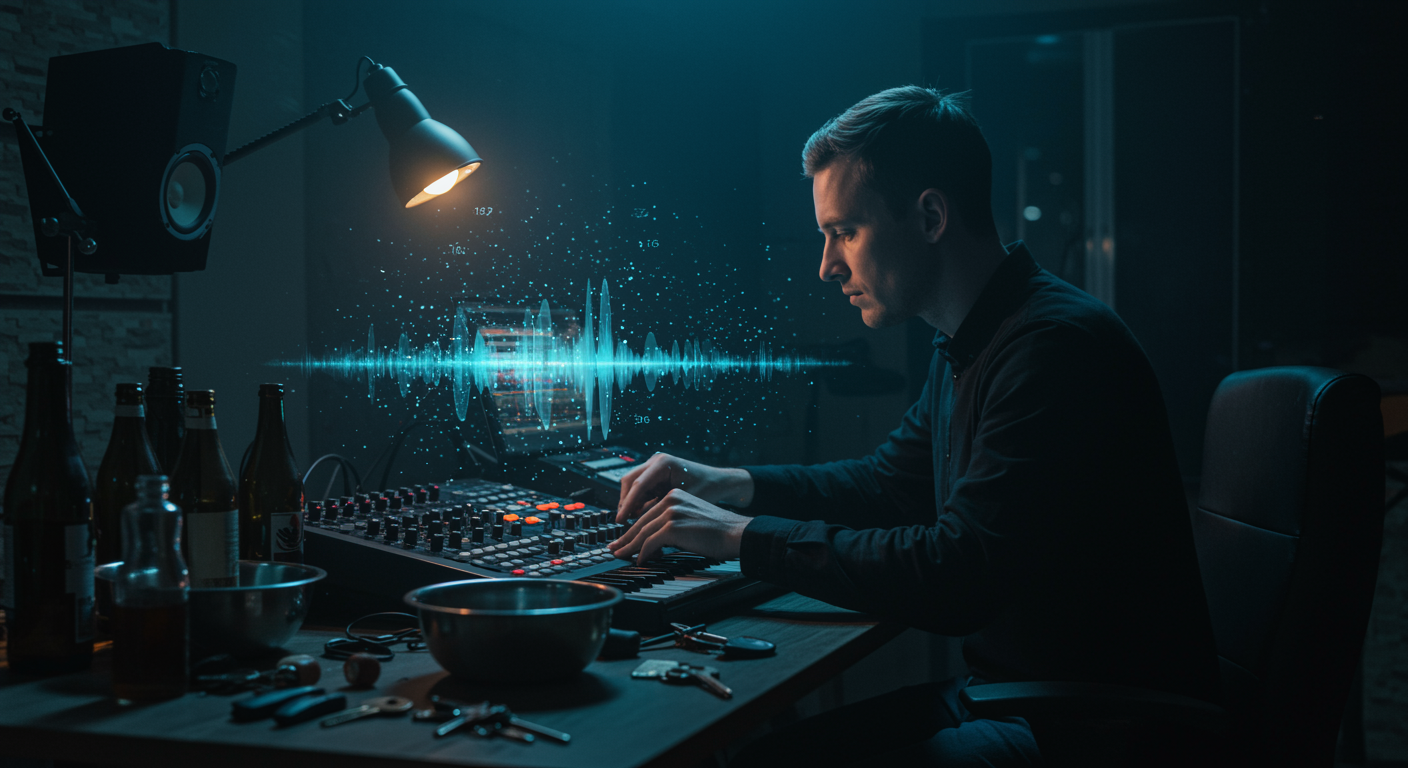
Designing sci-fi sound effects using household item samples and granular synthesis offers an incredibly creative sound design pathway to unique sonic textures, transforming mundane objects into otherworldly sounds through the intricate manipulation of tiny audio fragments.
The Foundation of Sci-Fi Sonic Textures
Sci-fi sound design thrives on sounds that evoke the unknown, the futuristic, and the technologically advanced, often steering clear of readily identifiable acoustic sources. This pursuit of originality frequently leads designers to unconventional recording methods and sophisticated processing techniques. The inherent alien quality of many sci-fi environments demands sonic elements that feel unfamiliar yet cohesive within the narrative. Rather than relying on synthetic presets or stock sound libraries, an innovative approach involves leveraging everyday objects as the raw material for extraordinary sonic transformations. This method ensures a unique sonic fingerprint for projects, establishing a distinct auditory world that enhances immersion and narrative depth without the constraints of traditional sound libraries.
Sourcing Sounds: Unlocking the Potential of Household Items
The first step in this creative journey involves a keen ear for potential within your immediate environment. Household items, from creaking doors and rattling keys to humming appliances and bubbling water, possess a vast and often overlooked sonic palette. To effectively capture these sounds, mastering field recording techniques is crucial, ensuring high fidelity and isolating their distinct characteristics. A simple contact microphone can reveal hidden vibrations and resonances within objects that a conventional microphone might miss, turning a mundane plastic container into a resonant drum or a vibrating metal bowl into a complex drone. When collecting these household samples, consider variations in performance: tapping, scraping, dropping, flicking, or bowing an object can yield a multitude of different timbres from a single source. Labeling and organizing these recordings meticulously is crucial, as a well-curated library of raw household samples forms the bedrock for subsequent granular synthesis transformations.
Granular Synthesis Explained: A Transformative Approach
Granular synthesis is a potent audio synthesis technique that deconstructs a sound into tiny segments, known as “grains,” typically ranging from 1 to 50 milliseconds in duration. For a deeper dive, explore a dedicated granular synthesis tutorial. These grains can then be individually manipulated in terms of pitch, duration, amplitude, spatial position, and playback order. Unlike traditional sampling, which plays back a recorded sound in a linear fashion, granular synthesis treats the sound source as a cloud of individual sonic particles. This allows for the creation of completely new textures, drones, swirling atmospheres, and shimmering effects that bear little resemblance to the original sound. For sci-fi sound design, granular synthesis is particularly invaluable because it excels at generating abstract, evolving, and highly textured soundscapes that embody futuristic or alien qualities, making it a cornerstone for innovative sonic creation. The ability to freeze, stretch, and reshape moments of audio offers unparalleled creative freedom.
Applying Granular Synthesis to Household Samples
The true magic of this approach lies in processing your meticulously recorded household samples through granular synthesis engines. Begin by loading a distinct household sound—perhaps a metallic clang, a water drip, or a plastic crinkle—into your granular synthesizer. Experiment with core parameters: adjusting grain size can morph a short transient into a sustained texture or a sharp attack into a diffused shimmer. Increasing grain density can create thick, swirling clouds of sound, while reducing it can produce sparse, pointillistic textures. Modulating grain position within the original sample allows you to focus on specific, interesting timbres or to constantly shift through the sound’s evolution. Pitch manipulation on individual grains can generate complex harmonies, dissonances, or sweeping glissandos, turning a simple hum into an extraterrestrial communication or an unsettling drone. Applying random variations to these parameters can quickly lead to unexpected and compelling sci-fi sound effects, moving beyond the recognizable origins of the household samples.
Crafting Specific Sci-Fi Effects
With household samples and granular synthesis, a vast array of specific sci-fi sound effects becomes achievable. For instance, creating intricate UI beeps and button clicks can start with short, percussive household sounds like a pen click or a tap on a glass. Granularly stretching these brief sounds and modulating their pitch can produce synthetic-sounding, responsive interface elements. Laser blasts and energy weapons often benefit from processing sharp, metallic impacts or flicked springs; stretching the initial attack with granular synthesis and adding subtle pitch shifts can give them a distinct futuristic punch. Alien creature sounds can be designed by feeding recordings of guttural human sounds, animal vocalizations, or even distorted mechanical noises into a granular engine, then manipulating grain pitch and density to create complex, evolving textures that defy easy categorization. The hum of a spaceship engine might begin with a mundane fan noise or refrigerator drone, transformed through extended grain playback and subtle, continuous parameter modulation into a deep, resonant, and dynamic sci-fi engine hum. This methodology allows for the rapid iteration of ideas, turning everyday sounds into iconic sonic elements.
Advanced Techniques and Creative Exploration
To push the boundaries of sci-fi sound design even further with household samples and granular synthesis, consider incorporating advanced techniques. For instance, layering multiple granular textures derived from different household objects can build immense sonic depth and complexity. For example, a granularized metallic scrape layered with a stretched water gurgle might create an alien liquid metal effect. Integrating modulation sources, such as LFOs or envelopes, to control granular parameters in real-time can introduce organic movement and evolution into static sounds. Automating grain density, pitch, or position can transform a simple background texture into a dynamic soundscape that subtly reacts to onscreen action. Furthermore, experimenting with external effects processors post-granular synthesis, such as reverbs, delays, and distortion, can further abstract and enhance the sci-fi quality of your sounds. Consider recording sounds in challenging acoustic spaces, like stairwells or bathrooms, to capture natural reverberation that can be granularized alongside the direct sound, adding another layer of environmental texture. The true power lies in fearless experimentation and a willingness to embrace serendipity, allowing the interaction between your source material and the granular engine to guide your creative process.
Essential Gear and Software Considerations
Embarking on this journey of sci-fi sound design using household samples and granular synthesis requires a few key tools. A good quality field recorder and a versatile microphone are paramount for capturing clean, usable household samples; both conventional condenser microphones and contact microphones prove invaluable. For processing, any digital audio workstation (DAW) will serve as the central hub for recording, editing, and mixing. The core of the granular transformation will come from dedicated granular synthesis plugins or standalone software. Many modern DAWs include capable granular synthesis modules, or there are numerous third-party options ranging from free to professional-grade. These tools offer varying levels of control over grain parameters, modulation capabilities, and real-time performance. While the specific brand of software or hardware is less critical than understanding the principles, investing in tools that offer intuitive control and robust functionality will greatly enhance your workflow and creative potential, enabling seamless transformation of your everyday recordings into groundbreaking sci-fi sonic elements.