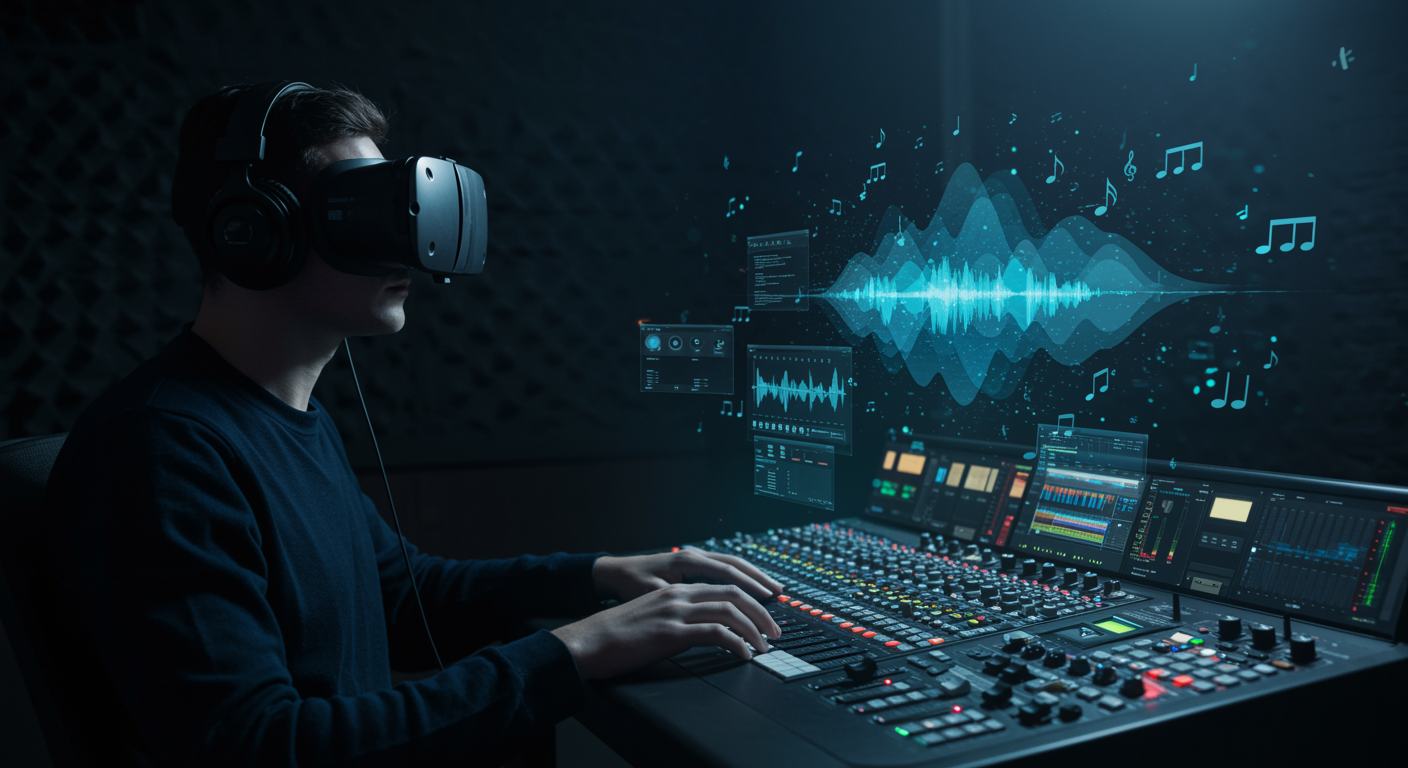
Layering music samples for virtual reality sound design is fundamental to crafting truly immersive experiences, requiring the meticulous combination of diverse audio elements—from ambient textures and foley to musical cues—and often employing spatial audio techniques to create dynamic, believable, and responsive sonic environments that deeply engage the user within the virtual world.
Foundations of VR Audio Immersion
Achieving profound immersion in virtual reality hinges significantly on the quality and fidelity of its audio design. Unlike traditional media, VR demands that sound not merely accompany visuals but actively contribute to the sense of presence and believability. This means moving beyond stereo soundscapes to embrace 3D spatial audio, where sounds emanate from specific points in a virtual space and react convincingly to the user’s head movements and proximity. The goal is to trick the brain into perceiving sounds as originating from real-world objects, thereby enhancing the feeling of “being there.” This foundational understanding is crucial for any virtual reality sound design tutorial, emphasizing the need for techniques that go beyond simple playback.
The core principle of immersive VR audio involves creating a sonic environment that is both rich and reactive. Static sound loops, while sometimes useful for foundational ambient beds, quickly break immersion if they don’t respond to user interaction or changes in the virtual scene. Dynamic audio systems, which can alter volume, pitch, and spatial position in real-time based on game logic or user input, are therefore paramount. This responsiveness, coupled with a carefully constructed soundscape, prevents auditory fatigue and maintains the illusion of an interactive, living world. Understanding these elements sets the stage for effectively layering audio samples to build complex, believable sonic textures.
Creating Depth with Layered Audio Samples
Layering audio samples is an indispensable technique for injecting depth, realism, and emotional resonance into virtual reality experiences. For designers looking to boost mix richness, this method provides unparalleled control. Instead of relying on a single, often flat, sound, a designer combines multiple discrete audio elements to form a richer, more complex sound event. For instance, a simple “footstep” might become a composite of a shoe scuff, a subtle floor creak, and the resonance of the environment. This approach is particularly effective for sound effects (SFX), but it extends significantly to ambient soundscapes and even musical elements, allowing for nuanced sonic textures that evolve naturally.
The power of layered audio samples lies in their ability to convey detail and subtlety that single samples often cannot. A forest ambience, for example, is not just one bird chirping; it’s a mix of distant wind, rustling leaves, the buzz of insects, and various bird calls, each positioned and treated independently. When these layers are meticulously blended, they create a cohesive and believable sonic fabric. These elements are key to crafting immersive soundscapes in VR. For music, layering can mean combining different instrumental tracks, adding atmospheric pads, or blending melodic motifs to build tension or emotional weight, all while considering how these layers will interact within a spatial audio framework. This depth is critical for ensuring that VR environments feel truly lived-in and responsive.
Selecting and Preparing VR Audio Assets
The success of any virtual reality sound design hinges heavily on the quality and suitability of the audio assets chosen for layering. When selecting music samples or sound effects, priority should be given to clean, high-fidelity recordings that are free from unwanted noise and artifacts. The acoustic characteristics of the samples should align with the desired virtual environment; for instance, dry recordings are often preferred for spatialization, as reverberation can be added later and controlled more precisely within the VR engine. Tutorials on virtual reality sound design often emphasize the importance of source material.
Preparation is equally vital. This includes editing samples to remove unnecessary leading or trailing silence, normalizing their volume for consistent playback, and categorizing them effectively for easy access. For layered audio, ensuring that individual samples have clear frequency separation can prevent muddiness when they are combined. Pitches and tempos of music samples may need to be adjusted to fit the overall composition or the dynamics of the VR experience. Investing time in meticulous asset preparation streamlines the layering process and contributes significantly to the final immersive quality of the audio design, making the subsequent stages of a virtual reality sound design tutorial more efficient.
Advanced Techniques for Spatialized Layering
Beyond simply stacking sounds, advanced techniques for spatialized layering are essential for achieving truly convincing VR audio. Spatialization places individual audio layers in a 3D virtual space, allowing users to perceive sounds as coming from specific directions and distances. This involves utilizing HRTFs (Head-Related Transfer Functions) which simulate how the human ear localizes sound. Understanding how to integrate binaural audio samples is crucial for this. When layering, each component of a composite sound—like the rattle, the impact, and the distant echo of a falling object—can be independently spatialized, providing a granular level of realism.
Dynamic mixing plays a crucial role in these advanced layers. This involves real-time adjustments to volume, spatial position, and effects based on the player’s actions, proximity to objects, or changes in the game state. For example, a layered ambient track might gradually increase the volume of wind elements as the player ascends to a higher altitude, or a musical motif might fade in or out depending on their progress through a narrative. Adaptive audio further enhances this by allowing layers to seamlessly crossfade or switch based on predefined parameters, creating an ever-evolving soundscape that feels alive and responsive. Implementing these techniques demands careful planning and integration with the VR development platform, transforming simple layered audio samples into a dynamic, interactive soundscape.
Essential Tools for VR Sound Designers
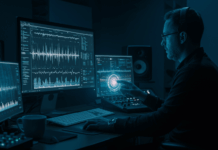
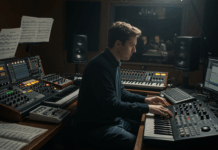
To effectively implement virtual reality sound design, designers rely on a suite of specialized software and hardware. Digital Audio Workstations (DAWs) such as Ableton Live, Logic Pro X, Cubase, or Pro Tools are fundamental for editing, mixing, and preparing individual audio samples. These tools provide the precision needed to clean up recordings, apply effects, and meticulously arrange layers before integration into a VR environment. They are the backbone for crafting the layered audio samples that form the basis of immersive experiences.
Beyond DAWs, dedicated middleware solutions like FMOD Studio and Wwise are indispensable for managing and implementing complex audio systems within VR games and applications. These platforms offer robust tools for spatial audio, dynamic mixing, adaptive music systems, and parameter control, allowing designers to create intricate relationships between audio events and game logic without extensive coding. They facilitate the real-time adjustments and responsive behaviors that define high-quality VR audio. Furthermore, game engines like Unity and Unreal Engine have their own built-in audio features and plugins that support spatial audio and provide frameworks for integrating layered soundscapes, often working in tandem with middleware for optimal performance and flexibility in a virtual reality sound design tutorial context.
Overcoming Common Audio Design Challenges
Designing immersive audio for VR presents unique challenges that distinguish it from traditional linear media. One significant hurdle is preventing auditory clutter or “mud.” As more layers of audio samples are introduced, the soundscape can quickly become overwhelming and indistinct. Careful frequency carving, strategic use of panning, and dynamic ducking—where one sound’s volume is momentarily reduced when another more important sound plays—are vital strategies to maintain clarity. Furthermore, managing CPU and memory resources is critical, as complex audio systems can be resource-intensive, impacting VR performance. Optimizing sample rates, bit depths, and judicious use of effects are necessary compromises.
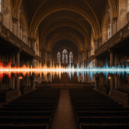
Another common challenge lies in maintaining a consistent sense of acoustic space. When layering sounds, it’s crucial that all elements sound as if they belong to the same virtual environment, which often involves careful consideration of acoustic space samples. This often means applying a consistent reverb profile across various layers or adjusting the spatial decay curves so sounds fade realistically with distance. Disorientation can also arise if spatial audio cues are inconsistent or inaccurate. Rigorous testing and calibration are required to ensure that sounds correctly anchor the user within the virtual world. Addressing these obstacles head-on is key to a successful virtual reality sound design tutorial, ensuring the layered audio samples enhance rather than detract from immersion.
A Workflow for Dynamic VR Soundscapes
Developing dynamic VR soundscapes through layered audio samples follows a structured workflow that prioritizes both creative vision and technical implementation. It typically begins with conceptualization, where the desired emotional tone and interactive elements of the virtual environment are defined. This phase guides the selection and creation of initial audio assets. Next, individual layers—such as ambient beds, specific sound effects, and musical motifs—are crafted and edited in a DAW, ensuring each element is clean and prepared for integration.
The core of the workflow involves integrating these prepared samples into a VR development environment or audio middleware. Here, the layering truly comes alive, as designers establish spatialization parameters for each sound, define dynamic mixing rules based on game states or player proximity, and implement adaptive audio logic that allows soundscapes to evolve seamlessly. This stage also includes setting up attenuation curves, reverb zones, and occlusion systems to ensure sounds react realistically to the virtual architecture. Throughout this process, iterative testing within the VR headset is paramount, allowing for immediate feedback and adjustments to optimize the balance, clarity, and immersive quality of the layered audio samples, forming the practical core of any virtual reality sound design tutorial.
Testing and Iteration in Virtual Environments
The final, yet continuous, stage of virtual reality sound design involves rigorous testing and iteration directly within the virtual environment. It is impossible to accurately gauge the impact of layered audio samples and spatialization techniques without experiencing them firsthand in a VR headset. Designers must repeatedly don the headset, move through the virtual space, interact with objects, and trigger various events to assess the effectiveness of the soundscape.
During testing, attention must be paid to several critical aspects: Is the spatial positioning accurate? Do sounds occlude and obstruct naturally? Are the dynamic and adaptive layers transitioning smoothly and meaningfully? Is the overall mix clear, or does it suffer from muddiness or excessive volume peaks? User feedback, alongside critical self-assessment, is invaluable at this stage. Iteration then involves returning to the DAW or middleware to fine-tune levels, adjust spatial parameters, refine adaptive logic, or even swap out entire layers until the audio perfectly complements the visual experience, creating an unparalleled sense of presence and immersion. This continuous loop of design, implementation, and testing ensures the highest quality virtual reality sound design.