Exploring obscure world instrument samples offers sound designers and music producers an unparalleled avenue to craft unique soundscapes by introducing novel textures, rich cultural heritage, and unexpected emotional depth. These samples transcend conventional sonic palettes, providing distinct timbres and rhythmic complexities that can breathe new life into any composition, from film scores and ambient tracks to electronic music production and experimental genres, resulting in truly original and immersive auditory experiences.
The Allure of Unconventional Timbres
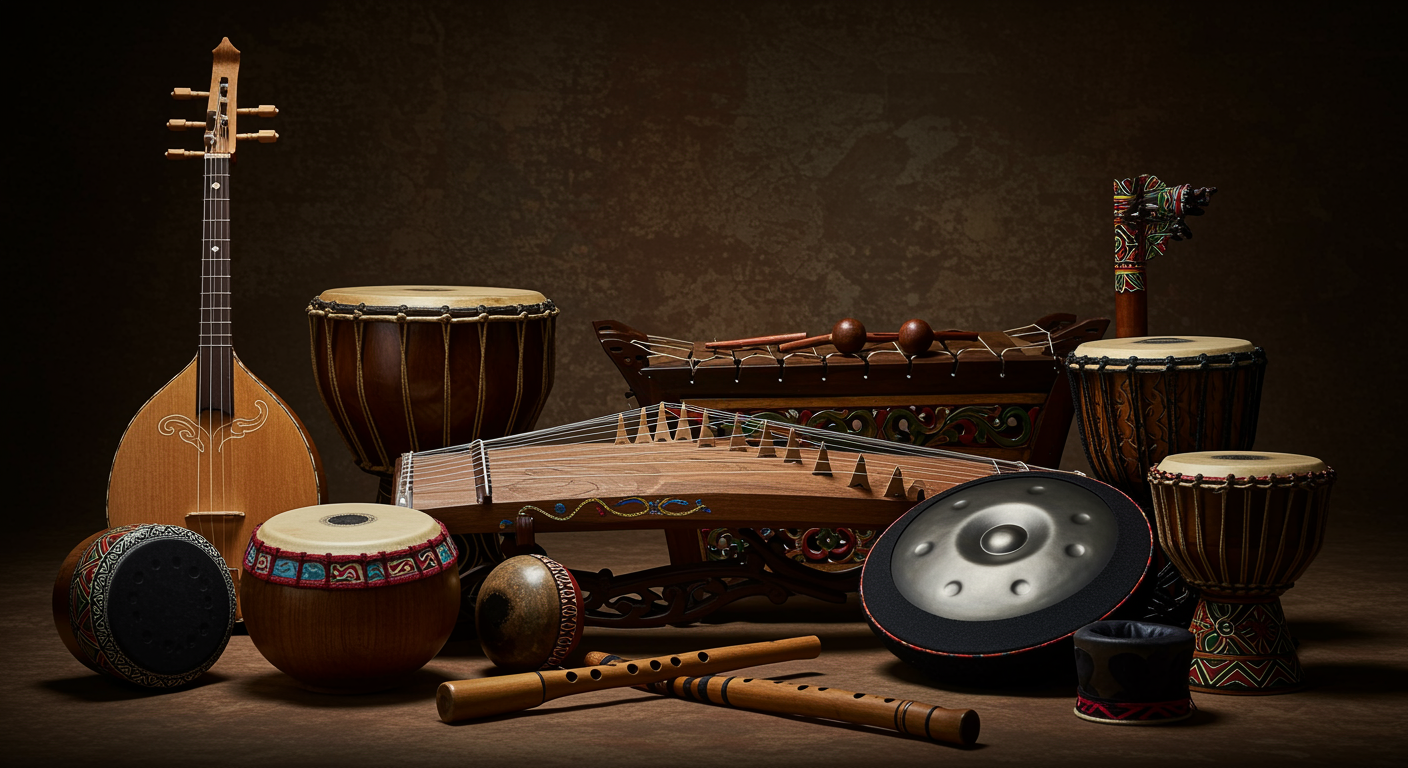
The quest for uniqueness in music production often leads artists beyond the well-trodden paths of standard synthesizers and orchestral libraries. Obscure world instruments present a compelling alternative, offering a vast reservoir of sounds that are inherently different from Western classical or contemporary electronic music. Instruments like the duduk from Armenia, the koto from Japan, the gamelan from Indonesia, or various flutes and percussion from indigenous cultures carry centuries of history and distinct playing techniques that imbue their samples with a character impossible to replicate digitally from scratch. This inherent distinctiveness allows producers to layer sounds that immediately stand out, creating an auditory signature that captivates listeners and defines a unique sonic identity.
Beyond mere novelty, these instruments bring a rich tapestry of emotional and atmospheric qualities. The haunting breathiness of a nay flute, the shimmering resonance of a handpan, or the intricate polyrhythms of an African djembe can evoke specific moods, geographies, or historical periods. This makes them invaluable tools for storytelling through sound, capable of transporting audiences to different worlds or eliciting profound emotional responses. Integrating such samples allows for the creation of soundscapes that feel organic, alive, and deeply textured, moving beyond flat, sterile digital sounds to embrace the warmth and imperfections that often define true musicality.
Sourcing Global Sonic Treasures
The digital age has made the discovery and acquisition of obscure world instrument samples more accessible than ever, though careful consideration is still required. Dedicated sample libraries from reputable developers often curate extensive collections, providing high-quality recordings, detailed metadata, and often multiple articulations to capture the instrument’s full expressive range. These libraries frequently collaborate directly with ethnomusicologists and master musicians, ensuring authenticity and respectful representation. Exploring these curated collections is often the first step for many producers looking for specific instruments or regional sounds.
Beyond commercial libraries, independent sound designers and field recordists offer niche packs, sometimes focusing on very specific instruments or unique performance styles not found elsewhere. Online communities and forums dedicated to sound design or world music can be excellent resources for discovering these hidden gems. Additionally, some virtual instrument developers create highly realistic emulations of world instruments, offering playability and flexibility without requiring extensive sample management. When sourcing, it is crucial to investigate the origins of the samples, checking for proper licensing and ensuring that the creators have obtained permission and offered fair compensation to the original performers, aligning with ethical sampling practices.
Creative Integration Techniques for Soundscapes
Integrating obscure world instrument samples effectively into a soundscape requires a blend of respect for the instrument’s original character and innovative sound design techniques. One powerful approach is layering audio samples for depth: combining a subtle atmospheric pad derived from a processed duduk with a percussive loop featuring a lesser-known frame drum can create a complex, evolving texture. Experimenting with granular synthesis on a short vocal sample from an indigenous tradition can transform it into an otherworldly drone, adding a mysterious layer without dominating the mix.
Processing these samples with modern effects is key to blending them seamlessly or making them stand out. Reverb and delay can place an instrument in a vast, imaginary space, while filters and EQ can sculpt its frequency content to fit the overall sonic environment. Pitch shifting, time stretching, and even subtle distortion can take a traditional sound and push it into abstract or futuristic territories, maintaining its unique timbre while giving it a contemporary edge. The goal is often not just to drop an instrument into a track, but to manipulate its essence, drawing out its most evocative qualities and weaving them into the fabric of the broader soundscape, creating a cohesive yet uniquely textured sonic narrative.
Cultural Sensitivity and Ethical Sampling
When working with obscure world instrument samples, particularly those from specific cultural contexts, cultural sensitivity and ethical practices are paramount. These instruments are often deeply intertwined with the traditions, rituals, and identities of communities. Simply using a sound for its aesthetic appeal without understanding its cultural significance can be disrespectful or even exploitative. Producers should strive to learn about the origin of the sounds they use, understanding the instrument’s role, the contexts in which it is traditionally played, and any associated meanings.
Ethical sampling extends to how samples are acquired and used. Whenever possible, support sample developers who directly compensate and collaborate with the musicians and communities from whom the sounds originate. Avoid sampling from unauthorized sources or using sounds in ways that might misrepresent or trivialize their cultural importance. If adapting a traditional melody or rhythm, consider giving credit or acknowledging the source to show respect. This mindful approach not only fosters positive relationships within the global music community but also ensures the longevity and integrity of these rich musical traditions, allowing future generations of artists to continue exploring their unique soundscapes responsibly. Understanding music sample copyright laws is crucial for every producer to ensure compliance and ethical practice.
Transforming Genres with Exotic Sounds
The transformative power of obscure world instrument samples lies in their ability to inject fresh perspectives into established musical genres, pushing creative boundaries and inspiring entirely new directions. In electronic music, for instance, a driving techno track can gain an extraordinary, almost ritualistic depth by incorporating processed shamanic drums or the ethereal calls of a pan flute. Ambient compositions can achieve unparalleled introspection and emotional resonance through the nuanced textures of a bowed string instrument from a distant land or the resonant chimes of a Tibetan singing bowl, providing a sense of spaciousness and organic movement rarely found with synthetic sounds alone. Sampling techniques for cinematic sound design can help composers craft sonic identities for fictional worlds or historical settings with authenticity and imaginative flair. A fantasy realm can feel more ancient and mystical with the inclusion of a Mongolian throat singer or the twang of an African kora. Beyond these obvious applications, even pop and R&B producers are discovering how subtle additions of a specific percussive instrument, a unique plucked string, or a distinctive vocal sample can elevate a track, giving it a global appeal and a sophisticated edge that differentiates it from mass-produced sounds. This cross-pollination enriches the musical landscape, proving that innovation often flourishes at the intersection of tradition and modernity.