
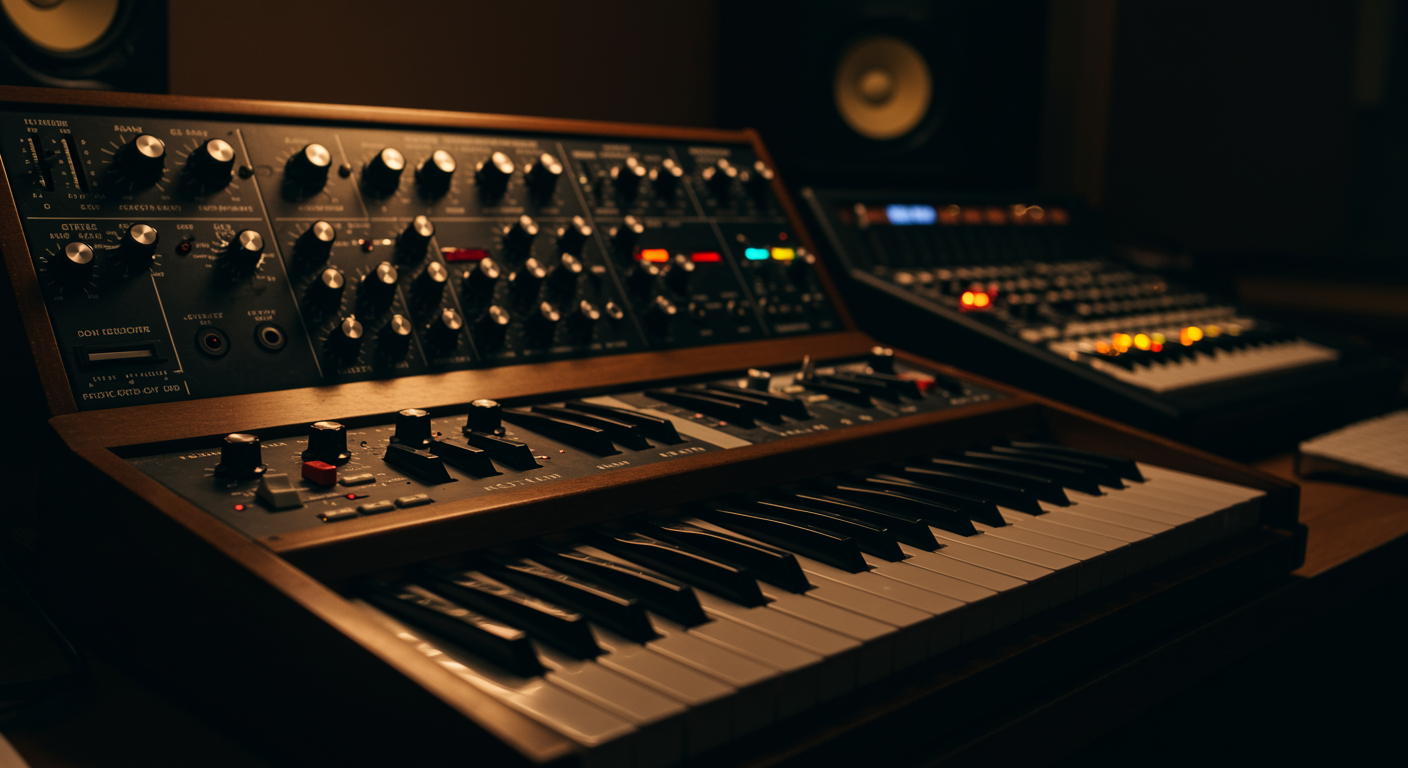
Using vintage synth samples in modern music production infuses tracks with unique warmth, character, and a nostalgic depth often challenging to replicate with contemporary tools, offering producers a distinct sonic palette to stand out in today’s crowded musical landscape.
The Enduring Allure of Vintage Synth Sounds
The distinctive character of vintage synthesizers lies in their analog circuitry, which introduces subtle imperfections, harmonic richness, and a certain “mojo” that digital precision often lacks. This inherent warmth and organic quality make vintage synth samples highly coveted for producers seeking to inject soul and authenticity into their modern compositions. From the fat basses of a Moog to the shimmering pads of a Roland Juno, these classic sounds carry a legacy, instantly recognizable yet infinitely adaptable.
Incorporating these sounds isn’t merely about nostalgia; it’s about leveraging their unique sonic footprint to create something fresh and innovative. The subtle drifts in pitch, the rich filter sweeps, and the inherent grit of older hardware contribute to a sound that feels more alive and textured. This sonic depth can provide a powerful foundation or a captivating embellishment, setting a track apart from those relying solely on pristine, digital instruments.
Producers utilize vintage synth samples to evoke specific moods, whether it’s the retro-futurism of the 80s, the raw energy of early electronic music, or the ethereal qualities of ambient soundscapes. By understanding the origins and characteristics of these classic machines, one can more effectively choose samples that align with their creative vision, ensuring that the vintage element serves a purposeful role in the modern mix.
Sourcing Authentic Vintage Synth Samples
Finding high-quality vintage synth samples is the first critical step toward effectively using vintage synth samples modern music production. While some producers have access to original hardware, the vast majority rely on meticulously recorded sample packs. These packs often capture the nuances of iconic synthesizers such as the Oberheim OB-Xa, Prophet-5, Korg MS-20, or Yamaha DX7, providing a library of one-shots, loops, and multi-sampled instruments. Understanding the nuances between a sample library vs sample pack can further refine a producer’s workflow and selection process.
Dedicated sample libraries from reputable sound designers are excellent resources. Many companies specialize in recording these classic machines through high-end analog-to-digital converters, ensuring sonic fidelity and preserving the original character. Free sample packs can also be a starting point, though quality may vary. Forums and online communities dedicated to vintage synthesis often share resources and tips for finding excellent sounds.
Beyond pre-made packs, creative producers might record their own samples from hardware emulators or even software plugins designed to mimic vintage synths. While not truly “vintage samples,” these can still provide a similar sonic aesthetic when processed correctly. The key is to seek out sounds that possess the inherent character and imperfections that define the vintage synth aesthetic, rather than overly clean or generic digital waveforms.
Integrating Vintage Samples into Contemporary Tracks
Successfully integrating vintage synth samples into modern music production requires more than just dragging and dropping files. It involves a thoughtful approach to ensure these classic sounds blend seamlessly with contemporary elements without sounding out of place or dated. One effective method is to use vintage samples as foundational elements, such as basslines or pads, providing a warm, analog glue to the entire track.
Alternatively, vintage synth samples can serve as accents or lead sounds, offering a distinct melodic or rhythmic voice. When used sparingly, a classic synth arpeggio or a unique FX sound can grab the listener’s attention and add an unexpected layer of texture. The goal is to leverage the unique sonic identity of the sample to enhance the overall composition, rather than letting it dominate or clash with other instruments.
Consider the stylistic context of your track. Vintage samples often shine in genres like synthwave, lo-fi hip-hop, deep house, or various forms of electronic music, where their characteristics are well-understood and appreciated. However, their versatility means they can also add an intriguing edge to pop, R&B, or even film scores, provided they are mixed and processed thoughtfully to complement the modern production aesthetic.
Creative Processing Techniques for Classic Tones
To truly unlock the potential of using vintage synth samples in modern music production, creative processing is essential. Even the most authentic sample can benefit from careful manipulation to fit perfectly within a contemporary mix. One common technique is using subtle saturation or distortion to enhance the analog warmth and grit, mimicking the natural harmonic distortion of vintage circuitry.
Time-based effects like reverb and delay are crucial for giving vintage samples space and atmosphere. A spring reverb emulation can instantly transport a sound back to an earlier era, while a modulated delay can add movement and depth. Compression is vital for shaping dynamics, allowing classic synth sounds to sit firmly in the mix without being overshadowed or overpowering other elements.
Beyond traditional effects, consider more adventurous techniques. Pitch shifting, granular synthesis, or creative looping can transform a recognizable vintage sound into something entirely new and unique, while still retaining its core character. Experiment with filtering – not just basic EQ, but envelope filters or even resonant sweeps – to add dynamic movement and expression, pushing the sample into uncharted sonic territory.
Achieving Cohesion: Blending Old and New Elements
A significant challenge in using vintage synth samples modern music production is achieving a cohesive sound where the retro elements don’t feel tacked on. The key lies in strategic mixing and sound design that bridges the gap between the vintage sample and the modern production environment. Equalization is paramount: often, vintage samples may have a different frequency balance than modern digital sounds, requiring surgical EQ to carve out space and prevent muddiness or harshness.
Layering is another powerful technique. Combining a vintage synth sample with a modern synth patch can create a hybrid sound that benefits from both worlds – the character of the old and the clarity of the new. To truly boost mix richness, mastering the art of layering audio samples for depth is indispensable. For instance, a classic analog bass sample could be layered with a clean sub-bass oscillator to provide both warmth and low-end definition, making the overall sound translate better on various playback systems.
Furthermore, attention to dynamics and stereo imaging helps unify the soundstage. Applying subtle sidechain compression to a vintage pad or bass when a modern kick drum hits can create rhythmic coherence. Using stereo wideners on certain vintage elements can give them presence, while keeping others mono can ground the mix. The goal is to make the vintage samples feel like integral components of the track, not just an homage.
Advantages in Modern Production Workflows
The strategic deployment of vintage synth samples offers numerous advantages within contemporary music production workflows. Primarily, they provide a quick and efficient way to access a vast library of iconic sounds without the expense, maintenance, or space requirements of actual vintage hardware. This accessibility democratizes the use of these classic tones, allowing a wider range of producers to infuse their tracks with historical sonic richness.
Beyond convenience, these samples significantly enhance a track’s uniqueness and sonic signature. In an era where many digital presets are widely used, vintage samples offer a distinct tonal character that can make a production stand out. They can inspire new creative directions, triggering ideas that might not emerge from more conventional modern sounds, pushing the boundaries of genre and style.
Moreover, vintage synth samples can lend a sense of depth and organic imperfection that digital-only productions sometimes lack. The subtle analog nuances, noise, and harmonic complexities contribute to a more “human” feel, preventing a track from sounding too sterile or artificial. This makes them invaluable tools for adding emotional resonance and a timeless quality to music crafted in today’s digital studios.
Avoiding Common Pitfalls with Retro Audio
While the allure of using vintage synth samples in modern music production is strong, producers should be mindful of common pitfalls to ensure the best results. One primary concern is overreliance or a lack of originality. Simply dropping in a famous vintage sound without creative processing or contextualization can make a track sound generic or overly retro, detracting from its modern appeal.
Another pitfall is poor sample quality. Low-resolution or badly recorded samples can introduce unwanted noise, artifacts, or an amateurish feel to a professional production. Always opt for high-quality, professionally sampled sounds, and be prepared to clean up any inherent issues with noise reduction tools if necessary. Ensuring legal clearance for any commercial use of samples, particularly if they are derived from copyrighted works, is also crucial. For a comprehensive understanding, consult guides on music sample legal clearance to navigate copyright laws effectively.
Finally, producers should avoid neglecting the overall mix. Vintage samples, especially those with significant analog warmth, can sometimes occupy a lot of frequency space. Failing to properly EQ, compress, and layer them can lead to a muddy or unbalanced mix. The aim is to integrate them harmoniously, making them feel like a natural part of the modern soundscape, rather than an unpolished, nostalgic add-on.