The historical impact of sampling lesser-known musical genres is profound, primarily manifesting in the preservation, recontextualization, and popularization of forgotten or obscure sounds, while simultaneously acting as a powerful catalyst for the creation of entirely new musical genres. This practice not only democratized access to a vast global sonic archive but also challenged traditional notions of musical authorship and value, fostering cross-cultural dialogues and driving innovation across diverse music scenes.
Defining Obscure Sources in Sampling History
The term “lesser-known genres” in the context of sampling history typically refers to a vast array of musical recordings that, for various reasons, remained outside mainstream commercial success or widespread public awareness. This often included library music, a genre composed specifically for use in film, television, and radio productions, which provided a treasure trove of unique instrumental breaks and atmospheric textures. Other significant sources were obscure funk, soul, jazz, and disco 45s and LPs, particularly those from regional labels or international scenes that never achieved national or global distribution. Furthermore, avant-garde recordings, experimental sound art, traditional folk music from various cultures, and even spoken-word records contributed substantially to the sonic palette available to pioneering samplers. Finding obscure world instrument samples became a quest for many producers.
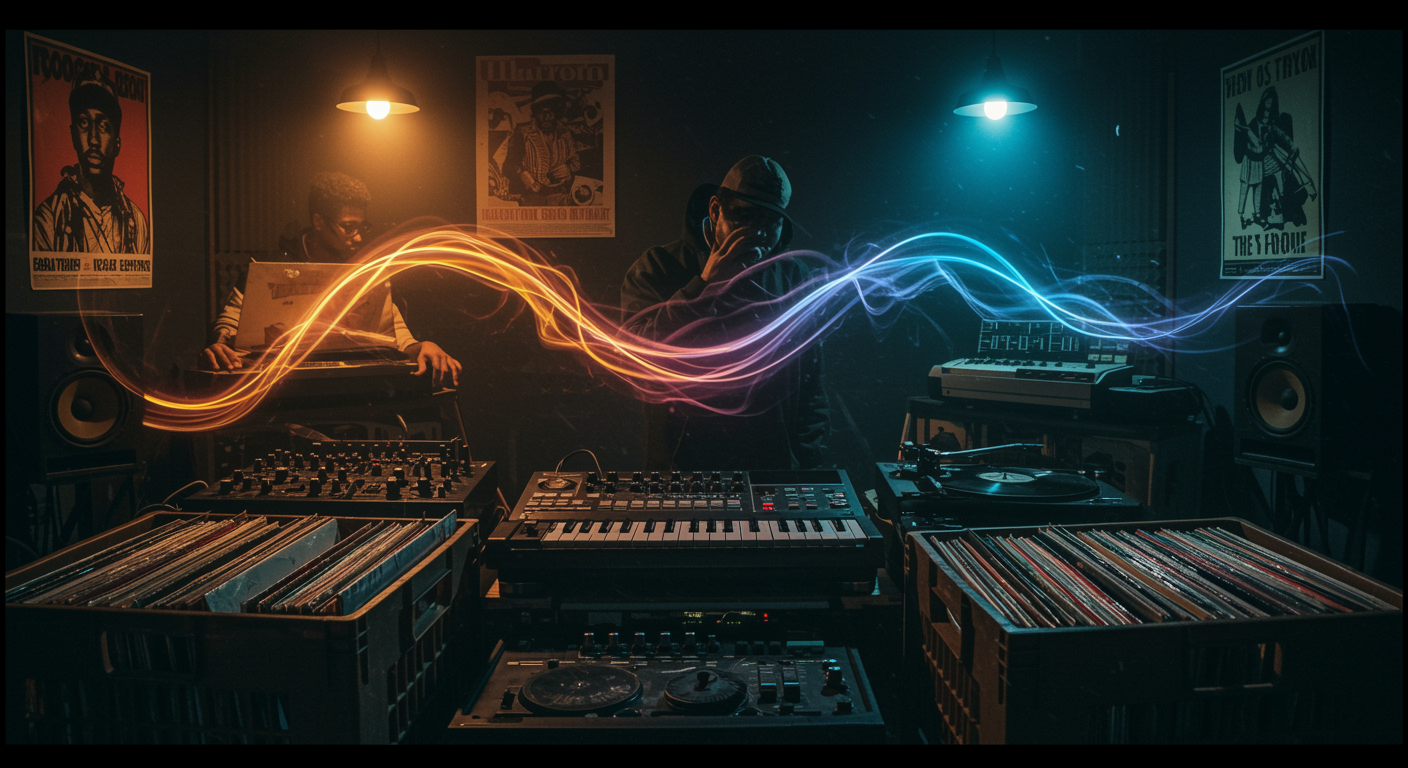
These genres often shared characteristics that made them appealing for sampling: distinctive rhythmic patterns, unique instrumental arrangements, raw vocal performances, or specific sonic qualities not found in mainstream productions. The limited commercial success of these records meant they were often inexpensive and readily available in second-hand record stores, flea markets, and garage sales, making them accessible to early producers and DJs who were “crate digging” for new sounds. This accessibility, coupled with their inherent musical richness, allowed samplers to unearth sonic gems that had largely been overlooked, giving them a second life and new meaning within emerging musical styles.
Early Pioneers and Their Sonic Discoveries
The early days of sampling were characterized by an almost archaeological quest for unique sounds, with producers meticulously sifting through countless records to find the perfect beat, melody, or vocal snippet. Pioneers in hip-hop, electronic music, and dance genres were at the forefront of this movement. Artists like Grandmaster Flash, Afrika Bambaataa, and Kool Herc famously extended drum breaks from funk and disco records, laying the foundation for hip-hop. However, beyond the obvious breaks, they and subsequent producers delved into more obscure territories.
The advent of samplers like the Akai S900 or the E-mu SP-1200 in the mid-1980s empowered a new generation of producers to manipulate these sounds in unprecedented ways. This era saw producers like DJ Premier, Pete Rock, and J Dilla elevating the art of sampling by creatively chopping, pitching, and layering snippets from highly eclectic and often unknown records. Mastering advanced drum break chopping became a hallmark of their distinctive sound. Their sonic palettes drew from obscure jazz fusion, foreign film soundtracks, forgotten children’s records, and niche experimental releases, demonstrating a deep appreciation for the underlying musicality within these less commercialized recordings. This dedication to uncovering unique textures ensured that the resultant sampled tracks carried a distinctive, often nostalgic, yet entirely fresh sonic signature.
Cultural Preservation and Sonic Recontextualization
One of the most profound historical impacts of sampling lesser-known genres is its role in cultural preservation and the recontextualization of musical heritage. Many of the records sampled came from artists or movements that, without the intervention of samplers, might have faded into complete obscurity. By extracting elements from these forgotten works and embedding them into new, popular compositions, samplers inadvertently acted as cultural archivists, drawing attention to overlooked musical legacies. This process didn’t just preserve the sounds; it gave them a new lease on life, introducing them to contemporary audiences who might never have encountered the originals.
The act of sampling also fundamentally recontextualizes the source material. A dramatic horn stab from a 1970s Italian horror film score, for instance, might be transformed into a menacing element in a modern trap beat. A subtle drum loop from an obscure Brazilian psychedelic rock album could become the foundation of an entire house track. This recontextualization changes the listener’s perception of the original sound, stripping it of its initial narrative and embedding it within a new artistic framework. This challenges traditional hierarchies of musical value, elevating sounds once deemed commercial failures or niche interests into essential components of globally recognized genres, thereby broadening the definition of what constitutes “valuable” music.
Innovation and the Birth of New Genres
The practice of sampling obscure genres has been an unparalleled engine for musical innovation, directly contributing to the genesis and evolution of numerous contemporary genres. By taking disparate elements from forgotten records and fusing them into novel compositions, producers weren’t merely borrowing; they were synthesizing entirely new sonic languages. The very foundation of genres like trip-hop, downtempo, and various forms of electronic music can be traced back to the creative repurposing of obscure samples. To understand how these sounds shaped entire movements, delve into the sampling in electronic dance music.
For example, trip-hop pioneers like Portishead and Massive Attack famously built their dark, atmospheric soundscapes by drawing heavily from obscure jazz, soul, and film noir soundtracks, manipulating these samples to create a mood far removed from the originals. Similarly, early jungle and drum and bass producers extensively sampled breakbeats from relatively unknown funk and soul records, pitching them up, chopping them intricately, and layering them to create rhythmically complex and entirely new forms of dance music. This willingness to explore beyond the mainstream provided an endless wellspring of unique textures and rhythms, allowing artists to craft sounds that were genuinely groundbreaking and impossible to achieve through conventional instrumentation alone. The resulting innovation not only enriched the musical landscape but also fostered a culture of sonic experimentation that continues to drive genre evolution today.
Global Reach and Cross-Cultural Dialogues
Sampling lesser-known genres has played a significant historical role in fostering global musical exchange and cross-cultural dialogue. Before the digital age, much of the world’s musical output remained localized, accessible only to those within specific regions or niche communities. Sampling acted as a powerful conduit, allowing sounds from disparate corners of the globe to interact and merge within new musical frameworks. A producer in London might stumble upon a forgotten Bollywood soundtrack, a Japanese folk recording, or a vintage African funk track, and integrate these elements into their contemporary compositions. For comprehensive guidance, explore how to effectively integrate world music samples into modern electronic productions.
This process introduced listeners to a vast array of global sounds they might otherwise never have encountered, subtly educating them about diverse musical traditions. Hip-hop, in particular, became a melting pot for sounds from Latin America, the Caribbean, Africa, and Asia, as producers searched for unique rhythms and melodies. This intermingling of cultural artifacts within a new musical context created hybrid genres that transcended geographical and cultural boundaries, promoting a deeper, albeit often unconscious, appreciation for the richness of global musical heritage. The historical trajectory of sampling has therefore been one of breaking down barriers, transforming isolated musical expressions into components of a larger, interconnected global soundscape.