
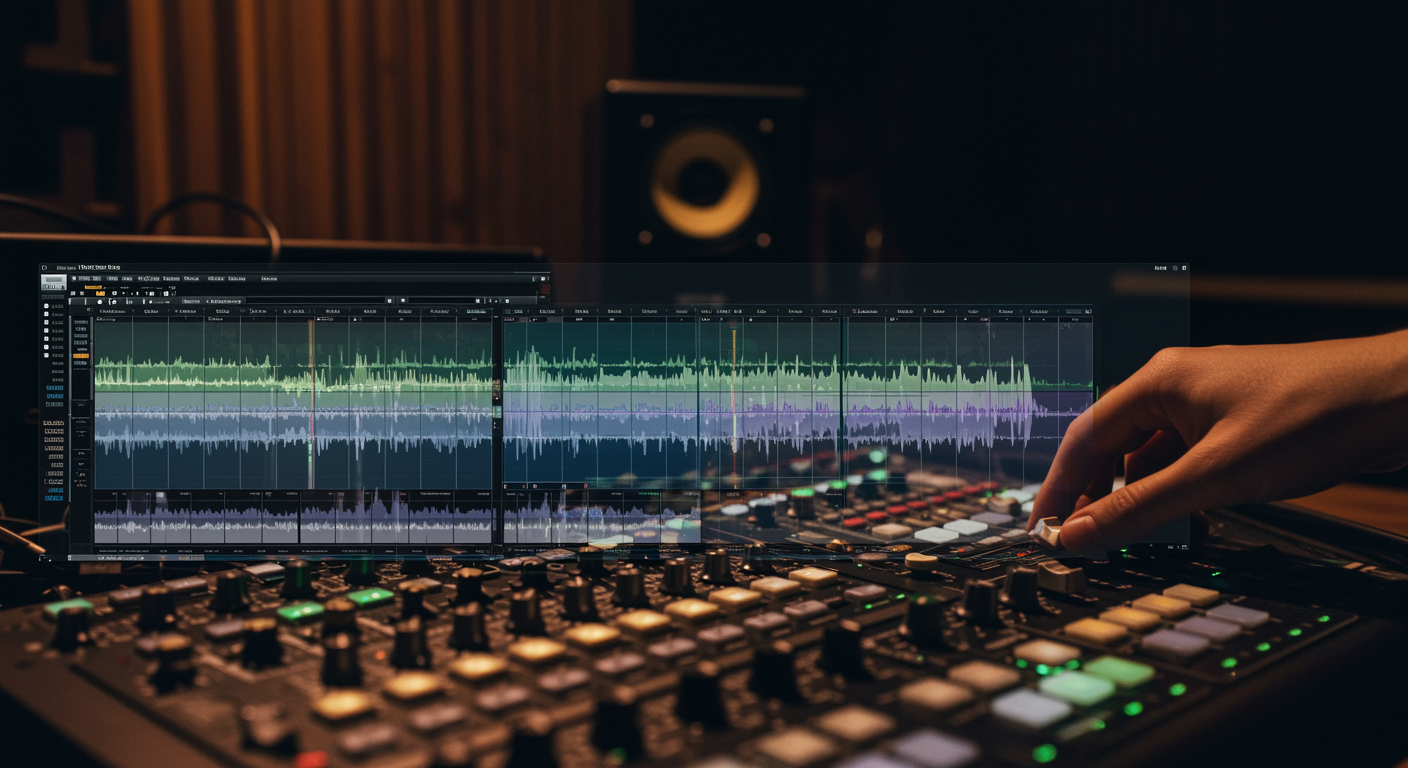
Creative layering of short percussive samples is an essential technique for building complex rhythms, involving the strategic combination of distinct sonic elements to forge intricate and dynamic patterns. This method allows producers to imbue their percussion with greater depth, unique texture, and a sophisticated sense of groove, moving beyond the limitations of single sounds to create rich, evolving rhythmic landscapes. For those looking to delve deeper, exploring advanced percussion sample layering techniques can further enhance your rhythmic creations.
Understanding Short Percussive Samples
Short percussive samples are concise, transient-focused audio snippets typically lasting less than a second, encompassing sounds like kicks, snares, hi-hats, claps, and various foley or one-shot effects. Their brevity makes them ideal building blocks for rhythm, as their quick attack and decay allow for precise placement and rapid succession without muddying the mix. The inherent characteristics of these samples—their distinct timbres, attack envelopes, and frequency profiles—are what make them so powerful when combined, offering a vast palette for sound design within the rhythmic framework. They serve as the foundational elements that, when skillfully layered, contribute to the density and articulation of complex rhythmic patterns.
Unlike longer, sustained sounds, short percussive samples provide immediate impact and clarity, which is crucial when aiming for intricate rhythmic interplay. Each sample contributes a specific sonic quality: a kick might provide low-end weight, a snare offers mid-range crack, while a hi-hat introduces high-frequency sparkle and rhythmic propulsion. The art of layering these distinct sonic identities lies in understanding how their individual characteristics complement or contrast one another, creating a composite sound that is greater and more complex than the sum of its parts. This foundational understanding is key to effectively using layering short percussive samples to build complex rhythms that resonate with depth and character.
Foundational Techniques for Layering Percussion
Effective layering of short percussive samples begins with intentional sound selection and a clear objective for the combined output. One primary technique involves layering samples to enhance specific sonic qualities; for instance, combining a deep, resonant kick drum with a shorter, punchy kick sample can create a powerful low-end impact that still cuts through the mix. Similarly, a primary snare drum can be augmented with a snappy clap to add brightness or a distorted rimshot for aggressive character. The goal is not just to make sounds louder, but to blend different timbres and transients to create a fuller, more unique percussive voice.
Another fundamental approach focuses on creating textural complexity. This involves combining main percussive elements with subtle, often quieter, layers of foley, as well as granular synthesis textures, or even ambient one-shots that have a percussive quality. These supplementary layers might include sounds of shuffling paper, light clicks, or metallic chimes, which are often heavily processed. For more detailed guidance, consider exploring foley sound effects rhythmic sampling techniques to create unique beats. When mixed discreetly, these elements add a subconscious depth and organic feel to the rhythm, making the overall groove richer and more engaging. This thoughtful combination of sounds is paramount when layering short percussive samples complex rhythms, as it provides a foundation for intricate sonic narratives.
A crucial aspect of foundational layering is the alignment of transients. For samples intended to hit at the exact same moment, ensuring their initial attack phases align perfectly prevents phasing issues and creates a cohesive “single hit” perception. This often requires subtle nudging of waveforms or using transient shaping tools. Conversely, intentional slight offsets can introduce a flam-like effect or a subtle “drag” that contributes to a more humanized, complex rhythm, adding a nuanced groove that a perfectly quantized hit might lack. Mastering this balance is central to achieving dynamic and compelling layered percussive outcomes.
Processing Methods for Cohesive Layering
Once short percussive samples are selected and aligned, diligent processing is crucial to ensure they meld into a cohesive, impactful whole rather than a muddy mess. Equalization (EQ) is often the first step, used to carve out frequency space for each layer. For example, the low-end of a punchy snare might be gently rolled off to prevent it from clashing with the primary kick drum’s fundamental frequencies, while a textural top layer might have its low-mids attenuated to maintain clarity. This spectral sculpting ensures that each sample contributes distinctly without competing, allowing the layering short percussive samples complex rhythms to breathe and resonate clearly.
Dynamic processing, particularly compression, plays a vital role in gluing layers together. Parallel compression is a highly effective technique where a heavily compressed version of the layered percussion is mixed in subtly with the uncompressed signal, adding density and sustain without crushing the transients. Gating can also be employed to clean up unwanted resonance or decay from individual samples before they are combined, ensuring only the desired percussive energy is present. Careful application of these tools helps to unify the disparate characteristics of different samples into a single, punchy, and consistent sound.
Beyond EQ and compression, saturation and transient shapers are invaluable for adding character and control. Subtle saturation can enhance harmonics and add warmth, making layered samples feel more integrated and “analog.” Transient shapers, on the other hand, allow for precise control over the attack and sustain of combined sounds. You can boost the attack of a layered kick to make it hit harder or dial back the sustain of a composite snare to keep the rhythm tight. Reverberation and delay, when used sparingly and appropriately, can also add depth and spatial context, but care must be taken to ensure they don’t blur the sharp transients that define complex percussive layers.
Rhythmic Variation and Grooves
The true power of layering short percussive samples for complex rhythms extends beyond simply creating a rich single hit; it lies in the ability to build intricate, evolving grooves. By strategically varying which layers are active at different points in a pattern, producers can introduce dynamic changes that keep the rhythm engaging. For example, a main kick and snare pattern can be supported by quieter, off-beat percussive layers that only appear intermittently, adding syncopation and a sense of forward motion without overpowering the core beat. This selective deployment of layers allows for subtle yet profound shifts in the rhythmic landscape.
Ghost notes and micro-rhythms are particularly effective for adding complexity and human feel. Layering very quiet, short samples in between main hits or slightly before/after them can create a nuanced “chatter” that mimics a live drummer’s subtle embellishments. A lightly layered shaker or a very short, filtered click placed just off the grid can introduce a swing or drag that makes a rhythm feel less robotic. These micro-rhythmic details are often barely noticeable individually but collectively contribute significantly to the overall groove and make the layered short percussive samples complex rhythms come alive with intricate motion.
Furthermore, automating parameters like volume, panning, or even the presence of specific layers over time can transform a static beat into a narrative journey. Imagine a section where a certain textural layer slowly fades in, building tension, or a percussive element pans from left to right, creating spatial interest. These evolving patterns, built from the careful combination and manipulation of short percussive samples, are fundamental to crafting sophisticated and memorable grooves that captivate the listener. The dynamic interplay achieved through intelligent layering elevates simple patterns into truly complex and compelling rhythmic expressions.
Genre-Specific Applications of Layered Percussion
The technique of layering short percussive samples to build complex rhythms is universally applicable but manifests uniquely across different musical genres. In electronic dance music (EDM), for instance, it’s common to layer multiple kick samples—one for sub-bass weight, another for mid-range punch, and a third for top-end click—to create a powerful, genre-defining four-on-the-floor beat that cuts through a dense mix. Snares are similarly augmented with claps, white noise, or metallic hits to achieve the bright, impactful sounds characteristic of house, techno, or trance.
In hip-hop and R&B, the focus often shifts to creating “thicker” and more characterful drum sounds that carry significant weight and groove. Producers frequently layer acoustic drum samples with synthetic ones, often distorting or saturating them to achieve a gritty, lo-fi aesthetic. Here, ghost notes and subtle, layered percussion play a crucial role in building complex rhythmic patterns that contribute to the laid-back yet intricate swing inherent to these genres, using sparse yet impactful layered hits to define the feel.
Beyond electronic and urban genres, layering techniques are also vital in cinematic scoring, where percussive elements often need to convey mood and scale. Here, producers might combine organic sounds like taikos and frame drums with processed metallic impacts or reverse cymbal swells, creating epic, evolving rhythms that underscore dramatic tension. Even in more acoustic-oriented music, subtle layering of a tambourine beneath a snare or a light shaker behind a hi-hat can add texture and dimension, demonstrating how layering short percussive samples to build complex rhythms is a versatile tool across the entire musical spectrum.
Optimizing Workflow for Complex Rhythms
An efficient workflow is paramount when embarking on layering short percussive samples to build complex rhythms, especially given the potential for numerous individual tracks or samples. Utilizing a Digital Audio Workstation’s (DAW) drum rack or sampler instrument is often the most effective approach. These tools allow producers to map multiple samples to a single MIDI note or pad, enabling the creation of composite sounds that can be triggered as one. This consolidates the mixing and processing chain, streamlining the sound design process and making it easier to manage intricate layers.
Organizing sample libraries systematically is another critical aspect. For comprehensive tips on this, read more about organizing sample libraries for faster workflow. Categorizing samples not just by type (kicks, snares, hats) but also by character (punchy, deep, distorted, clean) can drastically speed up the layering process. When seeking a specific sonic quality to complement an existing layer, a well-organized library means less time spent searching and more time spent creating. Developing a personal collection of pre-layered and processed “kit” sounds can also save immense time, allowing for rapid deployment of tried-and-true combinations while still leaving room for unique customization.
Furthermore, employing group buses for percussive elements is essential for cohesive mixing. Rather than processing each individual layer separately, sending all drum tracks to a dedicated “drum bus” allows for global compression, EQ, and saturation that glues the entire rhythm together. This ensures that even with numerous layers, the overall percussive groove feels unified and punchy. Regular saving, version control, and clear labeling of tracks and samples also contribute to a smooth workflow, preventing frustration and allowing the creative focus to remain on building dynamic and complex rhythmic patterns through effective layering.
Creative Approaches Beyond the Basics
Moving beyond standard layering techniques, creative approaches to layering short percussive samples can unlock truly unique and complex rhythms. One such method involves pitch shifting and timestretching individual layers to introduce harmonic variations or subtle rhythmic displacements. A kick drum layer, for example, could be slightly pitched down and stretched to add a sub-harmonic drone that evolves with the rhythm, or a hi-hat sample might be minutely timestretched to create a shuffled feel when layered with a standard closed hat.
Another innovative technique is the incorporation of non-traditional sound sources. Layering percussive foley sounds—such as recordings of footsteps, shattering glass, or even manipulated vocal fragments—can infuse rhythms with an organic, often abstract quality. These sounds, when heavily processed with reverbs, delays, and granular synthesis, lose their original context and become textural percussive elements. Such experimental layering broadens the sonic palette, allowing for the construction of rhythms that defy conventional expectations and possess a distinct, artistic signature.
Furthermore, exploring rhythmic polyrhythms through layering can elevate complexity significantly. By setting certain layered elements to different time signatures or subtle subdivisions against a main beat, producers can create a captivating push-and-pull effect. Imagine a four-to-the-floor kick pattern underpinned by a layered textural percussion loop in a 3/4 or 6/8 feel. This creates an interplay that is both challenging and rewarding to the ear, demonstrating the boundless potential of layering short percussive samples to build complex rhythms that are not only intricate but also profoundly innovative.