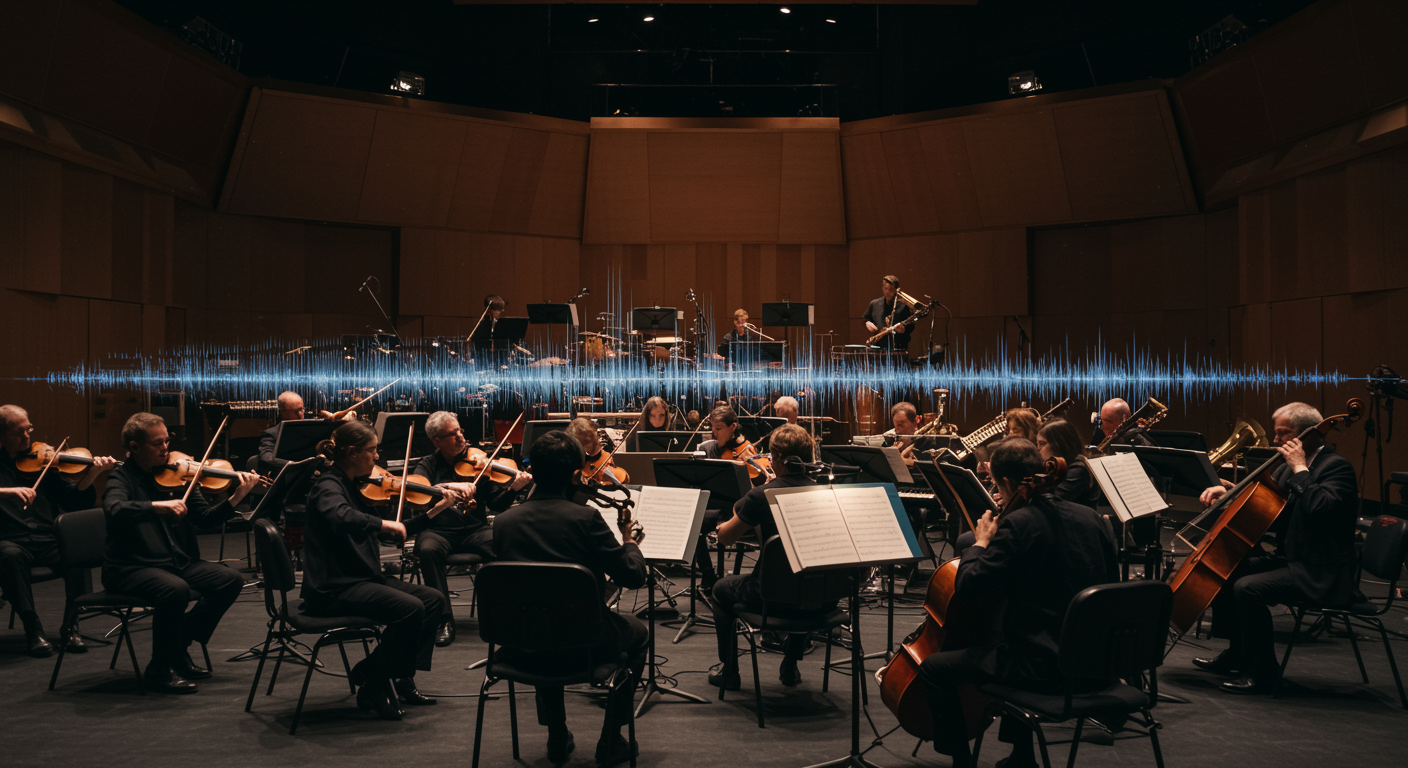
Achieving a seamless blend when mixing sampled instruments with a live orchestra requires a comprehensive approach, prioritizing meticulous sample selection, authentic dynamic and articulation programming, precise spatial and temporal alignment, and careful processing techniques to ensure that synthetic and acoustic elements resonate as a unified, coherent musical entity. For deeper insights into achieving truly flawless hybrid tracks, exploring comprehensive guides on mixing live instruments with samples can provide invaluable techniques.
Challenges and Benefits of Hybrid Orchestration
The endeavor of mixing sampled instruments with a live orchestra presents a unique set of challenges and significant opportunities. One primary hurdle lies in the inherent sonic discrepancies between meticulously recorded acoustic performances and pre-recorded, often sterile, digital samples. Live instruments possess a natural breath, evolving timbre, and subtle imperfections that are difficult to replicate, leading to potential clashes in realism, dynamic range, and overall musicality. Another challenge is the dynamic interplay; a live performer responds to the ensemble, while a sample rigidly adheres to programmed instructions, demanding careful programming to simulate human interaction.
Despite these complexities, the benefits of a hybrid approach are compelling. It offers an expanded sonic palette, allowing composers to access rare instruments, specialized effects, or sounds that would be logistically or financially impractical with a purely live ensemble. Budgetary constraints often make a full orchestra prohibitive, so augmenting a smaller live section with high-quality samples can achieve a grander soundscape. Furthermore, samples facilitate detailed pre-production, enabling composers to create precise mock-ups and proofs of concept, refining their vision before committing to expensive live recording sessions and rehearsal time.
Choosing the Right Sample Libraries
The foundation of a successful hybrid blend begins with the discerning selection of sample libraries. Not all sample libraries are created equal, and their suitability depends heavily on the specific context of the live orchestra you intend to augment. For a more comprehensive guide to sample libraries and how they can unlock creative potential, further reading is recommended. Prioritize libraries that offer extensive articulation sets, deep dynamic layers, and multiple round robins to avoid the dreaded “machine gun” effect where repeated notes sound identical and unnatural. Look for samples recorded in renowned acoustic spaces, as their inherent reverberation and room tone can significantly aid in blending with a live recording environment.
Consider the microphone perspectives available within a library; close-mic samples provide intimacy and clarity, while stage or far-mic samples offer a broader, more ambient sound that can more easily integrate with the natural decay and space of a live orchestra. Consistency in recording techniques across different sample libraries, if using multiple, is also crucial. Attempting to mix samples from vastly different recording environments – one dry and clinical, another drenched in hall reverb – will inherently complicate the blending process, requiring more aggressive processing to achieve cohesion.
Crafting Realistic Sample Performance
Mere playback of samples falls short when aiming for integration with live musicians; the true art lies in programming them to simulate authentic human performance. This involves meticulous attention to velocity, timing, and continuous controller (CC) automation. Velocity curves should be carefully sculpted, avoiding sudden jumps that expose the sample layer transitions. Humanization features within Digital Audio Workstations (DAWs) or dedicated sampler plugins can introduce subtle timing variations and pitch drifts, mimicking the minute imperfections of live playing, which are essential for realism. Delving into acoustic sample manipulation can provide further techniques to achieve a professional sound.
Extensive use of MIDI CCs is paramount for nuanced expression. Modulating parameters like vibrato depth, expression (volume), dynamics (often mapped to a separate CC), and even articulation switching via key switches allows the samples to “breathe” and respond like a live player. Understanding the actual playing techniques of the instruments you are simulating is critical. For instance, programming a cello line requires knowledge of bowing techniques, legato transitions, and vibrato characteristics, which must then be translated into MIDI data to unlock the full expressive potential of the sample library.
Integrating Spatialization and Reverb
Effective spatialization and reverb matching are critical for making sampled instruments feel present and unified within the acoustic space of a live orchestra. Samples, by their nature, are often recorded in a specific, sometimes isolated, acoustic environment. When placed alongside live instruments recorded in a different or larger hall, a mismatch in reverberation can instantly expose the artificial elements. The goal is to make the samples sound as if they were recorded in the same room as the live orchestra, positioned correctly within the stereo or surround field.
Utilize panning and depth cues to place sampled instruments appropriately within the orchestral seating arrangement. Close-mic samples might benefit from subtle pre-delay and less initial reverberation, allowing them to project, while further-mic samples can be treated with more space. Convolution reverb, loaded with impulse responses captured from the actual recording venue or a closely matched hall, is an invaluable tool for imparting a consistent room tone. Adjusting parameters such as pre-delay, decay time, and early reflections on send effects can help to glue the sampled elements into the live acoustic, creating a cohesive sense of shared space and ambience.
Achieving Spectral and Dynamic Balance
Achieving spectral and dynamic balance between sampled and live elements is a detailed process of fine-tuning that prevents sonic clashes and ensures every instrument finds its place in the mix. To truly master the art of balance in the mix, consider exploring resources dedicated to achieving sonic clarity and a professional sound. Live orchestral instruments occupy specific frequency ranges, and samples must be carefully EQ’d to fit harmonically without masking or being masked. Often, samples can sound overly bright or boomy compared to a live recording, necessitating subtractive EQ to remove problematic frequencies, such as harsh highs or muddy lows. Conversely, subtle additive EQ can sometimes help samples cut through or add warmth where needed, but this should be approached judiciously.
Dynamic processors, particularly compression, play a crucial role in unifying the disparate dynamic ranges. Live instruments typically have a wider, more organic dynamic response than many samples. Gentle compression on individual sample tracks or bus groups can help to tame peaks and lift quieter sections, bringing their dynamic behavior closer to that of the live orchestra. Parallel compression can also be effective for adding density and punch to samples without crushing their natural transients. Careful gain staging throughout the mixing process is essential to maintain a consistent perceived loudness and prevent either the samples or the live orchestra from dominating inappropriately.
Operational Aspects for Live Blending
When mixing sampled instruments with a live orchestra in a performance or recording scenario, careful operational planning is indispensable for a smooth execution. Synchronization is paramount; a stable, clear click track is fundamental for both the live conductor and musicians, as well as for triggering and maintaining tempo for the sampled elements. This click must be carefully prepared, incorporating any tempo changes, rubato, or fermatas anticipated in the score, and delivered reliably to all necessary parties via in-ear monitors or headphones.
Managing latency is another critical aspect, especially in live performance settings where samples might be processed through various digital systems. Any perceptible delay between the live instruments and the samples can severely disrupt the ensemble’s cohesion. Monitoring solutions must be robust, allowing the conductor and key musicians to hear a balanced mix of live and sampled sounds without interference. Furthermore, the routing and playback system for the samples must be stable and redundant, with backup systems in place to prevent catastrophic failures during a performance or recording session, ensuring the sampled components contribute seamlessly to the overall sonic tapestry.
Collaborative Workflow for Hybrid Scores
A successful hybrid orchestration project thrives on effective collaboration between all involved parties, from the composer and orchestrator to the mixing engineer. Early and consistent communication is key. The composer’s initial mock-up, often heavily reliant on samples, should be shared with the orchestrator to ensure that the live parts complement, rather than conflict with, the sampled elements. The orchestrator can then advise on which parts are best suited for live performance versus sampled augmentation, considering instrument ranges, performance capabilities, and timbral blending.
For the mixing engineer, having access to the original MIDI data and sample library details is invaluable. This allows for finer adjustments to programming, individual track processing, and the ability to troubleshoot any discrepancies directly. Creating comprehensive documentation, including detailed scores that indicate sampled sections and specific instructions for sample playback, ensures everyone is on the same page. Establishing a clear feedback loop throughout the production process, from initial conceptualization to final mixdown, ensures that the blending of sampled instruments with the live orchestra achieves the artistic vision and sonic integrity desired by all stakeholders.